The Hidden Pulse of the Workshop: Why New Machines Matter to Everyday Workers
A new machine in a local workshop does more than cut repair times; it changes how a Filipino worker goes home to their family at night.
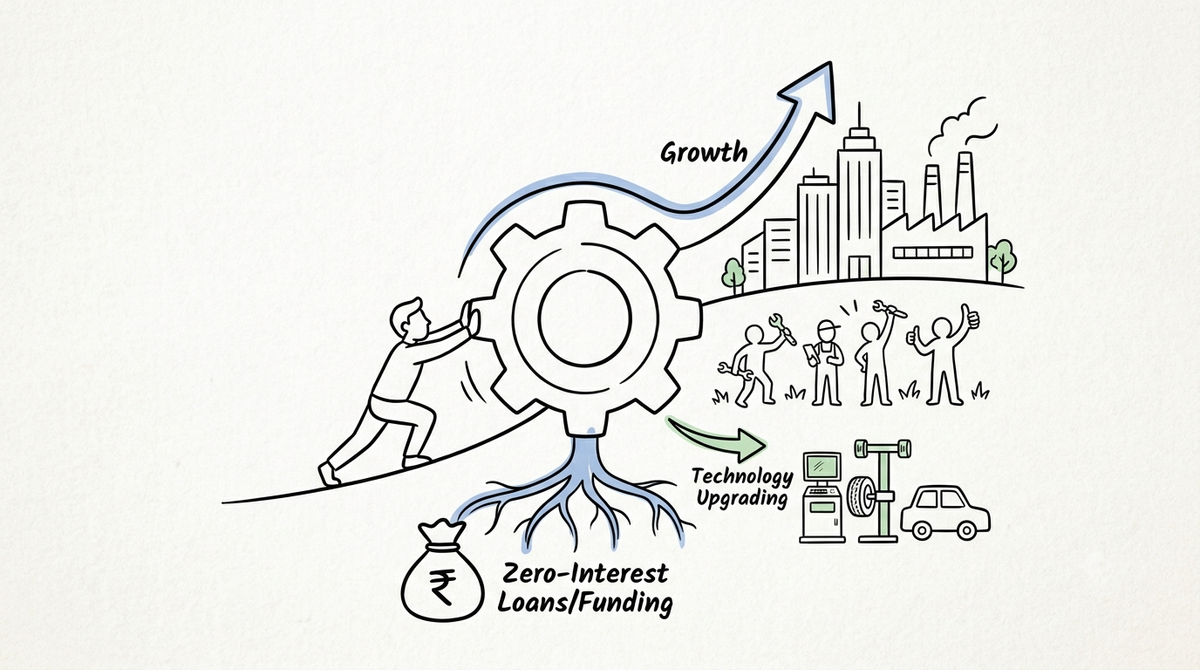
The adoption of new technologies by small metals and engineering firms through zero-interest programs directly impacts the financial stability, safety, and growth of local Filipino workers.
Step into any neighborhood talyer or local metal fabrication shop in the Philippines, and the sensory overload hits you immediately. It is a world defined by the deafening clang of hammers against steel, the sharp hiss of welding torches, the smell of grease, and the heat trapped under a corrugated iron roof. For decades, this has been the landscape of the Filipino trade worker. It is an environment where livelihood is directly tied to physical endurance. If a mechanic or a machinist cannot muscle through a heavy lift or spend hours manually aligning a vehicle chassis, the day’s earnings vanish.
For the families who depend on these neighborhood shops, the primary concern is rarely the abstract concept of "macroeconomic growth." Instead, the daily conversation over the dinner table revolves around simpler, more urgent realities. Will the shop get enough customers this week to pay the daily wages? Will a father come home with a back injury from lifting heavy truck components by hand? When we talk about modernization and industrial technology, it often sounds like a conversation reserved for large factories in major economic zones. But the reality of technology hits closest to home in the small, independent workshops that keep our local transport, agriculture, and communities moving.
The Shift in the Local Shop
Recently, news emerged regarding the Department of Science and Technology’s (DOST) Small Enterprise Technology Upgrading Program (SETUP). The initiative is providing zero-interest loans to help small and medium-sized metals and engineering firms adopt modern machinery. In Ilocos Norte, for instance, a local automotive shop named AutoNorte used a 1.1-million-peso assistance package to acquire high-precision computerized wheel alignment machines, four-post lifters, and digital tire changers.
On paper, the results look like standard corporate milestones: service times were cut in half, the client base grew by 30%, and service volume increased by 50%.
But if we look past the balance sheets and the institutional press releases, what do these numbers actually mean for the people on the shop floor? To understand the true impact of technology, we have to look at the human being operating the machine.
Moving Beyond the Heavy Lifting
When a local shop transitions from manual labor to computerized precision, the first major shift occurs in the physical toll exacted on the worker. In a traditional setup, aligning a vehicle or servicing heavy metal components involves intense physical strain. Workers spend hours bent double, using brute force and rudimentary tools to ensure accuracy.
Traditional Manual Workflow  ---> High Physical Strain  ---> Slower Output & Risk of Injury
Modernized Machine Workflow ---> Precision Technology ---> Faster Output & Safer Environment
With the introduction of tools like a four-post lifter or a computerized alignment system, the machine takes on the physical burden.
- Physical Longevity: A worker who no longer spends eight hours a day lifting immense weights by hand is a worker who can sustain their livelihood for years longer. It means fewer chronic back injuries, less physical exhaustion, and a safer environment.
- Dignity of Labor: Technology elevates the role of the worker from mere manual muscle to a skilled technician. Operating digital, high-precision equipment requires cognitive skill, transforming the job into a specialized trade.
- Time and Energy: When service time is cut in half, it doesn't just mean the business owner accommodates more vehicles. For the employee, it means a more predictable workflow and less unpaid, exhausting overtime spent wrestling with stubborn, outdated equipment.
The Ripple Effect on Livelihoods and Families
There is a common anxiety that whenever a machine enters a workplace, human hands become obsolete. In large-scale automated factories, that fear is often realized. However, in the ecosystem of Philippine small and medium enterprises (SMEs), a different dynamic emerges.
When a small neighborhood shop increases its efficiency, it doesn't necessarily lay off its staff. Instead, because the cost of doing business drops and the quality of work rises, the shop attracts more community trust. A vehicle owner who used to travel to a major city for specialized mechanical work can now support a local business right in their province. This retention of local capital keeps the community alive.
Furthermore, increased capacity often leads to direct job creation. In the case of the Ilocos Norte workshop, the technological upgrade directly resulted in hiring three additional local workers. In a country where finding stable, dignified employment close to home is a constant struggle, three new jobs mean three families who do not have to worry about a breadwinner migrating to Manila or overseas just to send money back home.
The Structural Barriers Local Businesses Face
While the success of specialized financing programs highlights a path forward, it also exposes the deep vulnerabilities that ordinary Filipino entrepreneurs face daily. Most small shop owners do not lack the ambition or the intelligence to modernize; they lack the capital.
For an ordinary family-owned metal workshop, borrowing millions of pesos from a commercial bank is an impossible hurdle. High interest rates, stringent collateral requirements, and overwhelming paperwork keep modern technology completely out of reach. Without targeted interventions like zero-interest institutional loans or partnerships with state-backed financial institutions like the Land Bank of the Philippines, the gap between small community shops and large corporations would only widen.
When technology remains a luxury available only to the wealthy, local communities lose out on self-reliance. If a local community cannot repair its own agricultural tools, its own fishing boats, or its own public utility vehicles locally, the cost of living rises for everyone.
Technology Grounded in Community Reality
This intersection of technology, human labor, and community resilience underscores why grass-roots, community-driven development matters. The struggle of a small workshop to survive and provide safe, stable jobs to neighborhood youth is a microscopic view of a national challenge.
This issue reflects why community-based efforts around sustainable livelihood programs and local capacity-building matter. When development initiatives focus on equipping local people with the tools, digital literacy, and technical skills they need to adapt to a changing world, the entire community stabilizes. It proves that progress is not about replacing the human element, but rather about strengthening it so that ordinary families can withstand economic shifts.
A Question of True Progress
As the country moves forward into an increasingly digital and automated future, we must constantly ask ourselves what progress really looks like. If a new machine simply makes a business owner wealthier while the workers remain vulnerable, exhausted, and underpaid, then technology has failed its truest social purpose.
True modernization is felt when a father comes home from a long day at the workshop with his health intact, feeling secure that his job is stable because he has learned to master the tools of tomorrow. The next time we see a headline about technological upgrading or economic loans, we should look past the steel and the software, and see the human lives being built behind the machines.
Bakit nga ba tuwing may nababalitang bagong makinarya o high-tech na kagamitan sa mga lokal na talyer at pagawaan, ang unang naiisip natin ay baka mawalan ng trabaho ang mga ordinaryong manggagawa?
Pero paano kung ang pagdating ng teknolohiya ay hindi para palitan ang tao, kundi para maprotektahan ang kanilang kalusugan at madagdagan pa ang disenteng trabaho sa probinsya?

Power Our Mission, Shape the Future
We empower single parents, PWDs, youths, seniors, and stay-at-home parents through digital livelihood.
Help us build resilient communities.
BUKLURAN remains open to partnerships, sponsorships, and collaborative initiatives that create meaningful community impact.
Whether through funding, in-kind support, volunteerism, or shared services, your organization can help strengthen programs that serve underserved communities.
Do you want to take part in our free livelihood programs, scholarship assistance, and community resource pooling initiatives? Membership is completely free.
Join BUKLURAN!
Register, volunteer, and become a member today.