The Hidden Question Behind the Long Weekend Beach Announcement
We all love a beautiful destination, but what happens to the families who live there when paradise becomes a crowded business hotspot?
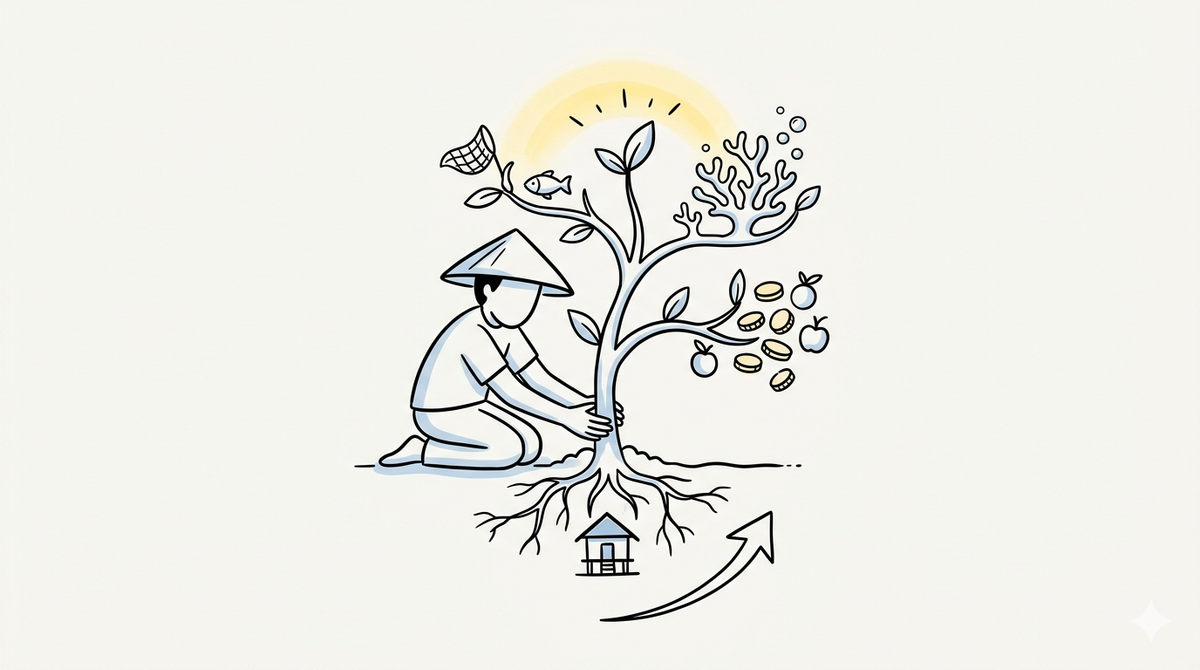
The article explores the long-term human and environmental costs of rapid tourism development in Boracay, urging a shift toward community-centered sustainability.
Every time a long weekend approaches, social media feeds fill up with the same images: crystal-clear turquoise waters, powdery white sand, and smiling faces framing a perfect tropical escape. For many working Filipinos, these destinations represent a hard-earned reward—a few days to breathe deeply, step away from the daily grind, and create memories with family. We celebrate these booming tourism hubs as proof of economic progress, proud that our local spots are recognized globally.
But behind the postcard-perfect views and the rising tourism statistics, a quieter, more concerning transformation takes place. Long before the concrete resorts are poured and the souvenir shops line the shore, these destinations are home to vibrant local communities. They are places where fishermen cast their nets, where children walk to school, and where generations of families have built their lives in harmony with nature. When a quiet town turns into a massive tourist center overnight, the rhythm of daily life shifts irreversibly.
The Evolution of a Paradise lost
The story of Boracay is perhaps the most striking example of this shift. In the 1980s, the island was a pristine sanctuary. Visitors who arrived back then recall a landscape dotted only with small, thatched houses. The beach was an endless stretch of uninterrupted white sand, and the water was so clear that you could see the thriving marine life just by wading in. Getting there required a modest ride on a double-outrigger boat, and the accommodations were basic, authentic, and deeply integrated into the local ecosystem.
By the mid-1990s, however, a massive transformation was well underway. The modest thatched homes were demolished to make way for heavy cement beachfront resorts. A sprawling commercial complex became the island's central hub. Slowly, the very elements that made the island magical began to erode.
Beneath the waves, the vibrant coral reefs started to die off, suffocated by unchecked waste and pollution. Behind the glamorous beachfront facade, a chaotic, unplanned web of cheap hotels, concrete alleys, and crowded stores emerged. Paradise had been commodified, and in the rush to accommodate more bodies and generate more revenue, the island's ecological and social boundaries were pushed to their absolute limits.
Moving Beyond the Headline Numbers
When we read about tourism booms, the reporting usually focuses on economic triumphs: millions of arrivals, billions in revenue, and massive infrastructure investments. But we rarely look at the structural trade-offs. What happens to the cost of living for a local family when an island becomes an international hotspot?
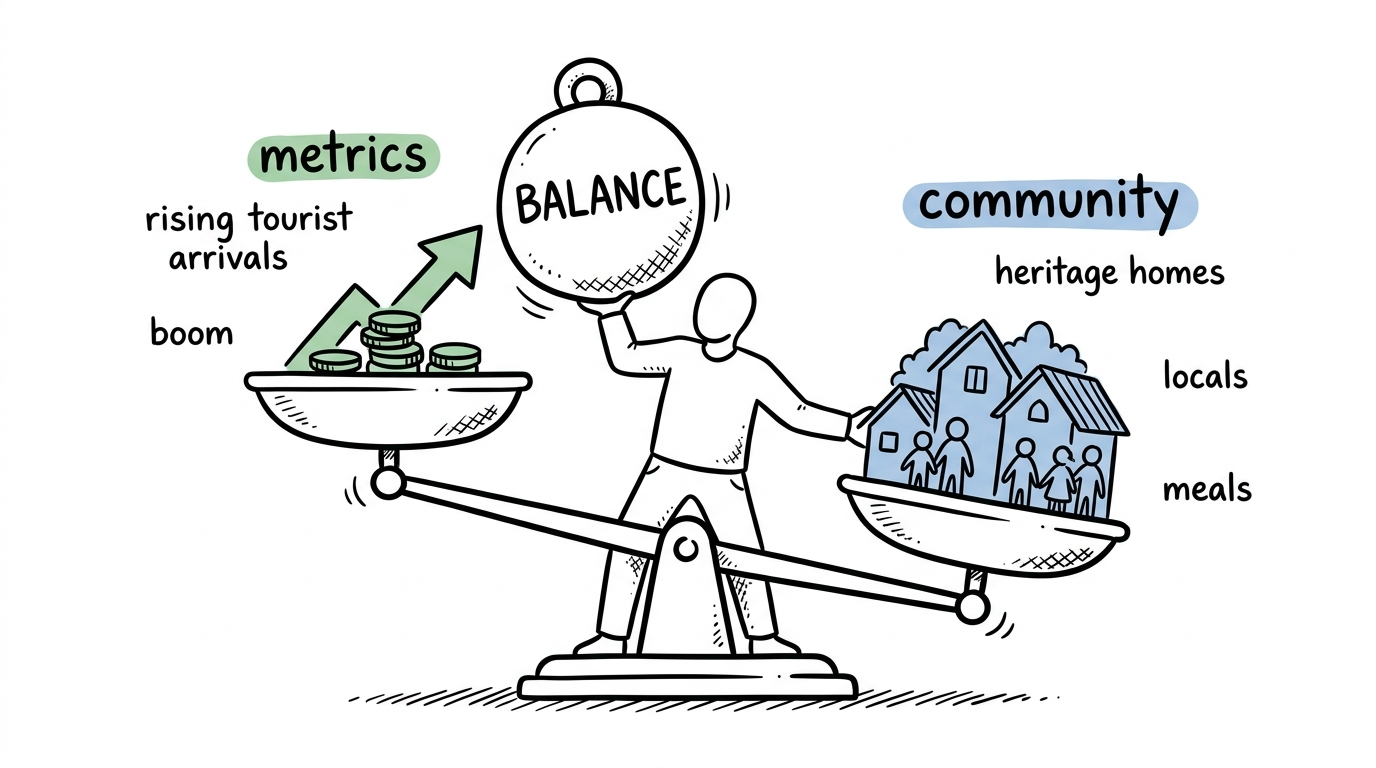
Unchecked development creates an environment where short-term financial gains are prioritized over long-term stability. When local governments and developers fail to build adequate sewage systems, proper waste management facilities, and strict zoning laws, the environment bears the initial brunt. But ultimately, the true cost is paid by the people.
When the coral reefs die, local fishermen lose their primary source of food and livelihood. When the groundwater gets contaminated, local families are forced to buy expensive bottled water. The immediate economic windfall from tourism often masks a creeping vulnerability, leaving the community entirely dependent on a fickle industry that can vanish at the first sign of an environmental crisis or a global downturn.
The Human Cost of Displace Reality
The deepest impact of this unchecked growth is felt at the household level. In the initial stages of a tourism boom, local families who own small plots of land are often enticed to sell their properties to large developers for sums of money that seem substantial at the time. Without a background in financial management or alternative sustainable livelihoods, many of these families eventually find themselves landless and displaced from the very coastal economies their ancestors nurtured.
Furthermore, the jobs created by rapid, unplanned tourism are frequently precarious. Local residents often find themselves relegated to low-wage, seasonal positions—working as cleaners, baggage handlers, or informal vendors—while managerial and high-paying roles are brought in from the outside. The promise of local enrichment transforms into a reality where residents become spectators to the wealth being generated in their own backyards.
For the youth in these communities, the changing landscape alters their future trajectory. Traditional practices, local knowledge, and cultural heritage are replaced by a homogenized commercial culture designed to please transient visitors. The sense of pride in one’s community can easily erode when that community begins to feel less like a home and more like an overcrowded theme park.
The Role of Community-Led Protection
The environmental and social distress witnessed in places like Boracay serves as a stark warning for other emerging destinations across the Philippine archipelago. It highlights the urgent need for development models that put the community's well-being on equal footing with commercial profitability. True sustainability cannot be achieved through top-down mandates or temporary closures alone; it requires active, grassroots participation.
This ongoing struggle across our coastal regions reflects exactly why community-based efforts around localized environmental monitoring and sustainable livelihood training matter. When ordinary citizens are equipped with the knowledge to test their own water quality, manage their community's solid waste, and advocate for strict zoning laws, they cease to be passive bystanders. They become the primary defenders of their own environment, ensuring that development respects both natural limits and human dignity.
Reimagining Our Travel and Growth
We must ask ourselves a fundamental question: Is it possible to celebrate growth without sacrificing the soul of our communities? Economic progress should not require the destruction of our natural heritage or the displacement of local families.
The next time we plan an escape to a beautiful local destination, perhaps we can look beyond the convenience of the massive resorts and choose to support initiatives that keep resources within the community. True paradise is not an exclusive resort built on compromised land; it is a thriving, healthy community where both nature and the people who care for it can coexist in dignity for generations to come.
Lahat tayo masaya kapag may mahabang weekend at pagkakataong magbakasyon sa mga sikat na beach. Pero naisip ba natin kung ano ang nangyayari sa mga lokal na pamilya kapag ang tahimik nilang komunidad ay biglang napuno ng mga dambuhalang semento at resort? Ang mabilis na pag-unlad ba ay laging may magandang dala, o may nawawala sa atin kapalit ng kita?

Power Our Mission, Shape the Future
We empower single parents, PWDs, youths, seniors, and stay-at-home parents through digital livelihood.
Help us build resilient communities.
BUKLURAN remains open to partnerships, sponsorships, and collaborative initiatives that create meaningful community impact.
Whether through funding, in-kind support, volunteerism, or shared services, your organization can help strengthen programs that serve underserved communities.
Do you want to take part in our free livelihood programs, scholarship assistance, and community resource pooling initiatives? Membership is completely free.
Join BUKLURAN!
Register, volunteer, and become a member today.