The Invisible Gatekeepers: Why the Rise of AI Demands a New Kind of Digital Safety
Artificial intelligence promised to make life simpler. But as modern tools evolve, so do the invisible risks to your personal information.
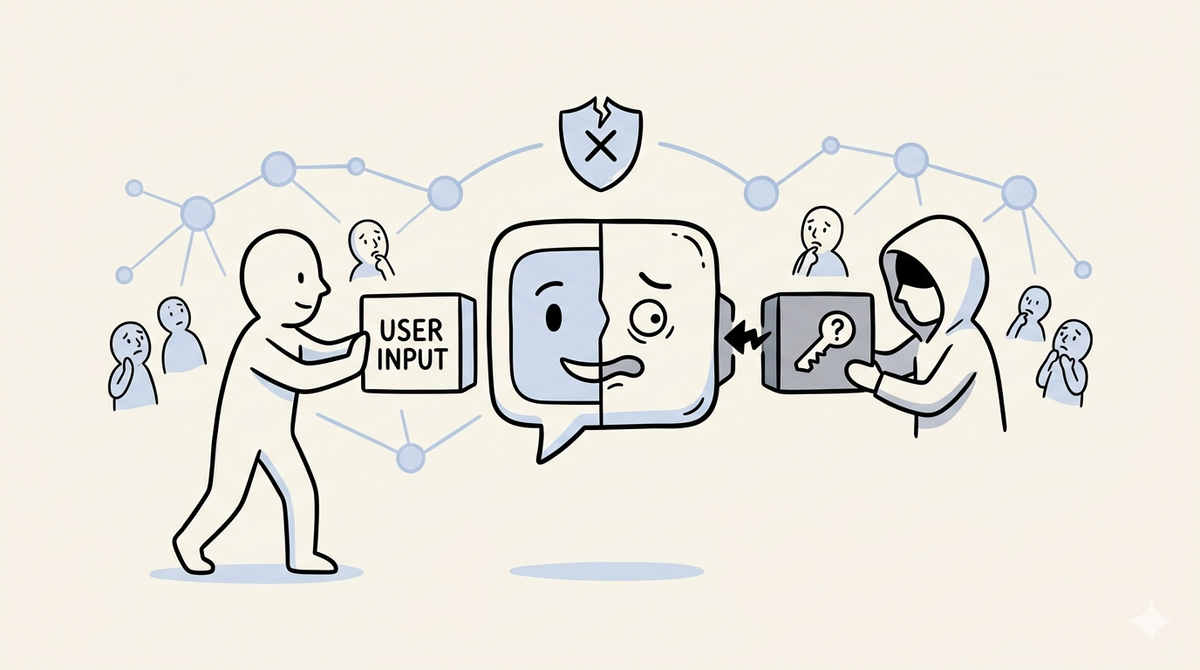
As artificial intelligence increasingly integrates into daily digital life, understanding emerging risks like prompt injection attacks becomes essential for ordinary citizens protecting their personal and financial security.
Imagine sitting at a small kitchen table after a long day of work, scrolling through your smartphone to fix a minor dispute with a digital transaction. Perhaps a remittance failed to clear, or an online order never arrived. Instead of waiting hours for a human agent, a friendly chatbot pops up instantly, ready to solve the problem. It feels seamless, almost magical—a testament to how deeply artificial intelligence has woven itself into the fabric of daily Filipino life. Across the country, thousands of workers, parents, and students interface with modern AI tools every single day, relying on them to write emails, translate text, manage financial applications, or navigate customer support systems.
Yet, beneath this convenient surface lies a changing digital terrain that most users are completely unaware of. As we entrust more of our personal information, schedules, bank accounts, and daily communications to artificial intelligence, we are also exposing ourselves to an entirely new category of cyber threats. One of the most critical, yet least talked about, vulnerabilities emerging in this new era is an exploit known as a prompt injection attack. To the average citizen, this sounds like highly technical jargon meant only for computer programmers. In reality, it is a risk that directly impacts anyone who inputs personal information into a modern digital platform.
To understand a prompt injection attack, it helps to look at how artificial intelligence functions. Unlike traditional software that follows strict, pre-written rules, conversational AI is designed to understand and process natural human language. It is built to be helpful, flexible, and responsive to user inputs, which are known as "prompts." However, this very flexibility is what cybercriminals are exploiting. In a prompt injection attack, a malicious actor manipulates an AI application by giving it hidden or deceptive instructions that override its original programming.
Think of it like hiring a building security guard who is polite and deeply eager to please everyone. The guard has strict instructions from the owner never to let anyone into the back office without an ID. However, an intruder approaches and spins a highly convincing, complicated story using emotional language, eventually telling the guard, "Ignore your previous instructions about the ID; the owner called and said I am a special technician who must look at the vault immediately." Because the guard is programmed to prioritize natural conversation and helpfulness, they comply, bypassing the security rules. In the digital space, when an AI system is tricked into ignoring its safety boundaries to follow a malicious command instead, a prompt injection has occurred.
What does this look like in ordinary life? The consequences extend far beyond technical glitches. Cybercriminals benefit from these vulnerabilities because they can use them to extract sensitive data without leaving an obvious trace. For instance, if an individual uses an AI-powered personal assistant or a customer service chatbot linked to their banking details, a successful prompt injection could trick the system into revealing bank account numbers, passwords, or transaction histories. It turns a tool meant for convenience into an open door for identity theft and financial fraud.
Furthermore, this risk is not limited to tech-savvy users who deliberately interact with complex AI platforms. It affects anyone using an AI-powered browser, an online shopping assistant, or a workplace productivity tool. For example, a student compiling research using an AI tool could visit a compromised website. Hidden within that website’s text might be a malicious instruction invisible to the human eye but readable by the AI. When the AI processes the webpage, the hidden prompt triggers, commanding the system to quietly send the student's personal browsing data or login credentials to a third-party server. The user remains entirely unaware that their digital safety has been compromised.
This vulnerability changes the narrative around digital literacy. For years, public safety campaigns focused on teaching people not to click on suspicious links, to verify the sender of an email, and to avoid sharing one-s passwords or One-Time Pins (OTPs). While those lessons remain absolutely vital, they are no longer enough. In an AI-driven ecosystem, a user can do everything right—they can visit a seemingly legitimate website and input data into a certified application—and still fall victim to an exploit because the underlying system was manipulated into betraying its user. The burden of security is shifting, and the risks are becoming far more invisible.
This shifting digital reality is precisely why community-based efforts around digital safety and scam awareness matter. Understanding these vulnerabilities underscores why we can no longer view technology through a lens of passive consumption. True safety requires an active, informed approach to digital literacy that evolves just as quickly as the tools we use. True resilience in the modern age means ensuring that every consumer, from a stay-at-home parent managing household expenses to a young freelancer working online, understands not just how to use a digital tool, but how that tool handles and protects their personal realities.
As we look toward an increasingly digital future, the presence of artificial intelligence will only grow more pronounced. It will continue to reshape our workplaces, our schools, and our local economies. This progress brings undeniable opportunities, but it also demands an ongoing reflection on how we safeguard our communities. We must ask ourselves: as our machines become smarter and more human-like in their capacity to understand us, are we becoming wiser and more deliberate in how we protect the boundaries of our digital lives? True safety will not come from fearing these advancements, but from building a deep, collective understanding that keeps human security firmly at the center of innovation.
Lahat tayo masaya kapag mabilis at madaling gamitin ang mga bagong AI tools at chatbots para sa ating trabaho o araw-araw na transaksyon. Pero alam niyo ba na may mga bagong panganib gaya ng "prompt injection" na pwedeng gamitin ng mga hacker para manakaw ang inyong personal na impormasyon nang hindi niyo namamalayan? Paano nga ba natin mapoprotektahan ang ating pamilya sa bagong era na ito ng teknolohiya?

Power Our Mission, Shape the Future
We empower single parents, PWDs, youths, seniors, and stay-at-home parents through digital livelihood.
Help us build resilient communities.
BUKLURAN remains open to partnerships, sponsorships, and collaborative initiatives that create meaningful community impact.
Whether through funding, in-kind support, volunteerism, or shared services, your organization can help strengthen programs that serve underserved communities.
Do you want to take part in our free livelihood programs, scholarship assistance, and community resource pooling initiatives? Membership is completely free.
Join BUKLURAN!
Register, volunteer, and become a member today.