The Invisible Work Shift: Why Our Culture of Care is Reaching Its Limit
We always praise the 'family-first' mindset of Filipinos. But what happens when the burden of care becomes too heavy for one household to bear?
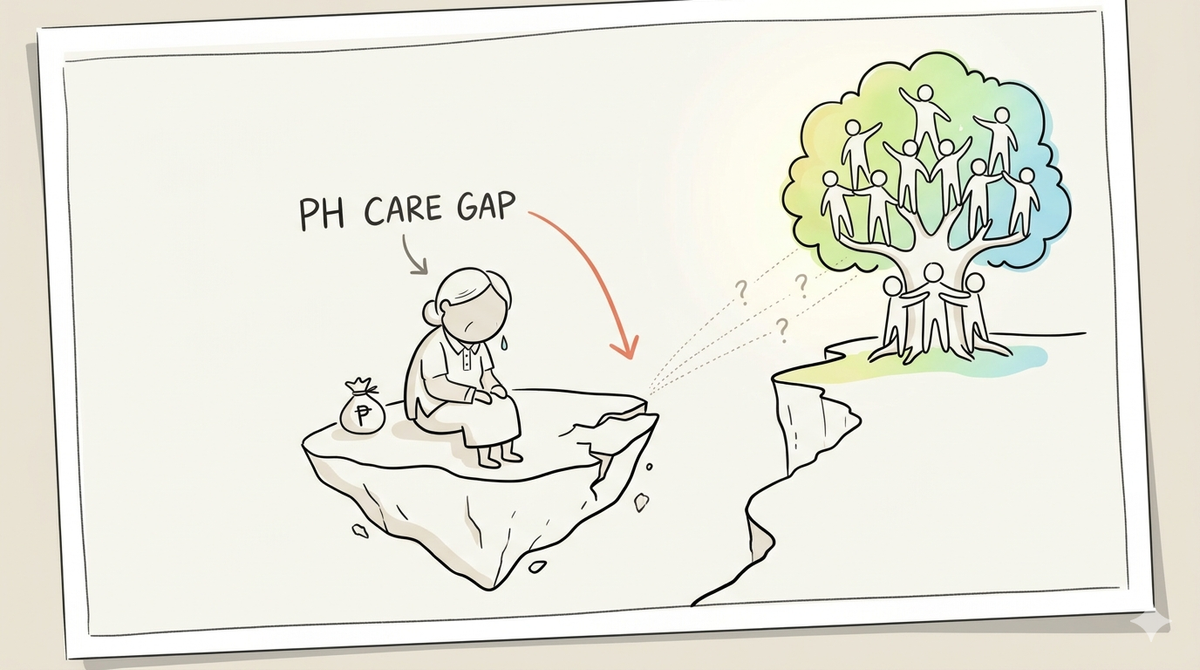
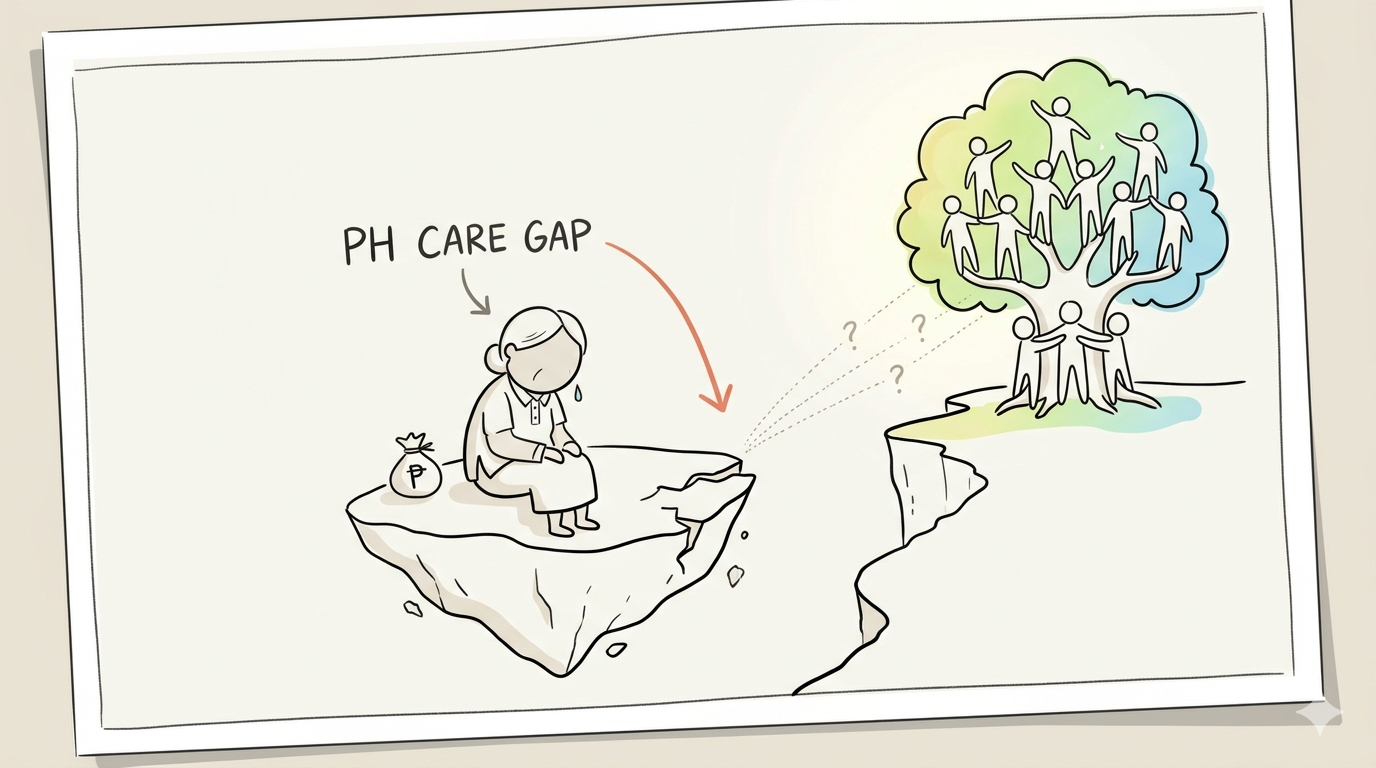
A growing care gap in the Philippines is placing immense economic and emotional strain on families, particularly women, as institutional support fails to keep pace with an aging population.
Walk into any neighborhood in the Philippines on a quiet weekday afternoon, and you will see a common sight. A mother juggling an online side-hustle while mashing vegetables for her toddler; a daughter adjusting the pillows for her bedridden father; a grandmother looking after grandchildren so her own children can commute three hours to work in the city.
For generations, we have taken pride in this standard setup. We tell ourselves it is a beautiful expression of bayanihan and deep-seated filial piety. Unlike in Western societies, we do not easily send our elders to nursing homes, nor do we willingly leave our kids with strangers. We handle everything inside the family.
But underneath this beautiful cultural narrative is a quiet, exhausting reality. The demands of caring for our loved ones are growing heavier, while the hands available to help are shrinking. What used to be a natural family dynamic is fast becoming a full-scale crisis that happens entirely behind closed doors.
Moving Beyond the "Family-First" Headline
A recent groundbreaking study titled “The Future Demand for Care in the Philippines,” published by the Philippine Institute for Development Studies (PIDS), has sounded a clear alarm. By the year 2030, the Philippines is officially projected to become an aging society, with older individuals making up 8.5 percent of our population. At the exact same time, modern life is shifting our family structures: families are getting smaller, couples are having fewer children, and the vast, multi-generational networks of aunts, cousins, and neighbors that used to share household responsibilities are stretching thin.
The math is simple but devastating: we have more people who need long-term care and fewer relatives available to give it.
When we read macroeconomic news about the country's rising gross domestic product (GDP) or new infrastructure projects, we rarely talk about the "care economy." Yet, this invisible infrastructure is what keeps the rest of the country running. If someone cannot watch the kids or look after a sick elder, another family member cannot go to work. Right now, our society is leaning entirely on the unpaid, unsupported labor of family members to bridge this massive structural gap.
The Heavy Burden Handed to Women
To understand how this care gap reshapes lives, we have to look closely at who is actually doing the work. The PIDS study brings forward some stark data: Filipino women spend an average of 28 hours a week on unpaid care work. Meanwhile, men spend about 8.6 hours.
This is not just a matter of who cleans the house or cooks the meals. This massive difference dictates who gets to have a career, who keeps a steady income, and who achieves financial independence. Consider these overlooked realities that millions of women face daily:
- The Labor Force Divide: Only about 50.3 percent of Filipino women participate in the formal workforce, compared to 72.5 percent of men.
- The Sacrifice of Ambition: Among married women who stay out of the labor force, a staggering 88 percent point to household and family duties as their primary reason for not working. For men in the same position? Only 15 percent.
- The Long-Term Financial Risk: When a woman steps away from paid work to care for an aging parent or a child with a limitation, she loses more than just her current salary. She misses out on SSS or GSIS contributions, health insurance benefits, and the ability to save for her own retirement. Decades later, she becomes an elder who needs care, with no savings of her own, continuing a cycle of financial vulnerability.
When a family member gets sick, the choice often seems simple: the person with the lower income—usually the woman—quits her job to stay home. It feels like a practical household decision in the short term, but over years, it erodes a family's upward mobility.
The High Cost of Staying Home
The care gap is also deeply divided by economic class. While affluent families can hire stay-at-home private nurses, professional caregivers, or enroll their kids in premium daycare centers, ordinary Filipino households must handle it all on their own.
According to the PIDS researchers, households that actively spend on elderly care dedicate about ₱33,278 annually. While that might sound manageable on paper to some, it represents nearly 7 percent of total household expenses for struggling families. When it comes to caring for family members living with disabilities, the financial strain escalates dramatically; raising a child with functional or developmental limitations can increase standard child-rearing costs by up to 80 percent.
Furthermore, our local care workforce is emptying out. The Philippines remains one of the premier global suppliers of professional caregivers and nurses. Thousands of our best medical workers leave the country every single month for better wages in Europe, North America, or Japan. This leaves local communities with a massive shortage of affordable, trained professional helpers. The families left behind receive remittances, but they are forced to absorb the intense, daily physical labor of caregiving without professional support.
The Structural Missing Link
Our current system treats care as an individual, private problem. If you are struggling to manage a sick parent while working a retail job, society views that as a personal family hurdle you just have to endure through grit and faith.
But the reality is that the responsibility is fractured across too many places. Government programs are split between different agencies—the Department of Health handles medical needs, the Department of Social Welfare and Development manages minor cash transfers, and local government units implement senior citizens' perks with varying degrees of consistency. There is no unified, national strategy designed to make local care accessible, community-based, and affordable.
We lack day-care spaces that allow working mothers to hold down an eight-hour shift without worry. We lack community-level senior centers that offer day respite care, giving family caregivers a few hours to rest, handle errands, or look after their own health.
Rethinking How We Protect Our Communities
This growing societal challenge reflects exactly why community-based efforts around inclusive health, localized support networks, and gender-fair social programs matter so deeply. True community development cannot just focus on building roads or offering temporary relief packs. It must look at how a community sustains itself daily—by ensuring that the people who spend their lives looking after others are not left behind to break under the pressure.
Addressing this gap requires moving beyond traditional social norms that leave caregiving entirely to women. It means advocating for workplace reforms like flexible hours, creating local government initiatives that offer community-based childcare, and building accessible care facilities that families can trust.
We must stop treating care as an endless, free resource that families can provide forever without running dry. Love and devotion are beautiful things, but they cannot pay for medicine, they cannot replace a lost salary, and they cannot prevent burnout. It is time we start caring for our caregivers by building a system that holds them up, before the quiet infrastructure of our homes gives way entirely.
Lahat tayo masaya kapag sinasabing ang pamilyang Pilipino ay mapag-aruga at hindi pinababayaan ang mga matatanda o may sakit. Pero alam ba natin ang totoong kapalit nito sa likod ng mga saradong pinto? Habang tumatanda ang ating populasyon, unti-unti nang bumibigay ang mga pamilya—partikular ang kababaihan—sa bigat ng walang bayad na pag-aalaga sa tahanan. Hanggang kailan natin kakayanin ito?
Power Our Mission, Shape the Future
We empower single parents, PWDs, youths, seniors, and stay-at-home parents through digital livelihood.
Help us build resilient communities.
BUKLURAN remains open to partnerships, sponsorships, and collaborative initiatives that create meaningful community impact.
Whether through funding, in-kind support, volunteerism, or shared services, your organization can help strengthen programs that serve underserved communities.
Do you want to take part in our free livelihood programs, scholarship assistance, and community resource pooling initiatives? Membership is completely free.
Join BUKLURAN!
Register, volunteer, and become a member today.