The Manufactured Crisis: What Happens When Leaders Gamble with Public Safety?
When a president manufactures a national crisis for political survival, who pays the price? Inside the historic sentencing in Seoul.
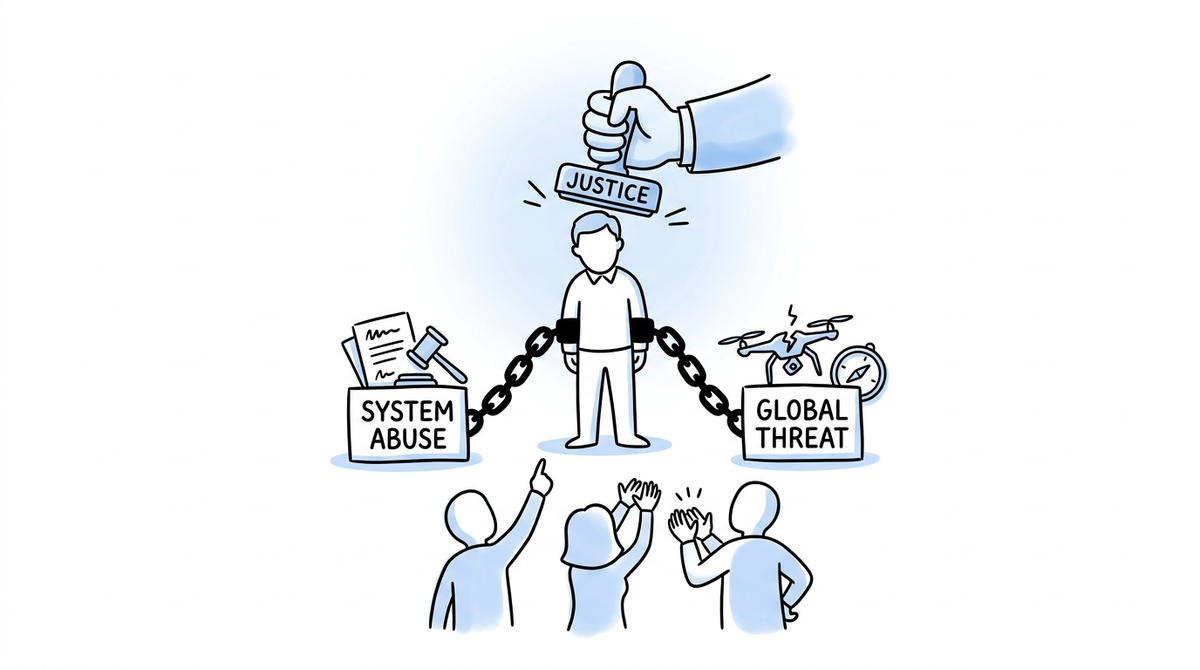
The sentencing of former South Korean President Yoon Suk-yeol highlights the dangerous reality of leaders fabricating national security crises for personal political gain and why ordinary citizens must remain vigilant.
Every single day, we make a silent pact with the world around us. When we wake up before dawn to prepare breakfast, line up for a crowded jeepney, or set aside a portion of our hard-earned wages for our children’s school tuition, we operate under a fundamental assumption: that the world will remain stable enough for our efforts to matter. We assume that our workplaces will open tomorrow, that our hard-earned money will retain its value, and that the peace we enjoy—no matter how fragile—will be preserved by those whose actual job is to protect it.
This quiet expectation is the bedrock of ordinary life for every Filipino family. We do not ask for luxury; we ask for predictability. We want to know that the rules of the game are fair and that our collective safety is not being traded away behind closed doors. But what happens when that silent pact is broken by the highest official in the land? What happens when national security, the very shield meant to protect ordinary citizens from harm, is transformed into a political weapon used to engineer fear?
The Headline from Seoul: Fabricating a Crisis
This is the sobering question at the heart of an extraordinary event unfolding in our neighboring region. On June 12, 2026, a court in Seoul sentenced former South Korean President Yoon Suk-yeol to 30 years in prison. The charges were severe: abuse of power and aiding the enemy. For a man who once climbed to the absolute peak of political power—and who ironically built his career as a tough, unyielding top prosecutor—this sentencing marks a historic and staggering fall from grace.
The specifics of the case read like a political thriller, but their consequences are entirely real. The Seoul Central District Court found that in October 2024, Yoon secretly ordered the South Korean military to send surveillance and psychological warfare drones deep into North Korean territory, specifically over its capital, Pyongyang. His legal team argued that this was a legitimate act of self-defense, a countermeasure against the trash-carrying balloons that North Korea had been floating across the border.
However, independent investigators and judges uncovered a far more calculated and sinister motive. Yoon did not deploy those drones to protect his country. He deployed them to deliberately provoke a volatile, nuclear-armed neighbor into a military reaction. The court ruled that Yoon explicitly wanted to heighten cross-border tensions and manufacture an artificial national security crisis.
Why? Because he needed a terrifying pretext to justify his sudden, disastrous declaration of martial law on December 3, 2024. It was a desperate gamble to suspend civilian rule, paralyze the National Assembly, and freeze his political opponents so he could hold onto power. This new 30-year sentence is piled on top of a life sentence he received in February 2026 for leading an insurrection during that botched self-coup. In the span of just a couple of years, an elected democratic leader transformed into a convicted criminal, exposed for using his nation’s armed forces for purely personal survival.
The Anatomy of a Manufactured Crisis
When we read international headlines about drone incursions, martial law, and high court sentences, it is easy to dismiss them as distant problems. We might look at South Korea—with its booming tech industry, global cultural influence, and immense wealth—and think their political upheavals have nothing to do with a family living in a barangay in Manila or a farming community in Isabela.
But if we look beneath the surface, the conviction of Yoon Suk-yeol exposes a universal political phenomenon that every ordinary citizen needs to understand: the anatomy of a manufactured crisis.
Fear is perhaps the most potent tool a leader can wield. When a community or a nation is made to believe that an existential enemy is at the gates, their priorities shift instantly. Long-term goals like improving public education, fixing healthcare systems, expanding livelihood programs, or lowering the price of basic food items are immediately sidelined. The public conversation becomes dominated by a single, urgent demand: survival.
Under the heavy blanket of fear, ordinary people are often willing to tolerate abuses, surrender civil liberties, and look the other way when democratic checks and balances are systematically dismantled.
Yoon’s strategy was a textbook example of this manipulation:
- Exploiting Geopolitical Flashpoints: He took a volatile, deeply rooted historical conflict—the division between the two Koreas—and deliberately poured gasoline on it.
- Prioritizing Self-Preservation: Facing plummeting domestic approval ratings and intense political pressure, he chose to fabricate a wartime environment instead of addressing the economic anxieties of his people through democratic governance.
- Weaponizing State Infrastructure: He used the state’s defensive apparatus inward, transforming tools meant for national defense into shields for his personal career.
The profound tragedy here is the complete inversion of duty. A president is given supreme command of the military to protect the public from external threats. In this case, the commander-in-chief used that very military to create a threat, turning the state's defensive apparatus inward to hold his own citizens hostage to anxiety.
Why This Echoes Beyond Borders: The Filipino Perspective
The true cost of this political gambling is never paid by the leaders who sit in fortified offices; it is paid entirely by ordinary people. To understand why a Filipino should care about this, we only need to look at our own global community.
Today, there are over a hundred thousand Filipinos living, studying, and working in South Korea. They are factory workers under the Employment Permit System (EPS), seasonal agricultural laborers, engineers, educators, and spouses. They represent thousands of Filipino households back home that rely on their steady remittances to buy groceries, pay for healthcare, and keep children in school.
When Yoon declared martial law in late 2024, those thousands of Filipino workers did not just read a piece of news; they felt the immediate shockwave of instability. The South Korean stock market plunged, economic uncertainty rippled through local businesses, and military vehicles appeared on the streets of Seoul. Across the Philippines, mothers, fathers, and siblings spent agonizing nights glued to their phones, waiting for a message confirming that their loved ones abroad were safe. When a leader decides to play chess with national security, the pawns he risks are the lives and livelihoods of regular workers, both local and foreign.
Beyond the economic and personal anxieties, there is a deeper human cost to the weaponization of national security. When public trust in state institutions is shattered, the damage takes decades to heal. If citizens can no longer trust that a military deployment or a security warning is genuine, the entire fabric of public safety begins to unravel. True public interest relies on the transparency and integrity of those in power. Without it, communities are left isolated, cynical, and constantly waiting for the next political shoe to drop.
The Price of Accountability
The institutional response to Yoon Suk-yeol’s actions offers a powerful masterclass in the rule of law. The conviction was not the result of a sudden political whim, but the culmination of a rigorous, independent judicial process.
The Seoul Central District Court did not act alone in holding this network accountable. Alongside Yoon, former Defense Minister Kim Yong-hyun was also sentenced to 30 years in prison for his direct role in executing the drone incursions. Yeo In-hyung, the former head of the Defense Counterintelligence Command, received a 15-year sentence. The judiciary effectively dismantled an entire chain of command that had chosen loyalty to a desperate leader over loyalty to the constitution.
The court rejected Yoon's defense with a crucial legal principle that should echo in every democracy:
"The powers vested in a president, including the supreme command of the armed forces and the authority to declare martial law, must be exercised strictly to protect the nation's survival and security. When a leader believes they can arbitrarily use such powers for their own political gain, it amounts to a betrayal of the people."
This institutional resilience is a vital reminder of what keeps a democracy alive. It demonstrates that a nation does not survive because of "strong leaders" or charismatic figures; it survives because of strong, independent institutions that refuse to back down, no matter how powerful the defendant.
A Final Reflection
The long, dark chapter of Yoon Suk-yeol’s presidency serves as both a stern warning and a profound source of reflection for communities everywhere, including our own. It forces us to look closely at our own political landscapes and ask ourselves what we truly value in our leadership.
It reminds us that the grand rhetoric of national security and emergency powers must always be met with healthy, democratic skepticism. When leaders tell us that the only way to save the nation is to bypass the law, silence critics, or maintain an atmosphere of constant crisis, we must remember the lesson of Seoul. Real security is never built on fear, and true peace cannot be manufactured through deception.
As we look at our own families and communities, working hard every day to build a predictable, safe, and dignified future, we are left with a vital question to carry forward: How do we cultivate a society where our institutions are strong enough, and our citizens vigilant enough, to ensure that the power we give to our leaders is always used to protect us—and never to protect them from us?
Ano ang ibig sabihin kapag ang mismong pinuno na dapat nagtatanggol sa kapayapaan ang siyang palihim na gumagawa ng gulo para lang manatili sa pwesto? Kamakailan, hinatulan ng 30 taong pagkakakulong ang dating Pangulo ng South Korea dahil sa pag-imbento ng krisis sa seguridad. Isang mahalagang babala ito para sa ating lahat tungkol sa kapangyarihan at katapatan.

Power Our Mission, Shape the Future
We empower single parents, PWDs, youths, seniors, and stay-at-home parents through digital livelihood.
Help us build resilient communities.
BUKLURAN remains open to partnerships, sponsorships, and collaborative initiatives that create meaningful community impact.
Whether through funding, in-kind support, volunteerism, or shared services, your organization can help strengthen programs that serve underserved communities.
Do you want to take part in our free livelihood programs, scholarship assistance, and community resource pooling initiatives? Membership is completely free.
Join BUKLURAN!
Register, volunteer, and become a member today.