The Missing Toilets Stalling Our Classrooms
When a school lacks a basic, working toilet, the consequences stretch far beyond discomfort. It stalls a child's entire future.
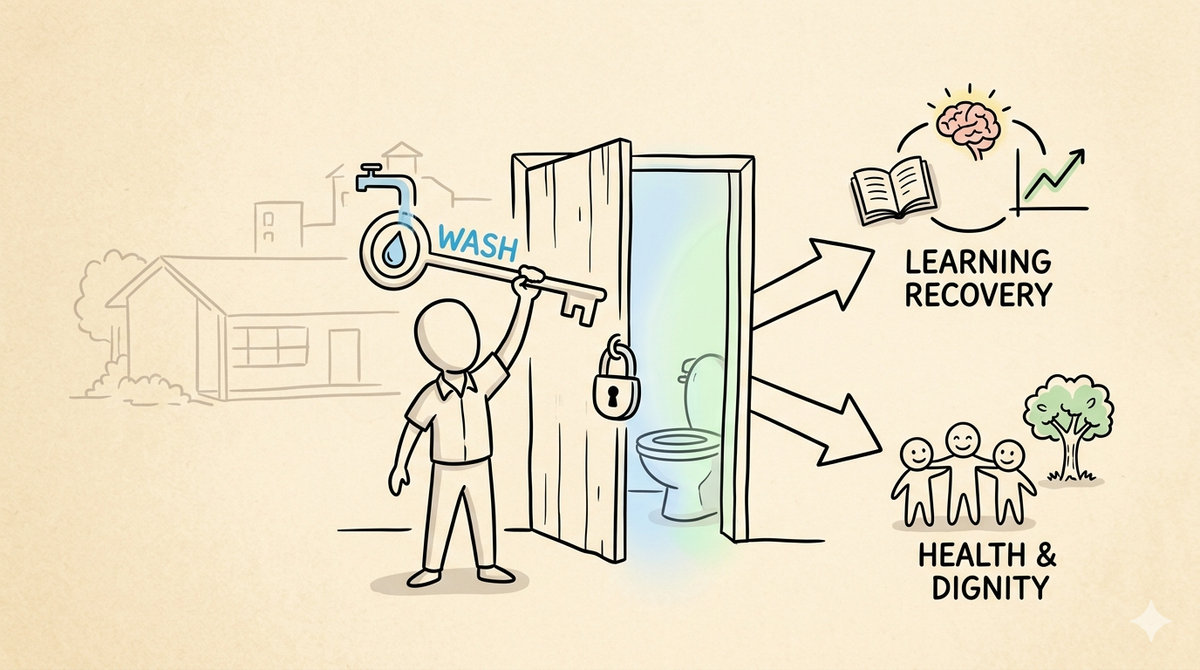
The severe lack of working toilets and sanitation facilities in 40% of Philippine public schools directly undermines children's health, dignity, and academic recovery.
Every morning across the Philippines, millions of parents wrap up a small baon, fix a uniform collar, and send their children off to school with a simple wish: mag-aral nang mabuti—to study hard and build a better future. We measure their readiness by the notebooks in their backpacks and the shoes on their feet. We talk endlessly about curriculum changes, updated textbooks, and the promise of digital classrooms.
Yet, there is a quieter, much more humbling reality waiting for these children at the school gate—one that rarely makes it into the glossy brochures of educational progress. It is the simple question of what happens when a seven-year-old child needs to use the restroom during recess, only to find a locked door, a broken pipe, or no toilet at all.
The Unspoken Math of Public School Infrastructure
A recent report by social business SATO Philippines brought an uncomfortable truth into sharp focus: approximately 40% of public schools across the country currently lack proper sanitation and toilet facilities.
To understand what 40% means, we have to look past the percentage and look at the sheer volume of children it represents. We are talking about thousands of campuses where the basic human right to Water, Sanitation, and Hygiene (WASH) is unfulfilled. This crisis is not distributed evenly. While urban centers face heavy congestion, the heaviest burdens are quietly carried by schools in remote regions, particularly in the Bangsamoro Autonomous Region in Muslim Mindanao (BARMM) and Region IV-B (Mimaropa). In these communities, geography and historic underinvestment combine to create a severe deficit in basic dignity.
For a busy parent or an observer reading the news in a comfortable office, a lack of sanitation facilities might sound like a minor logistical headache—something inconvenient, but ultimately secondary to the real work of learning algebra or reading. But for the child living through it, infrastructure is not secondary. It dictates their entire school day.
The Invisible Cost of a Missing Facility
When a school lacks proper toilets, the consequences cascade through a child’s life in ways that directly sabotage their education.
First, there is the immediate threat of waterborne illness. Young children, especially those under the age of five in early education programs or those coming from impoverished households, are highly vulnerable to pathogens that thrive in poor sanitation environments. Without clean running water and functional toilets, preventable conditions like acute diarrhea, skin infections, and intestinal parasites become recurring hazards. A sick child cannot go to school. A child who misses weeks of class due to recurring stomach ailments falls behind, leading to a frustrating cycle of catch-up that often ends in dropping out entirely.
Second, there is the profound issue of basic human dignity and psychological comfort. Consider the daily calculus of a student who realizes their school restroom is unusable:
- The Choice to Hold It: Many students choose to avoid eating or drinking throughout the day so they will not have to use the restroom, leading to dehydration, fatigue, and an inability to concentrate on lessons.
- Leaving the Campus: Some choose to walk all the way back to their homes or look for hidden spots outside school grounds just to find relief, missing valuable instruction time and exposing themselves to public safety risks.
- The Gender Gap: This crisis hits adolescent girls with a unique severity. When young women begin menstruating, the absence of a clean, private toilet with running water and a secure lock means they often choose to stay home for an entire week every month. This routine absence subtly but permanently derails their academic standing over time.
The Learning Crisis is a Structural Crisis
The country is currently locked in a deeply concerning learning crisis. International assessments have repeatedly highlighted that many Filipino learners struggle with basic reading comprehension, science, and mathematics. In response, public discourse centers on learning recovery programs, remedial reading sessions, and teacher training.
But how can a child recover their learning when they are distracted by physical discomfort? How can a teacher maintain a focused classroom when students are constantly asking to leave the premises to find a restroom, or when a significant portion of the class is absent due to avoidable waterborne illnesses?
We cannot separate the mind from the body. True learning recovery requires an environment where a child feels safe, physically comfortable, and valued. When we look at the poorest sectors of society, the public school is supposed to be an equalizer—a place that lifts children out of poverty by giving them the same opportunities as everyone else. But when a public school cannot provide a clean, safe place for a child to relieve themselves, it inadvertently reinforces the inequalities it was built to erase. It tells the poorest children that their comfort and health are negotiable.
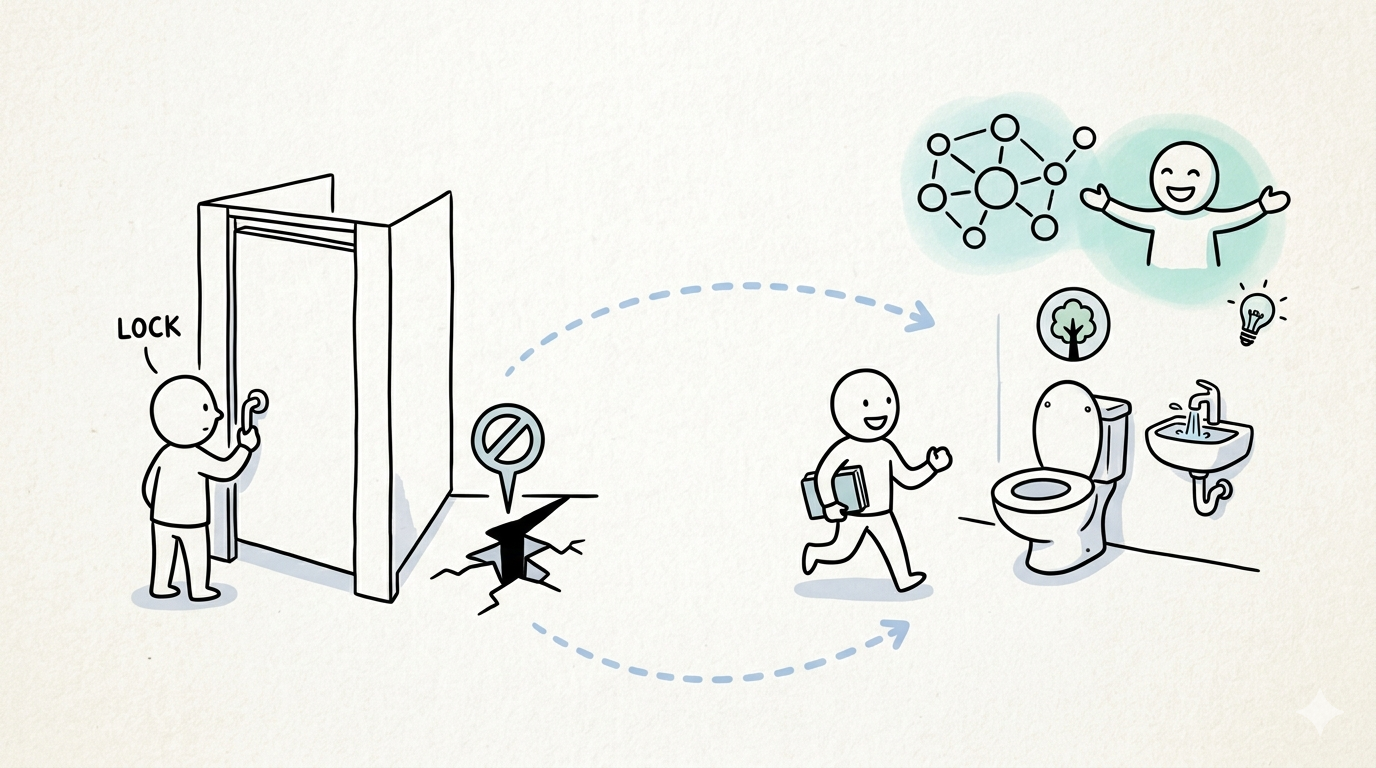
Moving Past Temporary Fixes
For decades, the standard response to school infrastructure gaps has been a mixture of community volunteerism and temporary stopgaps. During Brigada Eskwela, parents and teachers spend their own time and money patching up broken walls, painting old desks, and trying to fix plumbing with whatever materials are on hand.
While this showcase of bayanihan is deeply moving, it highlights a structural failure. A community's goodwill should be an addition to robust institutional support, not a replacement for it. Patching up a leaking pipe with plastic tape does not solve a systemic lack of clean water flow or a complete absence of sewage connectivity in a rural municipality.
Fixing the 40% gap requires viewing sanitation not as an administrative line item to be cut when budgets get tight, but as a core pillar of public health and educational policy. It means ensuring that when a new classroom building is funded, the plumbing and sanitation are given the exact same priority as the roof and the blackboards. It demands that regional allocations target the areas with the deepest deficits—ensuring that a child in BARMM or Romblon has access to the exact same standard of hygiene as a child in Metro Manila.
This issue reflects why community-based efforts around basic health and rural development infrastructure matter. When local organizations, local governments, and schools cooperate to build sustainable, easy-to-maintain sanitation systems, they are doing more than installing pipes and porcelain. They are building a protective barrier around the health of the community's children and clearing the physical obstacles that keep them from listening to their teachers.
A Question of Collective Priority
When the headlines about school rankings, budget debates, and policy overhauls fade away, the daily reality of our students remains. The true measure of our educational system is not found in the grand declarations made in session halls, but in the quiet, everyday experiences of our most vulnerable learners.
A school toilet is not a luxury. It is a fundamental tool for health, a guardian of privacy, and a baseline requirement for human dignity. Until we ensure that every single public school in the country can provide this basic necessity to its students, our conversations about world-class education and comprehensive learning recovery will remain incomplete.
As we look toward the next school year, we must ask ourselves a simple but uncomfortable question: If we cannot guarantee our children a clean, safe, and private place to fulfill their most basic human needs, how can we honestly expect them to sit quietly, focus completely, and build the future of our nation?
Lahat tayo masaya kapag nakikitang pumapasok ang mga bata sa paaralan, pero alam niyo bang halos 40% ng mga pampublikong paaralan sa bansa ang walang maayos na banyo at pasilidad para sa sanidad? Paano makakapag-aral nang mabuti ang isang bata kung ang simpleng pag-CR ay isang malaking problema araw-araw? Ano ang epekto nito sa kanilang kalusugan at kinabukasan?

Power Our Mission, Shape the Future
We empower single parents, PWDs, youths, seniors, and stay-at-home parents through digital livelihood.
Help us build resilient communities.
BUKLURAN remains open to partnerships, sponsorships, and collaborative initiatives that create meaningful community impact.
Whether through funding, in-kind support, volunteerism, or shared services, your organization can help strengthen programs that serve underserved communities.
Do you want to take part in our free livelihood programs, scholarship assistance, and community resource pooling initiatives? Membership is completely free.
Join BUKLURAN!
Register, volunteer, and become a member today.