The Price of a Plate: Why Global Economic Headlines Matter at the Local Talipapa
When global trade stumbles and AI advances, the effects are felt right at the Filipino dinner table. Here is what the data actually means for us.
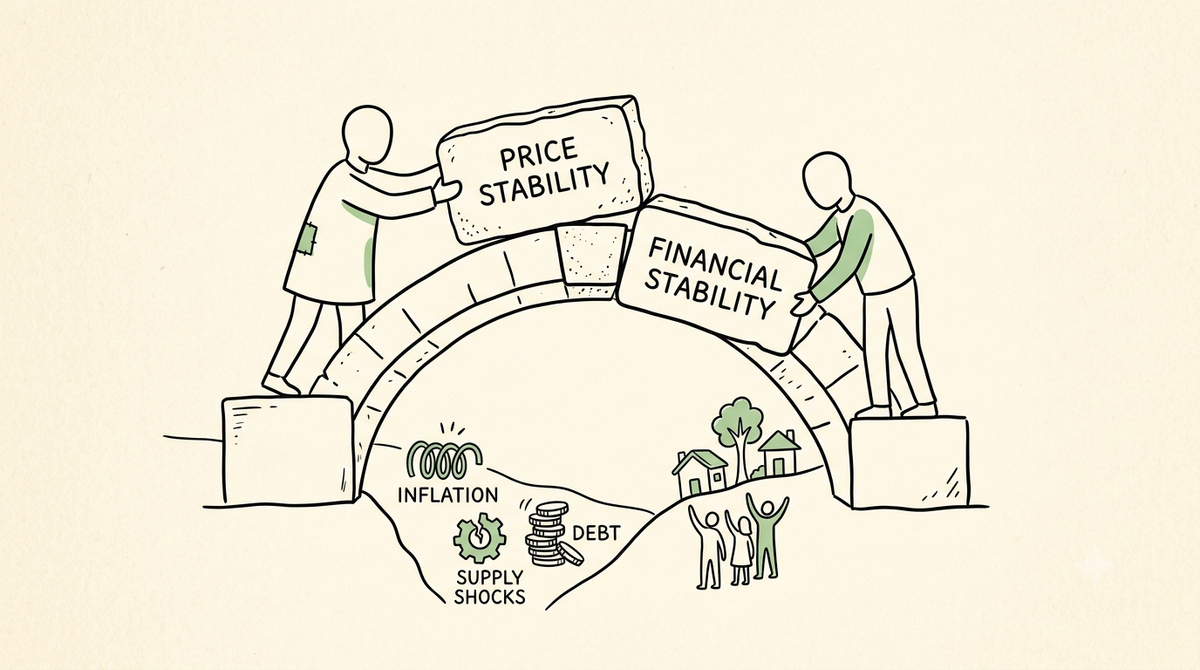
This article breaks down how global supply shocks, rising inflation, and the rise of artificial intelligence directly pressure the livelihoods and household budgets of ordinary Filipinos.
Every morning, millions of Filipinos go through a quiet, mental calculation. Parents look at the bills on the table, tricycle drivers check the price at the fuel pump, and carinderia owners adjust the portions of their viands. You do not need an economics degree to know when things are getting tighter; you feel it every time you hand over a five-hundred-peso bill at the local market and walk away with fewer groceries than you did a few months ago.
We often treat international news as something distant—events happening in far-off seas or corporate boardrooms that have very little to do with the daily commute in Manila or the harvest in Isabela. But our world is deeply interconnected. When global trade routes face disruptions and technological shifts accelerate across the globe, the ripples travel fast, eventually landing squarely on the Filipino household budget.
The Chain Reaction: From Distant Waters to the Kitchen Table
Recently, global economic discussions have focused on major pressure points affecting financial stability worldwide. One of the most critical triggers is the vulnerability of global supply chains. When critical maritime chokepoints—such as the Strait of Hormuz—experience tension or closures, the flow of energy and raw materials slows down significantly.
For a country like the Philippines, which relies heavily on imported fuel and agricultural inputs, a bottleneck thousands of miles away acts like a sudden tax on everyday life.
- Fuel Prices: Higher shipping and crude costs mean higher prices at the pump.
- Transport Costs: When diesel and gasoline go up, the cost of moving vegetables from Benguet or fish from Navotas to neighborhood markets rises accordingly.
- The Inflation Loop: This creates a cycle where businesses must raise prices just to survive, forcing households to spend more on basic necessities and less on education, healthcare, or savings.
When inflation makes a comeback, it doesn't just alter numbers on a government spreadsheet; it changes how families eat. It means choosing between buying a kilo of pork or settling for instant noodles. It forces parents to explain to their children why there are no treats this week. The danger is that when these price increases become normal, communities get locked into a stressful cycle of survival, squeezing the collective wallet of the nation.
The Double-Edged Sword of Technological Change
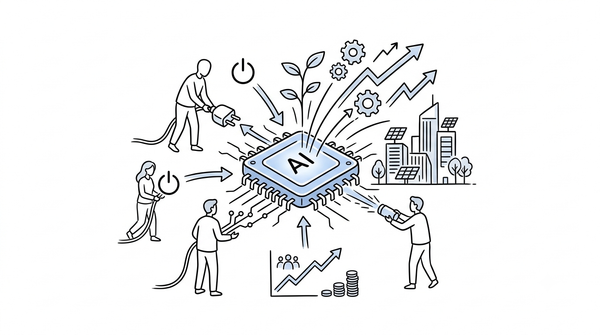
At the same time the world is grappling with price instability, a quieter but equally disruptive shift is happening in the background: the rapid rise of Artificial Intelligence (AI). Economists often speak of AI as a historic breakthrough that will skyrocket global productivity and drive long-term economic growth.
But for the ordinary Filipino worker, particularly those in the Business Process Outsourcing (BPO) sector or routine administrative roles, this transformation brings a deep sense of anxiety.
Automation can streamline operations, but it also risks displacing human labor. If a customer service platform or a data entry system can be managed by an algorithm at a fraction of the cost, what happens to the breadwinner who relies on that night-shift salary to pay for their sibling’s college tuition? A sudden shift in the labor market doesn't just mean a drop in employment statistics; it means a sudden halt to a family's upward mobility. When workers lose purchasing power, local consumption drops, causing a domino effect that hits small community businesses, sari-sari stores, and public transport drivers.
Balancing the Numbers and the People
To prevent these pressures from fracturing the economy, global financial experts emphasize the need for policymakers to secure price stability and shore up public finances. Managing debt and stabilizing the financial system are crucial steps to ensure that a country can withstand external shocks.
However, macro-level discipline must always be paired with micro-level empathy. Tightening financial belts at the state level can sometimes mean reduced spending on social safety nets if not handled carefully. For the ordinary citizen, economic stability isn't measured by a stable credit rating or a balanced fiscal budget; it is measured by job security, predictable prices, and accessible public services.
+-----------------------------------+-----------------------------------+
| Global Economic Pressure Point    | Direct Impact on Filipino Homes   |
+-----------------------------------+-----------------------------------+
| Supply Chain & Shipping Shocks    | Higher prices for food, fuel,     |
|                                   | and basic market commodities.     |
+-----------------------------------+-----------------------------------+
| Rapid AI Integration & Automation | Job insecurity in vulnerable      |
|                                   | sectors like BPOs and admin.      |
+-----------------------------------+-----------------------------------+
| Tightening Fiscal Policies        | Risk of reduced public spending   |
|                                   | on critical social safety nets.   |
+-----------------------------------+-----------------------------------+
When we look at the challenges of inflation and technological displacement, it becomes clear that macro policies need to be deeply rooted in the realities of the grass roots. High-level interventions are necessary to stabilize the boat, but local, community-driven support systems are what actually keep families afloat when the storm hits.
A Grounded Approach to Shared Challenges
These shifting realities are precisely why community-based efforts around digital literacy, sustainable local livelihoods, and grassroots financial awareness matter. When the global economy becomes unpredictable, relying solely on top-down solutions leaves a wide gap. True resilience is built when communities understand these shifts, adapt their skills to changing technological landscapes, and establish localized support networks that buffer families from sudden price spikes.
Protecting the welfare of ordinary citizens means ensuring that as technology advances, the workforce is not left behind, and as global markets fluctuate, the most vulnerable are shielded from the harshest blows.
The headlines will continue to talk about inflation rates, technological disruptions, and global supply chains in cold, mathematical terms. But behind every percentage point is a household trying to make ends meet, a student wondering if their chosen career will still exist in five years, and a worker hoping their wage can cover tomorrow's meals.
As we navigate an increasingly unpredictable global landscape, perhaps the most important question we should ask ourselves is not just how we can fix our economic systems, but how we can better protect the people who keep our communities running every single day.
Lahat tayo masaya kapag naririnig na umuunlad ang teknolohiya at nagbabago ang ekonomiya ng mundo. Pero bakit nga ba habang sumisikat ang Artificial Intelligence (AI) at nagbabago ang takbo ng pandaigdigang kalakalan, lalong sumisikip ang badyet ng pamilyang Pilipino sa araw-araw? Ano ang kinalaman ng mga balita sa ibang bansa sa presyo ng ulam sa talipapa ninyo?

Power Our Mission, Shape the Future
We empower single parents, PWDs, youths, seniors, and stay-at-home parents through digital livelihood.
Help us build resilient communities.
BUKLURAN remains open to partnerships, sponsorships, and collaborative initiatives that create meaningful community impact.
Whether through funding, in-kind support, volunteerism, or shared services, your organization can help strengthen programs that serve underserved communities.
Do you want to take part in our free livelihood programs, scholarship assistance, and community resource pooling initiatives? Membership is completely free.
Join BUKLURAN!
Register, volunteer, and become a member today.