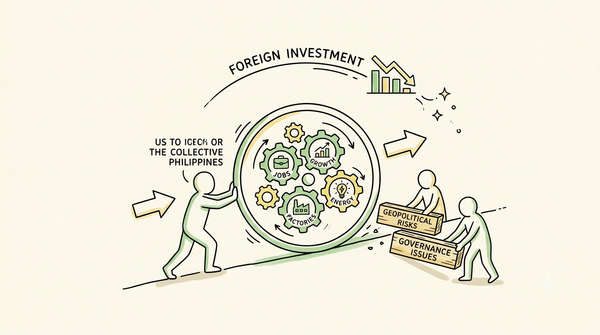
The Price of Political Noise: Why Stability in Manila Matters at Your Dinner Table
Think political drama is just for the evening news? Here is how unstable governance directly impacts the prices of the things you buy.
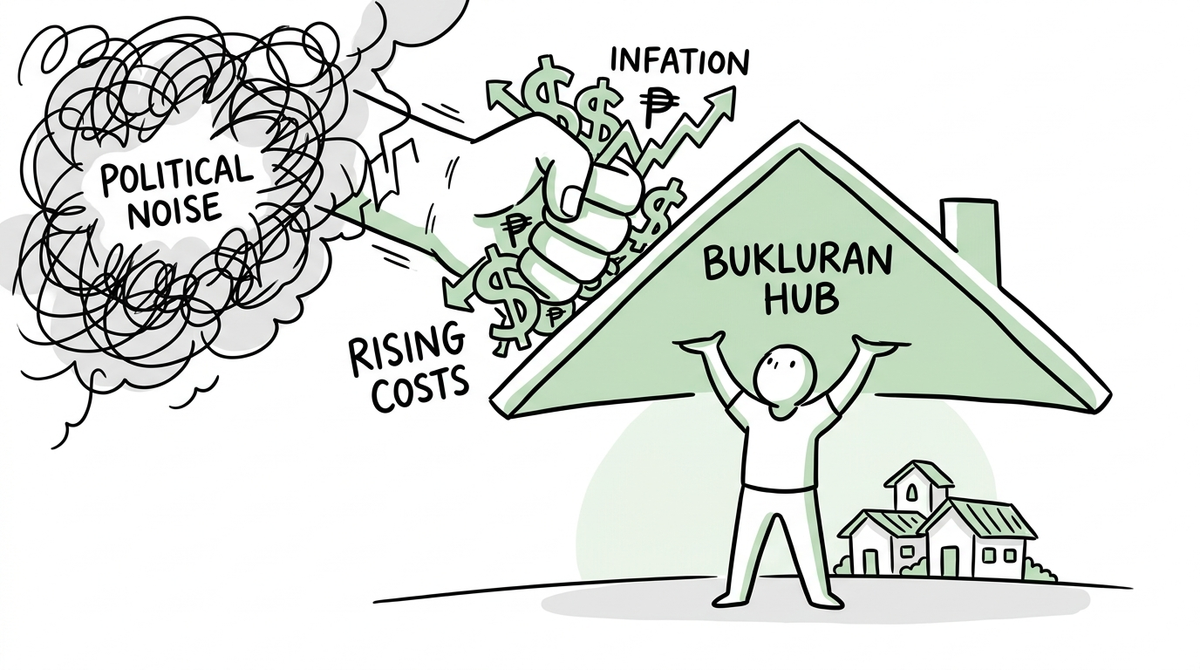
Political instability and a loss of credibility in institutions like the Senate create economic ripples that weaken the peso and drive up prices, hitting everyday Filipino consumers the hardest.
Imagine waking up, heading to the nearby talipapa, and finding out that the price of a kilo of rice or a liter of cooking oil has ticked upward yet again. When you ask the vendor why, they point to wholesale costs, transportation expenses, or the weak value of the Philippine peso. It is a frustratingly familiar scene for millions of ordinary Filipino families trying to stretch a hard-earned budget.
Now, imagine turning on the television later that evening and seeing politicians arguing on the Senate floor, shifting leadership titles, or trading accusations of irregularities. To a busy parent or an exhausted commuter, these two scenes feel worlds apart. It is easy to dismiss the political bickering as a distant, abstract circus—noise that belongs strictly inside the halls of power, with zero relevance to whether a family can afford a decent dinner.
But the reality of how our country works is far more interconnected than it seems. The drama in our highest institutions is not just a spectacles for the headlines; it acts as a direct, hidden tax on the pocketbooks of every day citizens.
The Unseen Link Between Politics and Prices
Recently, economists have pointed out a worrying trend that connects these two realities. Diwa C. Guinigundo, a former deputy governor of the Bangko Sentral ng Pilipinas and now a principal advisor at GlobalSource Partners, raised a warning that should make us all pause. He observed that the recent wave of political instability, leadership shake-ups, and controversies within the Philippine Senate have mutated into a severe risk for the broader economy.
To understand why a busy executive or a foreign investor cares about this, we have to look at what economists call "institutional credibility." Think of it as a country's reputation for being stable, predictable, and fair. When a nation’s foundational institutions—like the Senate—appear consistent and aligned with constitutional principles, it sends a signal of safety. It tells people who build factories, invest in local businesses, or lend money to our markets that the rules of the game will not change overnight.
However, when those institutions fall into chaotic infighting or face allegations of irregularities, that reputation cracks. This loss of confidence does not stay isolated within political circles. It immediately spills over into the financial sector, and its first victim is often the value of our currency.
From Senate Floor to the Foreign Exchange
How does a political dispute actually weaken the currency in your wallet? It happens fast. When international and domestic investors sense political uncertainty, they begin to see the country as a higher risk. To protect their capital, they often pull their investments out of the local market or convert their funds into safer currencies like the US dollar.
As the demand for dollars rises and the demand for pesos falls, our local currency loses value. For instance, analysts noted that when the recent Senate friction intensified, the peso faced immediate downward pressure, sliding significantly against the dollar in a matter of weeks.
This is where the abstract concept of "investor sentiment" hits home for ordinary Filipinos:
- Imported Goods Get Costly: The Philippines relies heavily on imported goods, most notably fuel and structural supplies. When the peso weakens, it takes more pesos to buy the exact same barrel of oil from the international market.
- The Logistics Domino Effect: Higher oil prices mean costlier diesel. Costlier diesel means trucking companies, delivery vans, and jeepney drivers have to pay more to operate. To survive, they must pass those costs along.
- The Grocery Store Result: By the time agricultural products or manufactured goods travel from farms and ports to your neighborhood store, the price has been inflated at every single step of the journey.
When our political institutions lose their footing, the resulting instability acts like a quiet engine driving up the cost of living. It makes the central bank's job of managing inflation vastly more difficult, leaving families to bear the burden of prices that refuse to come down.
The True Cost to Everyday Communities
Beyond the math of inflation and foreign exchange, there is an even deeper toll that political instability takes on our local communities: the erosion of social cohesion and public trust.
When people see constant volatility at the top, a sense of collective anxiety begins to take root. Families become hesitant to spend on long-term needs, and small neighborhood entrepreneurs hold back on expanding their tiny businesses or hiring help because they cannot predict what next month will look like. This collective hesitation slows down the entire local economy.
When governance is distracted by survival and political maneuvering, the essential, everyday needs of the public—such as clear policy-making, regulatory consistency, and efficient public services—frequently get pushed to the back burner. Infrastructure projects can face delays, social welfare distribution can become bogged down in transitions, and long-term planning for food security or disaster preparedness loses its momentum. The systemic risk created by institutional noise is, ultimately, a risk to human well-being.
Guarding Stability from the Ground Up
This ongoing vulnerability highlights exactly why community-centered, grassroots frameworks are so critical to the country's social fabric. While the macroeconomic systems shake at the top, the true resilience of the country is built and maintained from the ground up.
This deep need for institutional consistency and reliable environments reflects why community-based efforts around programs like the BUKLURAN Hub matter so much. When national spaces experience volatility, having decentralized, stable local spaces allows communities to maintain their focus on practical development, localized digital literacy, and immediate livelihood support.
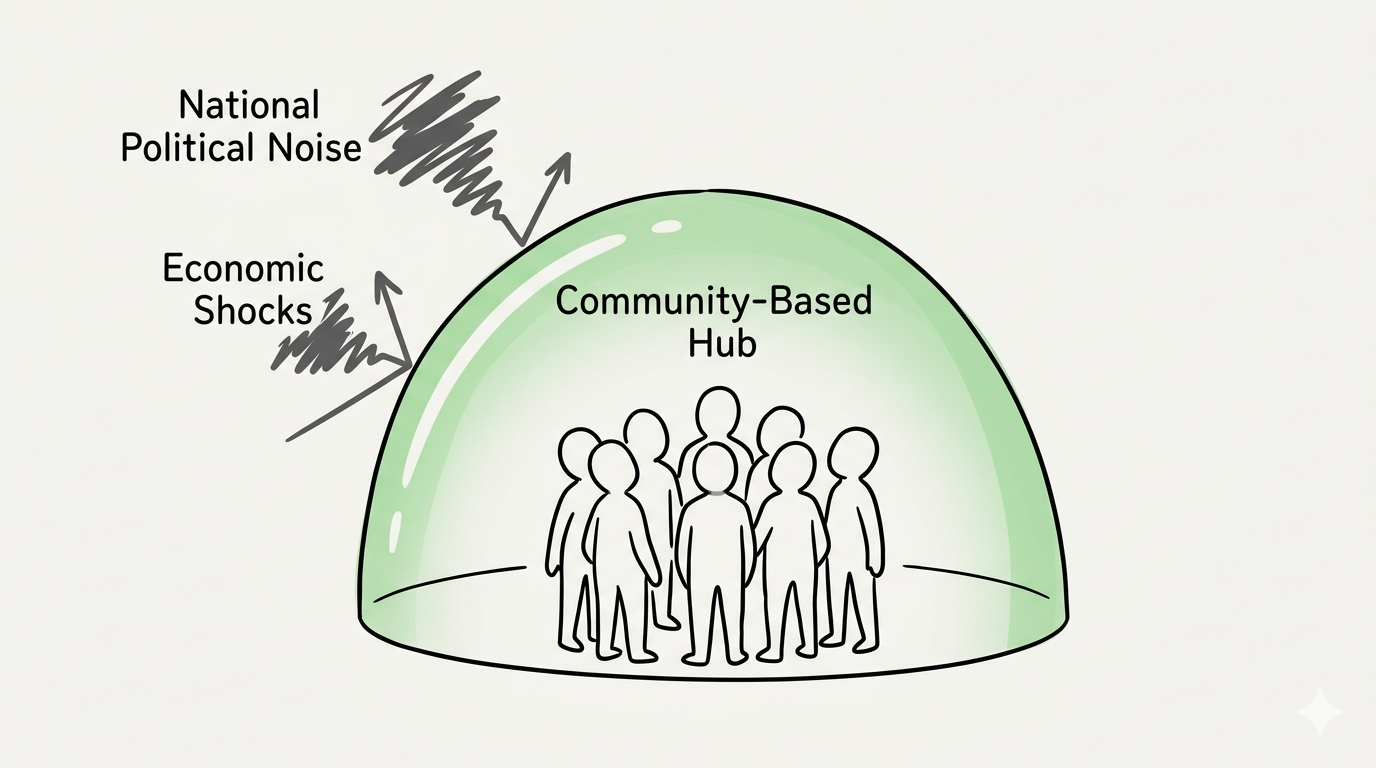
By ensuring that local spaces remain structured, transparent, and insulated from shifting political winds, communities can continue to build up their own safety nets. This baseline structure provides everyday citizens with a reliable environment where they can learn new skills, organize community projects, and find steady support—even when the macroeconomy is experiencing rocky times.
Moving Past the Spectacle
It is easy to look at political headlines as mere entertainment or a frustrating drama that can simply be muted with a remote control. But we cannot afford to look away entirely, nor can we afford to view politics as something disconnected from our physical survival.
The next time we see institutional stability brought into question, we shouldn't just ask who is winning the political game or who will take the next leadership seat. Instead, we need to ask a much more vital question: How will this affect the cost of the food on our tables, the security of our livelihoods, and the stability of our neighborhoods?
True progress does not come from a system that functions only when things are quiet at the top. It comes from building a society where institutional integrity is held to a high standard, and where our communities are strong enough, organized enough, and stable enough to keep moving forward—no matter how loud the noise gets.
Lahat tayo masaya kapag matatag ang takbo ng buhay, pero alam mo ba na ang pulitikang napapanood mo sa balita ay may direktang epekto sa laman ng pitaka mo? Kapag nawawalan ng tiwala ang mga namumuhunan dahil sa gulo sa gobyerno, humihina ang piso at nagmamahal ang mga bilihin. Ang ingay sa itaas, ramdam hanggang sa kusina natin.

Power Our Mission, Shape the Future
We empower single parents, PWDs, youths, seniors, and stay-at-home parents through digital livelihood.
Help us build resilient communities.
BUKLURAN remains open to partnerships, sponsorships, and collaborative initiatives that create meaningful community impact.
Whether through funding, in-kind support, volunteerism, or shared services, your organization can help strengthen programs that serve underserved communities.
Do you want to take part in our free livelihood programs, scholarship assistance, and community resource pooling initiatives? Membership is completely free.
Join BUKLURAN!
Register, volunteer, and become a member today.