The Principal’s Call: Why Localized School Closures Matter More Than You Think
When the weather turns bad, who decides if your child stays home? Inside the shift to localized school cancellations and what it means for you.
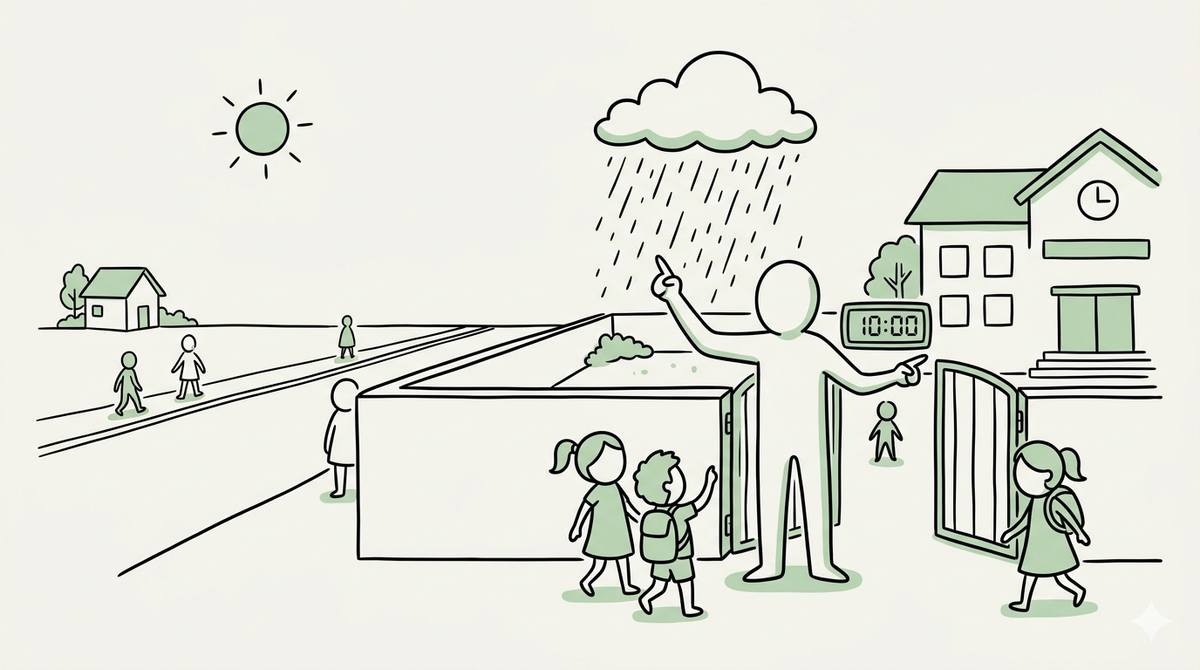
The Department of Education's shift toward localized class suspensions empowers school heads to make quick safety decisions, balancing student welfare with the critical need to prevent learning loss.
Imagine waking up at five o’clock in the morning to the heavy, rhythmic thumping of rain on a corrugated iron roof. For millions of Filipino parents, this sound instantly triggers a familiar, stressful routine. You look out the window to check if the street is flooding. You turn on the television or scroll through social media feeds, waiting for an official announcement from the provincial governor or the city mayor. Should you cook breakfast? Should the children put on their uniforms? By the time a blanket suspension for the entire city is announced at seven o’clock, the kids are already at the jeepney stop, soaked, frustrated, and forced to turn back.
This guessing game has been a staple of the rainy season for generations. However, a recent policy shift by the Department of Education (DepEd) aims to fundamentally change how these decisions are made. School principals and heads have now been granted the direct authority to implement localized class suspensions. Instead of waiting for a sweeping mandate that covers an entire province or city, individual schools can call off classes based on the exact conditions of their immediate neighborhood, in consultation with division superintendents and local government units.
On paper, it sounds like an administrative adjustment. But for the ordinary Filipino household, this is a change that hits right at the kitchen table. It addresses a glaring reality: a tropical storm or a local emergency does not treat every barangay equally. While the main highway near the city hall might be perfectly dry and passable, the low-lying community three kilometers away where the elementary school sits might already be knee-deep in muddy water.
Moving Beyond the Blanket Solution
For years, the standard response to typhoons, extreme heat waves, or sudden transport strikes has been the division-wide or city-wide suspension. While safe, this generic approach often creates secondary problems. When an entire city shuts down its schools because one zone is high-risk, thousands of students in unaffected areas lose a crucial day of structured learning.
The country is currently grappling with a severe instructional deficit, exacerbated by years of pandemic-era disruptions and subsequent climate-driven school closures. Every single day inside a classroom matters. Under the new guidelines, the introduction of a localized decision-making framework recognizes that the person best equipped to judge the safety of a school is the person who manages it every day. A principal knows if the courtyard turns into a pond after two hours of rain. They know if the nearby creek is rising, or if the afternoon heat inside particular roofing configurations has become unbearable and unsafe for children.
This policy establishes what is known as a Learning Continuity Framework. The objective is not simply to cancel school more efficiently, but to ensure that when a physical classroom becomes unsafe, the education system can pivot without completely grinding to a halt. It gives schools the flexibility to select appropriate learning responses—such as shifting immediately to modular or asynchronous learning—based on the actual readiness and physical safety of both the learners and the teachers.
The Weight on Everyday Lives
To understand why this matters, one must look at the ripple effects of a school suspension on an ordinary working family. When classes are canceled abruptly, the burden does not fall on the student alone; it reshapes the day for the entire household.
- The Working Parent’s Dilemma: For daily-wage earners, factory workers, or micro-retailers who cannot work from home, a sudden school closure creates an immediate childcare crisis. A mother may have to skip a day of work—and lose a day's pay—to stay home with a young child, or rely on an elderly grandparent who may struggle to manage active kids during an emergency.
- The Safety and Transit Risk: Many students travel significant distances to attend high school. A localized suspension means preventing students from boarding crowded tricycles or wading through flooded corridors just to find out their classrooms are empty. Conversely, it prevents students from being trapped at school when a sudden, hyper-local downpour floods the immediate vicinity while the rest of the municipality remains clear.
- The Cost of Lost Momentum: Education is cumulative. When generic suspensions occur frequently, teachers face immense pressure to compress lessons, skipping deep-dive discussions to finish the curriculum before the school year ends. Students bear the brunt of this rushed pace, often failing to master foundational concepts in math, reading, and science.
By localizing the mechanism, the education system attempts to minimize these disruptions. If a community is safe, the children stay in school. If a community is compromised, the decision to suspend is made swiftly at the gates, reducing wasted travel expenses and unnecessary exposure to danger.
The Challenge of Decentralized Decisions
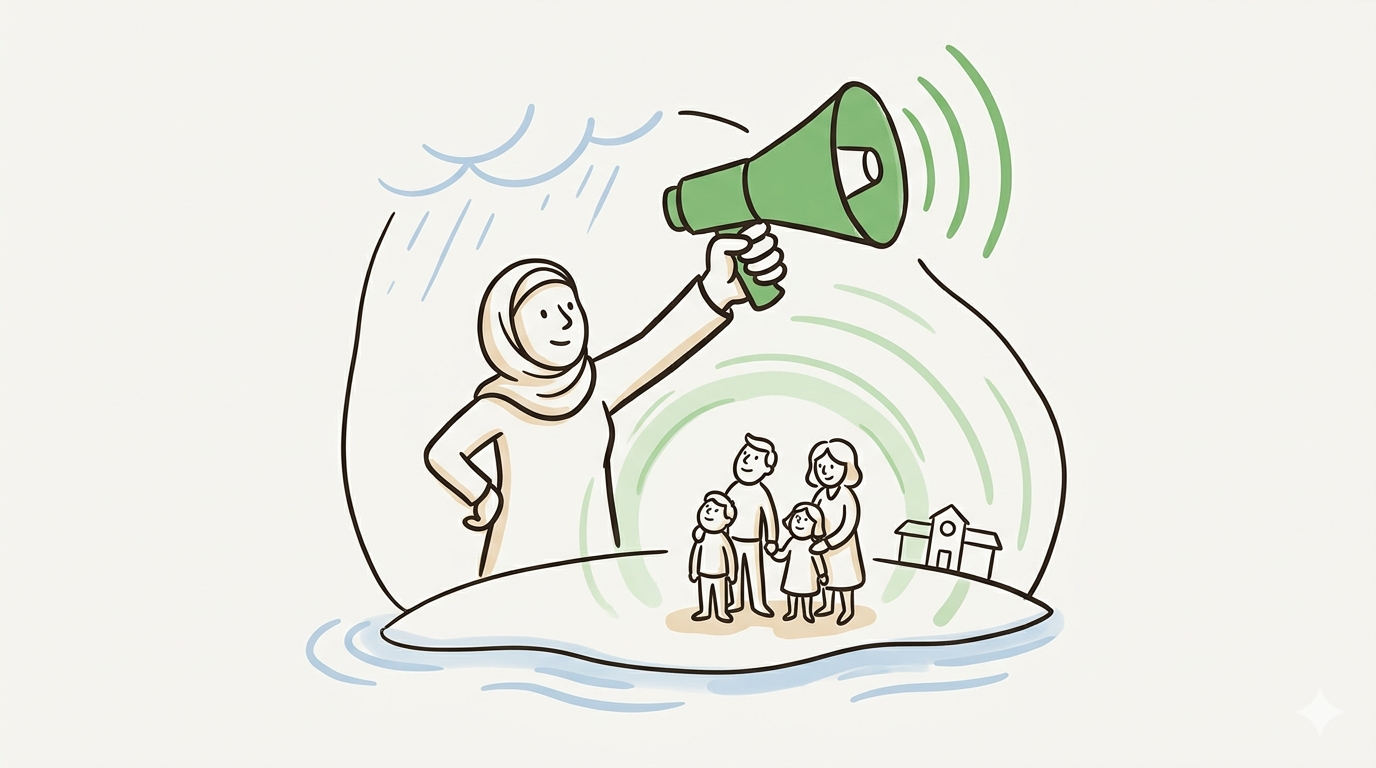
While the policy introduces much-needed flexibility, it also shifts a massive amount of pressure onto the shoulders of local school heads. Making the call to suspend classes requires courage and accurate, real-time information. A principal must balance the real threat of learning loss against the paramount priority of child safety.
This requires a seamless channel of communication between the school, the barangay officials, and the local disaster risk reduction management councils. If a principal lacks clear data on rising river levels or approaching weather fronts, localized suspension could lead to inconsistent decisions across neighboring baranggays, confusing parents who have children attending different schools in the same vicinity. The success of this decentralized approach depends heavily on how well local communities cooperate, share information, and trust the judgment of their institutional leaders.
Grounding Safety in the Community
This shift toward localized, community-specific solutions highlights a broader truth about resilience: the strongest responses to systemic risks are almost always built from the ground up, rather than handed down from a distant central authority.
When institutions trust local leaders to make critical decisions, it fosters a culture of active preparedness rather than passive waiting. This philosophy mirrors why community-based efforts around disaster risk reduction and localized social welfare matter so deeply. Whether managing a public school during a typhoon or maintaining neighborhood safety nets during an economic downturn, the individuals who live and work within a specific area are invariably the ones best positioned to protect it. They do not need to wait for a macroscopic view of a crisis because they can see its immediate impact right outside their doors.
As the country navigates increasingly unpredictable weather patterns and evolving public safety challenges, the localized suspension policy serves as a practical test case for decentralized governance. It challenges communities to become more organized, more communicative, and more self-reliant.
The next time the dark clouds gather over your neighborhood, the decision that affects your child's morning will no longer depend on an official scanning a map of an entire province from a distant office. Instead, it will rely on a local educator looking out at the same streets your children walk, evaluating the risks with firsthand knowledge, and making a choice that keeps both safety and learning in proper balance.
Lahat tayo masaya kapag ligtas ang mga bata sa banta ng baha o masamang panahon. Pero paano kung walang ulan sa inyong lugar, pero suspendido pa rin ang pasok dahil bumabaha sa kabilang dulo ng lungsod? Sa bagong direktiba ng DepEd, ang mga principal na ang magpapasya kung may pasok o wala. Handa nga ba ang mga paaralan sa bagong responsibilidad na ito, at ano ang epekto nito sa araw-araw na diskarte ng pamilyang Pilipino?

Power Our Mission, Shape the Future
We empower single parents, PWDs, youths, seniors, and stay-at-home parents through digital livelihood.
Help us build resilient communities.
BUKLURAN remains open to partnerships, sponsorships, and collaborative initiatives that create meaningful community impact.
Whether through funding, in-kind support, volunteerism, or shared services, your organization can help strengthen programs that serve underserved communities.
Do you want to take part in our free livelihood programs, scholarship assistance, and community resource pooling initiatives? Membership is completely free.
Join BUKLURAN!
Register, volunteer, and become a member today.