The Rain Before the Dry: Why a Looming Super El Niño Demands Our Attention Today
Beyond the technical data from weather bureaus lies a deeply human reality: how a warming Pacific Ocean changes what we pay for food and water.
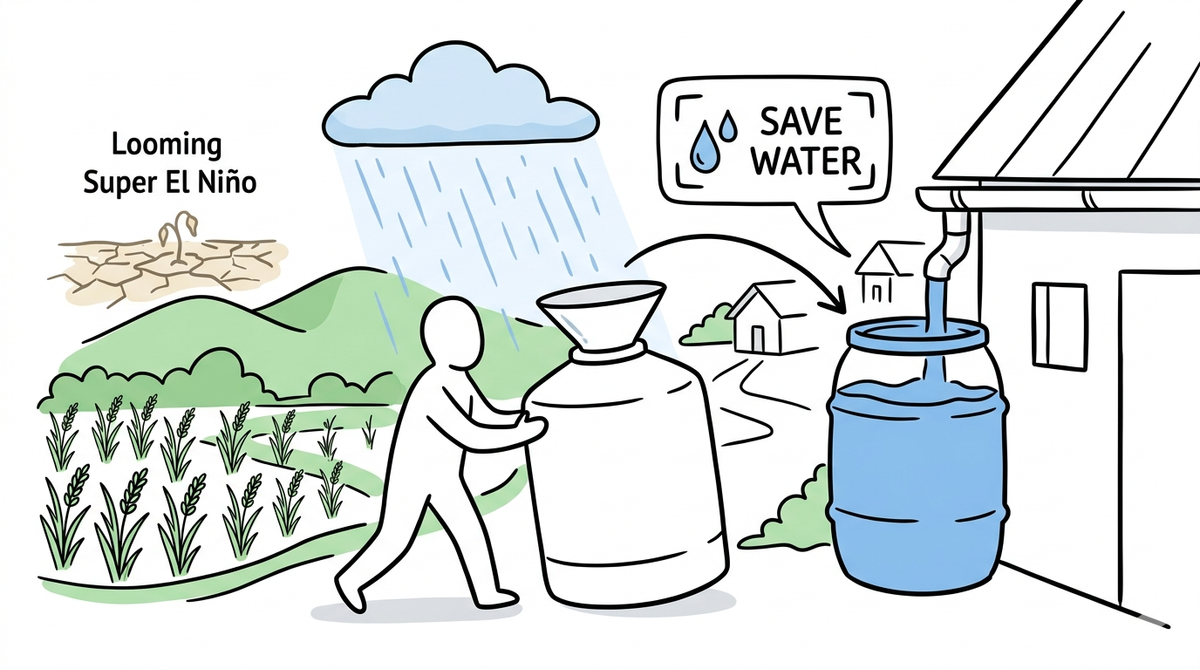
The incoming Super El Niño threatens the everyday stability of Filipino families through a complex mix of monsoon-driven floods, agricultural deficits, and rising utility costs, demanding proactive community-level water and resource management.
Step into any typical Filipino kitchen during the early mornings, and you will find a familiar rhythm. A mother carefully measures water to cook rice, a father fills a plastic drum in the bathroom "just in case" the taps run dry later in the afternoon, and children check outside to see if they need an umbrella for their walk to school. For millions of families across the country, water is not an abstract environmental concept. It is the lifeblood of the morning routine, the factor that determines whether a small neighborhood eatery can open, and the invisible boundary between a secure week and an expensive struggle.
In recent weeks, the Philippine Atmospheric, Geophysical and Astronomical Services Administration (PAGASA) raised its ENSO Alert System to an El Niño Alert. State meteorologists reported a 92% probability of El Niño emerging between June and August, with a strong warning that it could intensify into a "very strong" or "Super" El Niño toward the end of the year and persist into early 2027.
To the busy citizen, these meteorological acronyms can easily sound like distant background noise. However, when science warns of a "Super El Niño," it is not just describing a change in global weather charts. It is predicting a series of events that will directly alter the cost of a kilo of rice, the reliability of the electricity powering our fans, and the safety of our immediate neighborhoods.
The Climate Paradox: Floods in the West, Drought in the East
Understanding El Niño in the Philippines requires breaking a very common misconception. Many people assume that the announcement of El Niño means the rain will instantly vanish, replaced by clear skies and immediate dry spells. The reality is far more complex and dangerous.
During the early stages of a strong El Niño, the climate phenomenon behaves like an amplifier for existing weather patterns. As the southwest monsoon—locally known as the habagat—takes hold from June to September, the abnormal warming of the Pacific Ocean can actually intensify monsoon winds.
This creates a stark geographical split across the archipelago:
- The Western Section (Luzon and Visayas): Regions facing the West Philippine Sea are likely to experience more frequent, intense rain showers and thunderstorms. The threat of localized flooding and landslides does not disappear; in fact, the risk of extreme weather systems reaching typhoon or super typhoon strength increases because storms spend more time gathering energy over warmer ocean waters.
- The Eastern Section and Southern Regions: Areas across Mindanao, the Bangsamoro Autonomous Region in Muslim Muslim Mindanao (BARMM), and the Caraga region are already projected to experience below-normal rainfall as early as August. By October and November, this dry footprint is expected to expand across the main agricultural hubs of Central and Northern Luzon.
This means that while families in Western Visayas or Metro Manila might be wading through flooded streets and carrying umbrellas today, the underlying water reserves that sustain them through the rest of the year are quietly under threat.
The Ripple Effect on the Market Basket and Power Bills
Why should an ordinary Filipino family care about a weather pattern that peaks months from now? Because the economic damage of a Super El Niño builds up slowly before hitting the household budget all at once.
Consider the immediate pressure on local agriculture. A severe El Niño can sharply reduce crop yields, with historic studies showing drops of 20% to 25% for domestic rice production and up to 25% for vital crops like sugarcane in Western Visayas. When farmlands in Nueva Ecija, Isabela, or Iloilo lack consistent water, the impact is felt directly at the local wet market. Reduced supply drives up retail food prices, forcing families to allocate a larger portion of their daily wages to basic nutrition.
At the same time, the country's energy grid is deeply tied to its water supply. Multi-purpose dams like Angat, Magat, and Pantabangan do triple duty: they provide drinking water, irrigate thousands of hectares of crops, and generate hydropower to supplement the electrical grid. When reservoir inflows experience deficits of up to 50%, hydropower generation drops significantly. To keep the lights on, power distributors must rely on more expensive fossil-fuel alternatives, leading to higher generation charges on the monthly electricity bill precisely when families need electricity most to combat rising temperatures.
Furthermore, water scarcity introduces subtle but real public health risks. When local water pressure drops or service interruptions begin, families are forced to store water in open containers, unwittingly creating breeding grounds for dengue-carrying mosquitoes. The Department of Health also warns that limited access to clean water for basic sanitation frequently leads to spikes in waterborne illnesses, diarrhea, and skin infections within densely populated urban communities.
Moving From Panic to Community Preparedness
When faced with large-scale climate shifts, it is easy to default to a feeling of helplessness or to assume that structural solutions are entirely the responsibility of large institutions and municipal governments. While large-scale infrastructure adjustments and agricultural subsidies are vital, the daily survival of a neighborhood during a dry spell depends heavily on local, collective action.
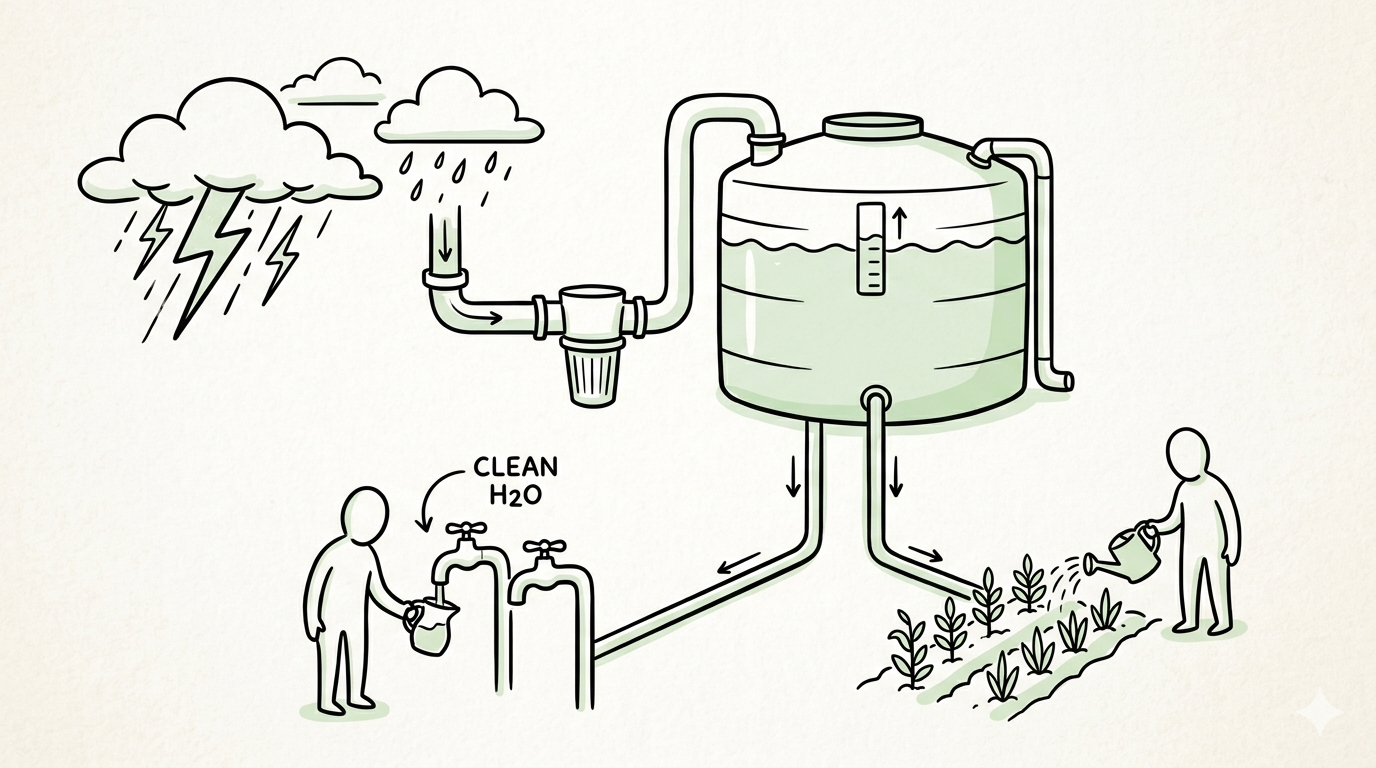
True resilience during a climate crisis is built from the ground up. It looks like a homeowners' association organizing a localized system for rainwater harvesting during the remaining rainy months, ensuring that non-potable water is available for cleaning and sanitation when dry conditions set in. It looks like small-scale farmers working together to implement rotational irrigation schedules rather than competing for a dwindling water supply, ensuring that every plot of land gets a chance to survive.
A Reflective View on Our Shared Resources
This issue reflects why community-based efforts around localized disaster risk reduction and community resource management matter. When we look closely at the threat of a Super El Niño, we realize it is not a tragedy written in the stars; it is a stress test for our social fabric. It forces us to examine how we manage our shared spaces and communal resources when abundance turns into scarcity.
The upcoming months will require a careful balance of mindsets. We must prepare for the intense rains of the current monsoon season while simultaneously conserving the precious water that falls, knowing that the reservoir levels we secure today will determine our comfort in the dry months of early 2027.
Ultimately, a changing climate challenges us to look beyond our own doorsteps. The plastic drum filled with water in one bathroom is a temporary fix for one family. But ensuring that our local farming communities have the tools to adapt, that our neighborhoods practice conscious conservation, and that we look out for vulnerable seniors and children during extreme heat—that is how a community endures. The forecast has been given; the window to prepare is open in our homes and neighborhoods today.
Lahat tayo masaya kapag malamig ang panahon at may ulan, pero alam niyo ba na ang nagbabadyang "Super El Niño" ay maaaring magdulot ng matinding baha ngayon, bago ang malawakang tuyot sa susunod na mga buwan? Paano nga ba maaapektuhan ng ulat ng PAGASA ang presyo ng bigas, kuryente, at tubig sa inyong tahanan? Huwag nang magpatumpik-tumpik sa paghahanda.

Power Our Mission, Shape the Future
We empower single parents, PWDs, youths, seniors, and stay-at-home parents through digital livelihood.
Help us build resilient communities.
BUKLURAN remains open to partnerships, sponsorships, and collaborative initiatives that create meaningful community impact.
Whether through funding, in-kind support, volunteerism, or shared services, your organization can help strengthen programs that serve underserved communities.
Do you want to take part in our free livelihood programs, scholarship assistance, and community resource pooling initiatives? Membership is completely free.
Join BUKLURAN!
Register, volunteer, and become a member today.