The Screen Between Us: What a Surge in Government App Downloads Really Changes
Millions are downloading the government’s one-stop app to skip long lines. But does a digital shift fix red tape, or just relocate it?
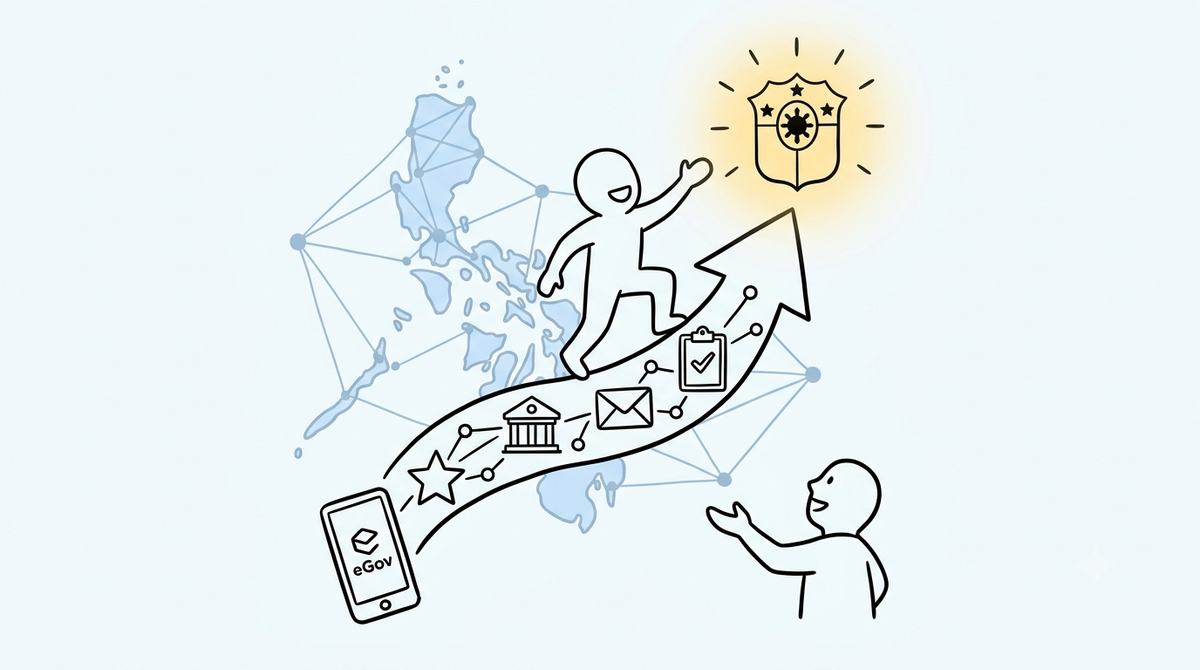
While the rapid adoption of the eGovPH app highlights a growing appetite for digital convenience, true government accessibility requires bridging the deep digital divide that still leaves many Filipinos behind.
Wake up at four in the morning. Secure a jeepney ride before the rush hour chaos peaks. Stand under a humid, corrugated iron roof for three hours just to secure a single documentary stamp, only to be told that the system is offline or that you are missing a supporting photocopy.
For generations of Filipinos, dealing with government bureaucracy has not just been an administrative chore; it has been a test of physical endurance and economic sacrifice. Taking a day off to fix a permit or claim a social welfare benefit often means losing a day’s worth of wages. It means choosing between standing in a physical line and keeping food on the family table.
So, when the Department of Information and Communications Technology (DICT) recently reported a staggering 700% surge in transactions and downloads for its flagship eGovPH application, the initial reaction from observers was a collective sigh of relief. On paper, the promise is undeniable: a unified digital platform that brings national IDs, local government permits, social welfare applications, and citizen complaints directly into the palm of your hand.
But as millions of citizens transition from queuing on crowded sidewalks to tapping on smartphone screens, a critical question emerges for ordinary families: Does moving public services to an app genuinely dismantle long-standing systemic barriers, or does it simply shift the hurdles from the pavement to the digital ether?
Understanding the Digital Shift
The eGovPH platform was designed as a "one-stop shop" aimed at consolidating the notoriously fragmented landscape of Philippine government agencies. Instead of navigating dozens of confusing individual portals—each with its own password requirements and localized crashes—users can hypothetically access a streamlined ecosystem. The recent explosion in transaction volume proves that Filipinos are not tech-averse; they are desperate for efficiency.
When a platform offers a way to bypass the multi-hour pilgrimage to a physical regional office, people will naturally gravitate toward it. The sheer volume of transactions shows a populace eager to shed the burdens of traditional red tape. It demonstrates that the appetite for modernization is deeply rooted in the everyday desire to save time, energy, and hard-earned money.
What App Adoption Really Means on the Ground
To understand the true impact of this digital transition, we must look beyond the impressive percentage increases celebrated in agency offices. For a middle-class worker in Metro Manila with a reliable postpaid internet connection and a high-tier smartphone, an app like eGovPH is a liberating upgrade. A transaction that used to kill an entire Saturday morning can now be completed during a lunch break.
However, the reality changes drastically when we shift our gaze to the broader population. For millions of Filipinos, digital access is not a seamless highway; it is a toll road with unpredictable obstacles.
Consider the practical barriers that do not show up in download statistics:
- The Cost of Connectivity: Downloading a data-heavy application and keeping it updated requires a consistent internet connection. For a family reliant on prepaid "tingi" (retail) data promos, every megabyte used to upload a high-resolution photo of a barangay clearance is data taken away from online schooling or remote livelihood opportunities.
- Hardware Limitations: The app handles highly sensitive personal data, requiring biometric verification and robust security protocols. These features often demand modern smartphone hardware. A vendor using a five-year-old budget phone with cracked glass and low storage memory may find the app constantly crashing or rejecting their verification attempts.
- The Literacy Gap: Navigating a user interface, understanding digital verification prompts, and troubleshooting an error code require a specific type of technological literacy. When a system rejects an upload without a clear, accessible explanation in plain language, the user is left just as helpless as they were when turned away at a physical government window.
When these barriers intersect, we face a subtle but dangerous paradox: the digitizing of public services can inadvertently create a new form of exclusion. Those who already possess wealth, stable internet, and tech literacy move to the front of the virtual line, while the most vulnerable segments of our society remain stuck on the physical sidewalk.
Looking Closer at Systemic Friction
Even when the application functions perfectly, it is vital to remember that an interface is only as good as the bureaucracy running behind it. An app can digitize the input—the form submission, the ID upload, the application request—but human beings, outdated databases, and underlying institutional cultures still handle the output.
If a citizen files a complaint or requests a social welfare clearance through an app, but the back-end agency is still bogged down by manual verification backlogs or a lack of personnel, the digital convenience ends at the submission screen. The waiting period remains exactly the same; it is just experienced in silence at home rather than in a crowded lobby. True administrative reform cannot be achieved merely by putting a modern digital coat of paint over an old, creaking institutional structure.
The Value of Community-Based Support
This widening gap between technological advancement and grassroots reality highlights why community-level structures remain absolutely vital. High-tech solutions are highly effective, but they become powerful only when paired with high-touch assistance.
This friction reflects why community-based efforts around digital literacy and local support hubs matter so deeply. Across various provinces, community spaces that provide shared internet access, basic tech troubleshooting, and guided assistance for older or less tech-savvy residents have proven to be the real missing link. When local community networks step in to help an elderly farmer or a self-employed laborer navigate a digital portal, they ensure that technological progress does not leave the community behind. These organic, ground-up interventions serve as a reminder that technology should adapt to the people, not the other way around.
Beyond the Smartphone Screen
The growth of digital public service platforms is an important step forward. It proves that the country is capable of building large-scale digital architecture, and it sets a new benchmark for what citizens should expect from their government. No one wants to return to the days of arbitrary requirements and endless physical queues.
Yet, the ultimate measure of any public innovation is not how many people download it, but how effectively it serves those who need it most. A truly inclusive digital Philippines requires looking beyond the dashboard metrics. It means building systems that consume less data, designing interfaces that speak clearly to users of all educational backgrounds, and maintaining robust physical options for those who cannot cross the digital divide.
Until internet access is treated as a universal public utility rather than a costly luxury, and until our underlying institutions match the speed of our software, the digital line will remain just as long as the physical one—only much harder to see.
What has your experience been with utilizing digital government services? Do you feel they have truly made life easier for your family, or have you run into new digital hurdles?
Lahat tayo masaya kapag hindi na kailangang pumila nang madaling-araw sa mga opisina ng gobyerno. Balita ngayon ang mabilis na pagdami ng gumagamit ng eGovPH app para sa mga dokumento at ayuda. Pero sapat na nga ba ang smartphone app para tuluyang mawala ang red tape, o nailipat lang ang mahabang pila mula sa kalsada patungo sa loob ng ating mga screen? Sino nga ba ang totoong nakikinabang sa ganitong pagbabago?

Power Our Mission, Shape the Future
We empower single parents, PWDs, youths, seniors, and stay-at-home parents through digital livelihood.
Help us build resilient communities.
BUKLURAN remains open to partnerships, sponsorships, and collaborative initiatives that create meaningful community impact.
Whether through funding, in-kind support, volunteerism, or shared services, your organization can help strengthen programs that serve underserved communities.
Do you want to take part in our free livelihood programs, scholarship assistance, and community resource pooling initiatives? Membership is completely free.
Join BUKLURAN!
Register, volunteer, and become a member today.