The Story Behind the Screen: What Viral Sliders Miss About Public Money
When a viral post claims a city's wealth doubled overnight, it sounds like a triumph. But the real story of public money is closer to home.
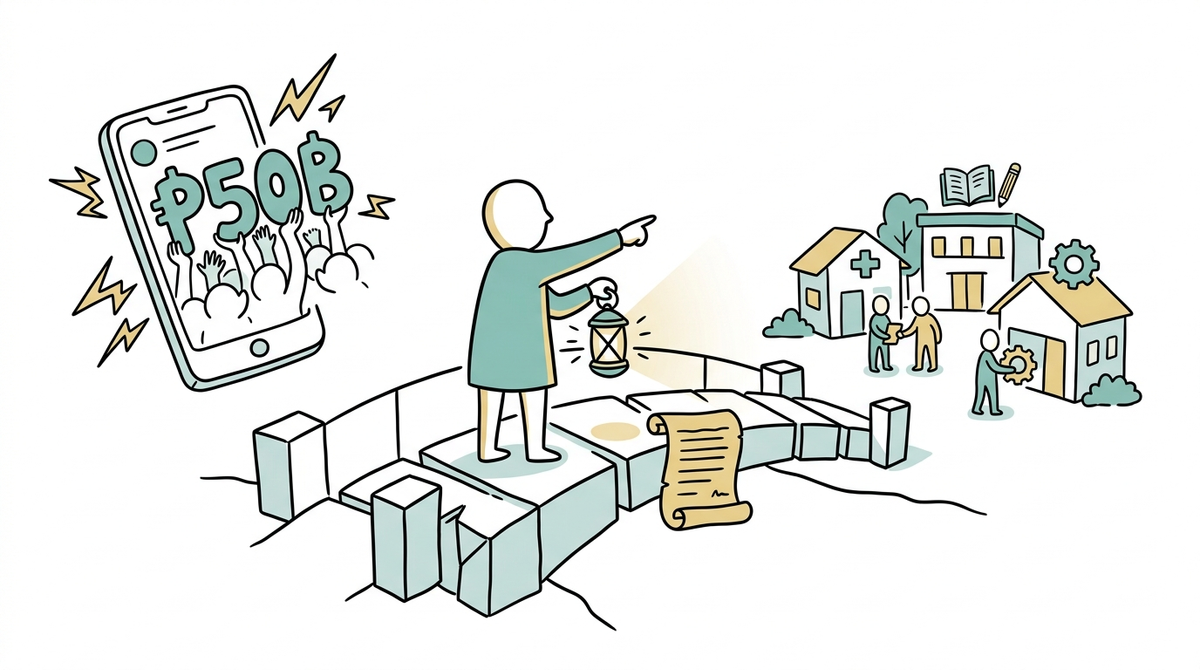
While viral social media claims about local government finances often distort reality, understanding how public funds are actually tracked and spent reveals the true power of transparent community governance.
It happens almost every time we scroll through our feeds. A graphic pops up with bold text, flashing two contrasting numbers: what a city supposedly had years ago versus what it has now. The caption attributes the massive leap entirely to good governance or "investor trust," and within hours, thousands of people have liked, shared, and commented. For a moment, it feels like a victory. We want to believe that a single political shift can instantly double a community’s fortune, turning a city into a financial powerhouse overnight.
It is a comforting narrative because it offers a simple solution to complex problems. But if you sit down at a neighborhood carinderia or talk to commuters waiting in line under the midday sun, the conversation shifts from abstract billions to immediate realities. Parents wonder why the local public school still needs basic repairs, or why a trip to the barangay health center requires waiting in line before dawn just to secure a number. When the digital praise fades, a lingering question remains: if the city is suddenly so wealthy on our screens, why does daily life on the ground feel exactly the same?
The gap between viral metrics and community realities highlights a deeper challenge in how we talk about public governance. Recently, a viral post claimed that a prominent city’s "net worth" leaped from P19 billion to over P50 billion in just a few years, pointing to it as ultimate proof of a clean administration. It was shared widely by well-meaning citizens eager to celebrate progress. However, an official look at the numbers from the Commission on Audit (COA) revealed a completely different ledger. The city’s actual assets at the start of that timeline were already over P45 billion, not P19 billion. The viral post had inadvertently slashed the city’s historical starting point in half just to make the current growth look miraculous.
Decoding the Bureaucratic Ledger
To understand why these viral comparisons miss the mark, we have to look at how local government units (LGUs) actually manage money. In professional auditing, the term "net worth"—a concept we usually associate with wealthy individuals or private corporations—does not even exist on a city’s official Statement of Financial Position. Instead, state auditors look at total assets, liabilities, and net equity.
More importantly, a city’s financial health is not a corporate scoreboard where the highest number wins. When a government’s assets rise, it often does not mean there is cash sitting idle in a vault waiting to be spent. A significant portion of a city’s reported assets comes from non-cash items:
- Real Estate and Infrastructure: The valuation of public land, newly constructed roads, school buildings, and bridges.
- Equipment and Revaluations: Upgraded hospital equipment or adjustments in property assessments.
- Accounting Adjustments: Changes in how existing properties are recorded or audited over time.
An increase in asset value might simply mean the city finally finished a long-delayed inventory of its properties, or that the market value of the land underneath an old public market went up. A school building built ten years ago might be revalued at a higher price today due to inflation, but that change on a spreadsheet does not create new classrooms or hire more teachers.
When social media commentary reduces local governance to a single, oversimplified trajectory, it obscures how public money actually works. A city administration rarely starts with a completely clean slate; financial commitments, ongoing infrastructure projects, and institutional debts carry over from one leadership term to the next. Attributing decades of accumulated public property or structural changes to a single moment in time distorts the reality of public administration.
The Real Power of Transparent Finances
This does not mean that clean governance and honest financial reporting do not matter—in fact, they matter immensely. But the true value of a well-managed local treasury is found in transparency and systematic tracking, not in inflated internet graphics.
When a local government cleans up its accounting practices, the benefit is practical rather than promotional. Accurate ledgers mean the community knows exactly what resources are available. It prevents public equipment from vanishing into private hands, ensures that funds allocated for specific health programs actually reach the barangay clinics, and allows local leaders to plan budgets based on real numbers rather than guesswork.
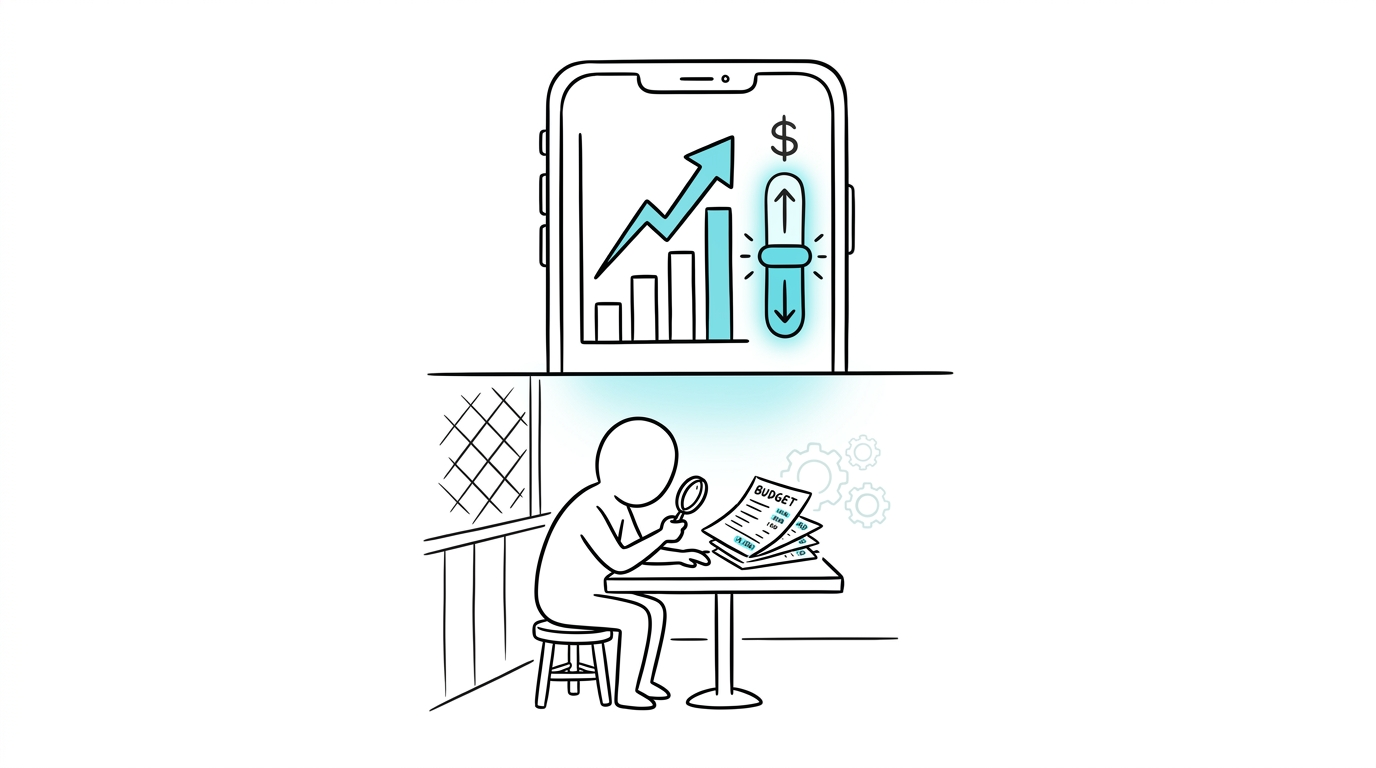
[Social Media Hype]         --> Focuses on: "Net Worth" Scoreboards & Hyperbolic Growth
[Real-World Governance]     --> Focuses on: Line-Item Budgets, Resource Allocation & Public Access
When public finances are transparent, ordinary citizens gain the leverage to ask meaningful questions. Instead of cheering for a vague 50-billion-peso milestone on a phone screen, a community can look at the actual municipal budget and ask: How much of this is going to flood mitigation? Why is the allocation for agricultural support or livelihood training lower this year? Are the medicines in our local health centers fully funded? True accountability is not about celebrating an abstract surplus; it is about ensuring that every peso collected from the public is actively working to protect and support the public.
Where the Screen Meets the Street
The temptation to rely on viral statistics is understandable. Life for the average Filipino worker, farmer, or small business owner is a daily exercise in navigating broken systems. High inflation, unpredictable transport options, and precarious employment make the desire for a quick, visible sign of political salvation incredibly strong. We want a simple metric that tells us we are winning.
But public interest is never served by numbers that do not hold up under scrutiny, even when those numbers are used to support a leader we admire. When we share misleading financial milestones, we inadvertently lower the bar for what good governance looks like. We substitute deep, structural critique for public relations victories. We risk becoming complacent, satisfied with a viral headline while the underlying structural issues in our communities remain unaddressed.
The strength of a community does not rely on the performance of a single individual or a perfectly curated piece of digital content. It relies on the collective capacity of ordinary people to understand the systems that govern their lives. This understanding changes the relationship between the citizen and the state. A citizen who knows how public assets are structured is no longer just a spectator cheering for a political brand; they become an active participant in local development.
This ongoing need for clarity and grounded awareness highlights why deep, community-level work is so vital. Across different regions, the long-term effort to build financial literacy, encourage local monitoring of public resources, and foster civic participation forms the backbone of resilient neighborhoods. This patient, often unglamorous work reflects why community-based efforts around grassroots leadership and local accountability education matter. It is in small barangay assemblies, cooperative meetings, and local budget consultations—far away from the viral algorithms—where true public awareness is built.
When we look past the digital noise, we find that the most reliable measure of a city's progress cannot be captured in a viral slider. It is found in the reliability of its public services, the resilience of its poorest neighborhoods, and the honesty of its public records. The next time a spectacular financial claim appears on our feeds, the most impactful thing we can do is pause, look past the headline, and ask what it means for the streets we actually walk on.
Lahat tayo masaya kapag naririnig nating yumayaman ang ating lungsod, pero talaga bang bilyon-bilyon agad ang tinaas ng "net worth" nito dahil lang sa magandang pamamahala? Bago natin i-share ang mga viral graphics sa ating feed, alamin muna natin kung ano ang totoong kwento sa likod ng mga numero ng gobyerno—at kung bakit ang tunay na pag-unlad ay hindi nakikita sa simpleng palakpakan sa social media.

Power Our Mission, Shape the Future
We empower single parents, PWDs, youths, seniors, and stay-at-home parents through digital livelihood.
Help us build resilient communities.
BUKLURAN remains open to partnerships, sponsorships, and collaborative initiatives that create meaningful community impact.
Whether through funding, in-kind support, volunteerism, or shared services, your organization can help strengthen programs that serve underserved communities.
Do you want to take part in our free livelihood programs, scholarship assistance, and community resource pooling initiatives? Membership is completely free.
Join BUKLURAN!
Register, volunteer, and become a member today.