The Tech Cake We Didn’t Ask For: What the AI Revolution Demands from Everyday Filipinos
Tech giants call AI a "five-layer cake." For ordinary Filipinos, it’s a recipe that could change our jobs, our skills, and even our monthly electric bills.
The article explains the five-layer architecture of artificial intelligence through Nvidia's "cake" model and analyzes how its heavy demands on energy, infrastructure, and applications will directly impact ordinary Filipino livelihoods, utility bills, and digital readiness.
Step into any jeepney, neighborhood sari-sari store, or public market in the Philippines, and you are bound to see someone staring intently at a smartphone screen. We are a nation deeply in love with connectivity. We use apps to send money to family in the provinces, book motorcycle rides to escape urban traffic, and watch videos to unwind after a grueling ten-hour shift. To most of us, technology is simple: you download an app, press a button, and it works.
Lately, however, a new word has been dominating television news broadcasts, radio commentaries, and workplace conversations: Artificial Intelligence, or AI. We hear about chatbots that can write essays, algorithms that can predict the weather, and automated systems that might someday replace customer service representatives. For a young call center agent in Pasig, a graphic designer in Cebu, or a parent wondering what college course their teenager should take, AI feels like a looming shadow—invisible, fast-moving, and unpredictable.
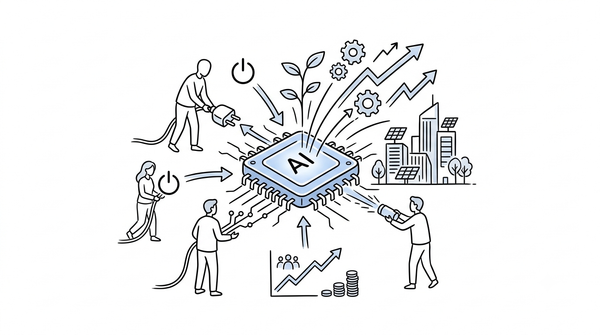
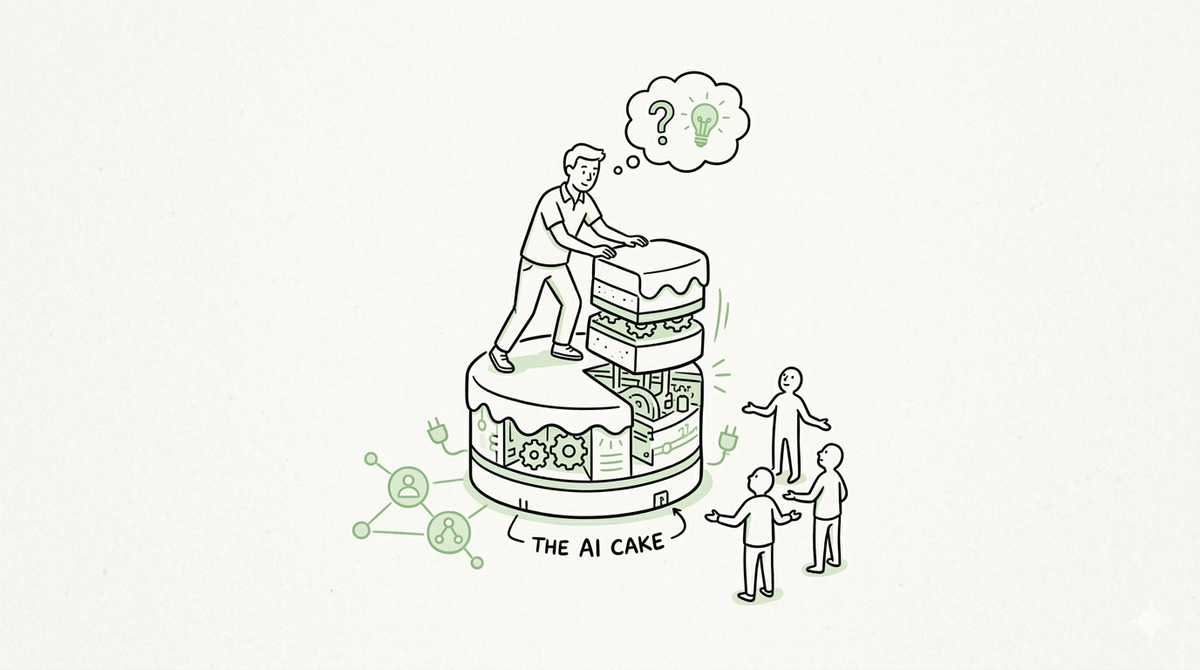
Tech executives from Silicon Valley often talk about AI as if it exists in a vacuum, a magical piece of software floating in the digital cloud. But recently, Jensen Huang, the CEO of the world’s leading AI chip manufacturing company, Nvidia, offered a different, grounded metaphor. He described the entire AI industrial system as a "five-layer cake."
To understand where the Philippines fits into this massive global shift, we have to look past the flashy headlines and dissect this cake, piece by piece. Because while the ingredients are being mixed in foreign tech hubs, the heat from the oven is something ordinary Filipinos are already beginning to feel.
Dissecting the Five-Layer Cake
To make sense of how a global tech phenomenon impacts a local household, we must first understand what actually builds artificial intelligence. It is not just a single program; it is an interconnected tower of resources.
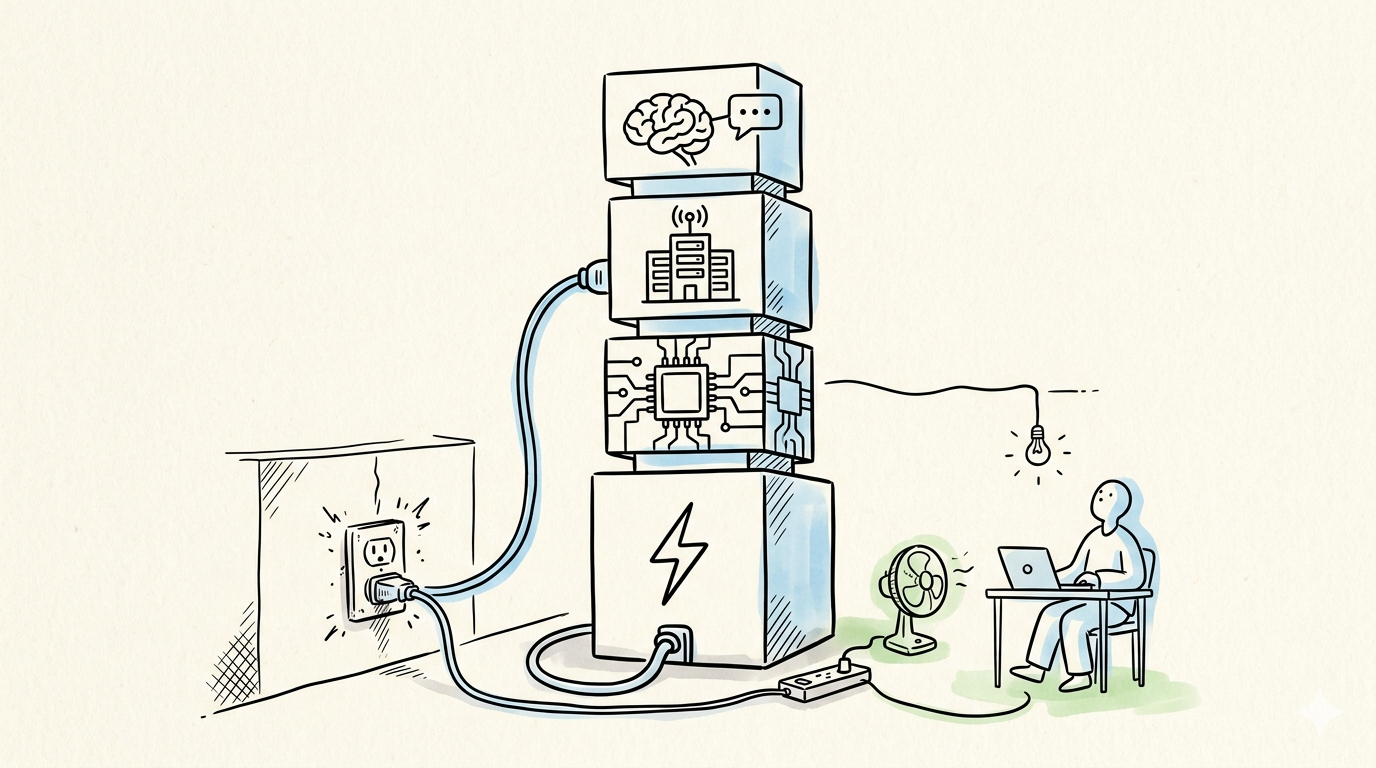
- Layer 1: Energy. This is the base of the entire cake. Real-time digital intelligence requires an immense amount of electricity. Massive data centers must run continuously, and they require intensive cooling systems to keep from overheating. Without stable, abundant power, AI cannot function.
- Layer 2: Chips. These are specialized microprocessors that turn raw electricity into actual computation. They handle the massive mathematical equations required to make AI "think."
- Layer 3: Infrastructure. This refers to the physical data centers and cloud systems where thousands of these chips are housed. They are essentially the factories of the digital age.
- Layer 4: Models. These are the complex mathematical frameworks trained on billions of pieces of data. They are the engines that perform the tasks we see, like reasoning, translating languages, or recognizing faces.
- Layer 5: Applications. This is the top layer—the final product that the public actually interacts with. It includes the customer service chatbots, the photo editing tools, and the automated assistants on our phones.
When we look at this model, it becomes clear that AI is not a weightless piece of software. It is a heavy, resource-hungry physical industry.
What This Really Means: The Strain on Our Living Conditions
When ordinary Filipinos look at the first layer of the AI cake—Energy—a collective alarm bell should ring. The Philippines already faces chronic power challenges, characterized by rotating brownouts during the dry season, aging grids, and some of the highest electricity rates in Asia.
AI data centers consume electricity at a scale that is difficult to comprehend. If global tech firms begin establishing infrastructure or heavily utilizing networks in Southeast Asia, the demand on regional grids will spike exponentially. For a family living in a cramped urban settlement or a farmer relying on irrigation systems, a strained national grid doesn't mean slower internet; it means higher monthly electric bills and more frequent power outages during the hottest months of the year.
Furthermore, as the global economy pours trillions of dollars into Layers 2 and 3 (Chips and Infrastructure), international investments are heavily diverted toward these sectors. This means capital that could have gone into traditional manufacturing, agriculture, or public infrastructure in developing nations is instead being funneled into building high-tech digital factories. For our local economy, this shifts the playground entirely. We are no longer just competing for factory jobs or service roles; we are competing against a global infrastructure designed to minimize human labor.
The Human Impact: A Shift in the Filipino Livelihood
The most immediate anxiety surrounding AI in the Philippines centers on Layer 5: Applications. For over two decades, the Business Process Outsourcing (BPO) industry has been a lifeblood for the Filipino middle class. It has allowed millions of young professionals to earn decent wages, support their aging parents, and send their siblings to school without having to leave the country as Overseas Filipino Workers (OFWs).
But as AI applications become more sophisticated at handling customer inquiries, processing data, and troubleshooting basic tech issues, the landscape of the Filipino workplace is shifting underneath our feet. It is no longer a question of if AI will affect our jobs, but how fast.
Consider the reality of a 26-year-old customer support specialist. She isn't dealing with a robot walking into her office and taking her desk. Instead, she is finding that the software she uses daily is slowly absorbing her tasks. First, the AI drafts the email responses for her. Then, it handles the first five minutes of every customer call. Eventually, the company realizes it only needs one human worker to oversee what five people used to handle.
This creates a widening gap. While tech companies see increased efficiency and soaring stock values, ordinary workers face a steep hill of "up-skilling." If our local workforce is only trained to handle the basic, repetitive tasks at the very top layer of the cake, we become highly vulnerable to being phased out when those applications become fully automated.
The View from the Ground
This rapidly evolving digital landscape highlights exactly why grassroots community readiness and digital literacy matter more than ever. The conversation around technology can no longer be limited to corporate boardrooms or elite universities. If ordinary communities are left in the dark about how these systems work, they cannot prepare for the economic shifts ahead.
True community development in the modern era requires building local resilience against these macroeconomic disruptions. This means ensuring that digital literacy programs in communities focus not just on how to use basic social media or simple productivity apps, but on understanding data privacy, navigating automated platforms, and adapting to digital tools in local livelihoods. When community-led initiatives prioritize digital familiarity and adaptive skills, they help ensure that ordinary citizens are not blindsided by technological shifts, but are instead equipped to find new pathways within a changing economy.
Moving Beyond the Hype
It is easy to get caught up in either blind optimism or paralyzing fear when discussing artificial intelligence. The tech industry wants us to view AI as an inevitable, flawless wave of progress. On the flip side, science fiction often makes us view it as a catastrophic threat.
The reality, as revealed by the five-layer cake model, is much more mundane but equally critical: AI is an infrastructure issue. It is an energy issue. It is a labor issue.
As a nation, we need to ask ourselves tough questions. Are our educational institutions preparing the next generation to build and manage these technologies, or are we merely training them to be temporary users of applications that will soon evolve? Is our energy grid ready to sustain a digital world without compromising the comfort and wallets of ordinary consumers?
We cannot afford to just be consumers sitting at the table, waiting to be served whatever the global tech industry bakes. Understanding the layers of this system is our first step toward ensuring that as the world changes, the ordinary Filipino worker is not left with nothing but crumbs.
Lahat tayo masaya kapag may bagong teknolohiya na nagpapadali ng buhay. Pero alam niyo bang ang Artificial Intelligence (AI) ay parang isang "five-layer cake" na nangangailangan ng napakalaking kuryente at pondo? Ano ang kahulugan nito para sa ating buwanang billing sa ilaw, at sa kasiguruhan ng trabaho ng mga ordinaryong Pilipino sa BPO at iba pang sektor? Huwag magpahuli sa usapan.

Power Our Mission, Shape the Future
We empower single parents, PWDs, youths, seniors, and stay-at-home parents through digital livelihood.
Help us build resilient communities.
BUKLURAN remains open to partnerships, sponsorships, and collaborative initiatives that create meaningful community impact.
Whether through funding, in-kind support, volunteerism, or shared services, your organization can help strengthen programs that serve underserved communities.
Do you want to take part in our free livelihood programs, scholarship assistance, and community resource pooling initiatives? Membership is completely free.
Join BUKLURAN!
Register, volunteer, and become a member today.