What Happens After the First Storm Warning: Rethinking How We Prepare
When a low-pressure area becomes a tropical depression, it is easy to dismiss Signal No. 1. But for local communities, it's a call to action.
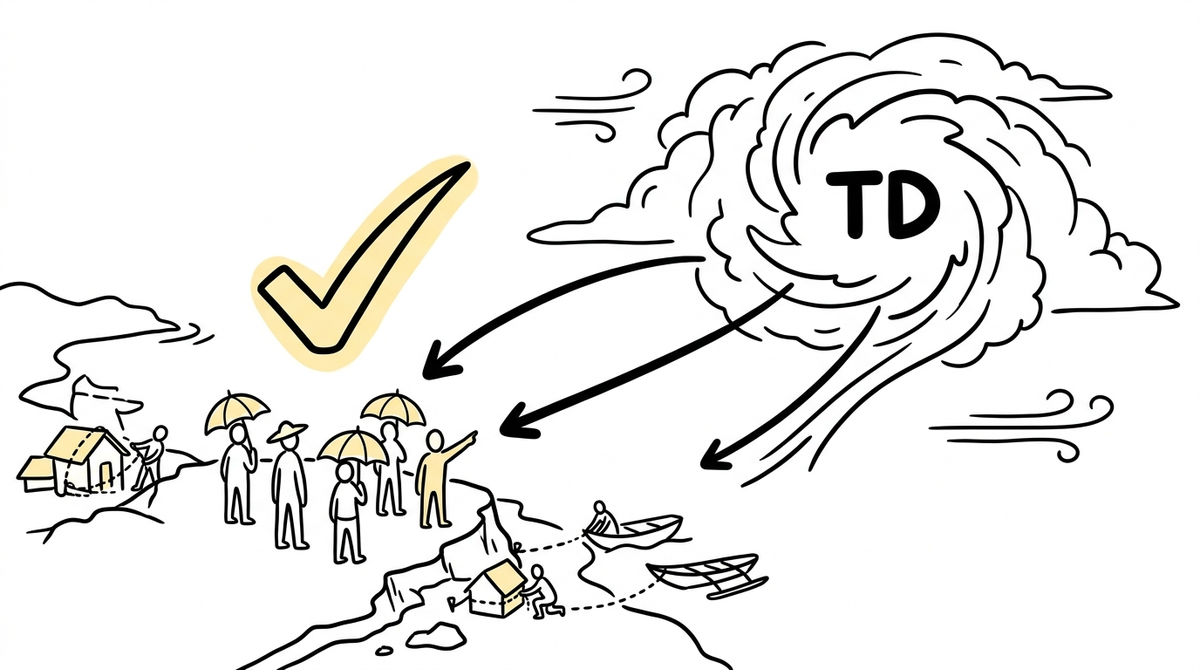
The article explains that early-season tropical depressions, like the recent one prompting Signal No. 1 in Batanes, demand a shift from reactive emergency responses to long-term, community-led structural resilience.
Imagine waking up to the sound of heavy rain ticking against your roof, checking your phone, and seeing that the state weather bureau has raised Tropical Cyclone Wind Signal No. 1 over your province. For many residents living in urban centers, Signal No. 1 might feel like a minor inconvenience—perhaps a reason to pack an umbrella or brace for heavier traffic during the morning commute. But for families living in isolated coastal towns, small island provinces, or vulnerable farming villages, that very first official warning signal represents something far more urgent. It is the opening note of a seasonal routine where survival depends entirely on how quickly a community can mobilize.
Recently, a tropical depression formed within the Philippine Area of Responsibility, prompting authorities to hoist Signal No. 1 over northern Batanes. The storm itself, packing maximum sustained winds of 45 kilometers per hour near the center, might not dominate international news cycles the way super typhoons do. It is easy to look at those numbers and assume everything is fine. Yet, looking at a storm solely through the lens of wind speeds misses the true story of how weather impacts human lives.
The Reality Behind the Lowest Signal
To understand why even the weakest tropical depression matters, one must look at the geography of vulnerable communities. When a weather disturbance hovers over an area like Batanes or the coastal regions of Northern Luzon, the immediate threat is rarely just the wind. The real danger often comes from the rain, the sea, and the isolation.
For a family relying on small-scale fishing, Signal No. 1 means an immediate halt to their livelihood. Small sea vessels are grounded because maritime travel becomes too risky. If the system lingers for several days, the lack of daily income quickly translates into food insecurity at the household level. In mountainous terrain, persistent rain saturates the soil, raising the quiet threat of landslides that can cut off the single road connecting a remote village to the nearest hospital or market.
When we focus only on catastrophic storms, we ignore the cumulative damage caused by smaller, frequent weather disturbances. A series of low-pressure areas and minor storms can erode riverbanks, wash away newly planted crops, and slowly undermine local infrastructure. By the time a major typhoon actually hits later in the year, the community’s natural defenses and household finances are already completely exhausted.
Moving From Relief to Readiness
Every year, the conversation around disasters follows an identical pattern. A storm approaches, emergency funds are readied, relief goods are packed into plastic bags, and after the skies clear, officials distribute goods in front of cameras. While emergency relief is absolutely necessary to save lives in the immediate aftermath of a disaster, it is a reactive strategy that does nothing to prevent the damage from happening again next time.
True public safety requires a fundamental shift toward structural preparedness. This means moving away from the culture of treating disasters as unexpected emergencies and instead accepting them as a predictable, recurring reality of Philippine life.
Consider what actually keeps a family safe when a storm hits:
- Localized early warning systems: Announcements must be made in the local language, explaining specific risks like localized flooding or storm surges, rather than just broadcasting general wind speeds.
- Resilient local infrastructure: Evacuation centers need to be permanent, sturdy structures equipped with clean sanitation facilities, water storage, and independent power sources, rather than relying on schools which disrupts children's education.
- Secured supply chains: Food, medicine, and fuel must be pre-positioned in remote areas before the weather deteriorates, ensuring communities do not face shortages if roads or ports are blocked.
When these elements are missing, the burden of survival falls squarely on the shoulders of individual families. Those who can afford to reinforce their homes or buy extra groceries manage to get by, while those living in informal settlements or poverty are pushed deeper into crisis. Disaster vulnerability is not just an environmental issue; it is a direct reflection of economic inequality.
The Power of Local Organizations
When formal government systems are stretched thin or delayed by logistical bottlenecks, the first line of defense is always the community itself. Neighbors helping neighbors clear drainage pathways, monitoring river levels, and identifying elderly residents who need assistance moving to safer ground is what keeps casualties low during the early stages of a storm.
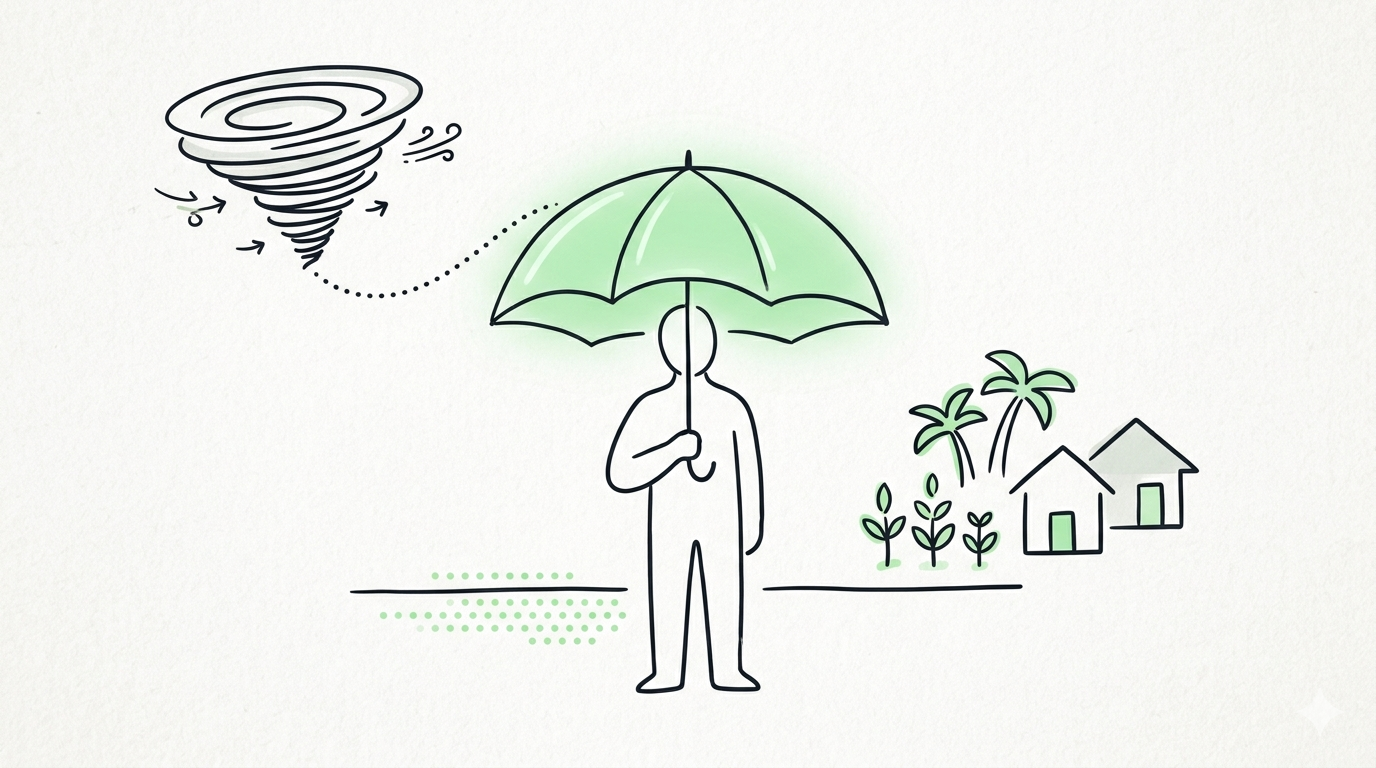
This reality reflects exactly why community-based efforts around grassroots disaster risk reduction matter. When local residents are given the training, resources, and institutional support to manage their own safety plans, the entire landscape of readiness changes. Preparedness cannot be dictated effectively from a distant central office; it must be designed, owned, and executed by the people who actually walk the terrain and understand where the water rises when the rains come down.
By investing in neighborhood-level committees and equipping local volunteers with basic rescue and communication tools, society builds a form of resilience that does not depend on a relief truck arriving on time. It transforms passive victims of weather events into active managers of their own safety.
A Question of Collective Priority
As the climate changes, weather patterns are becoming increasingly unpredictable. The traditional "typhoon season" is no longer confined to specific months, and weak systems can rapidly intensify over warming tropical waters. Waiting for a storm to reach typhoon status before taking action is a luxury we can no longer afford.
The tropical depression passing through Batanes is a quiet reminder that readiness is an everyday task. It challenges us to ask a difficult question about our collective priorities: Are we truly satisfied with a system that measures success by how many relief bags are handed out after a disaster, or should we demand a society where communities are built well enough that they no longer need to rely on relief bags just to survive the rain?
The true measure of a nation’s strength is not found in how it responds to the grand crises that make the evening news, but in how safely and quietly its most vulnerable citizens can sleep through a simple Signal No. 1 warning.
Ano ang unang iniisip mo kapag may inanunsyong Signal No. 1? Para sa marami, baka payong o traffic lang ang dalahin. Pero para sa mga komunidad sa mga isla at baybayin, iba ang kahulugan ng babalang ito. Paano nga ba natin dapat tingnan ang mga maagang paalala ng panahon bago pa maging huli ang lahat?

Power Our Mission, Shape the Future
We empower single parents, PWDs, youths, seniors, and stay-at-home parents through digital livelihood.
Help us build resilient communities.
BUKLURAN remains open to partnerships, sponsorships, and collaborative initiatives that create meaningful community impact.
Whether through funding, in-kind support, volunteerism, or shared services, your organization can help strengthen programs that serve underserved communities.
Do you want to take part in our free livelihood programs, scholarship assistance, and community resource pooling initiatives? Membership is completely free.
Join BUKLURAN!
Register, volunteer, and become a member today.