What Nissin Taking Majority Control of Its Noodle Joint Venture Means for Filipino Consumers
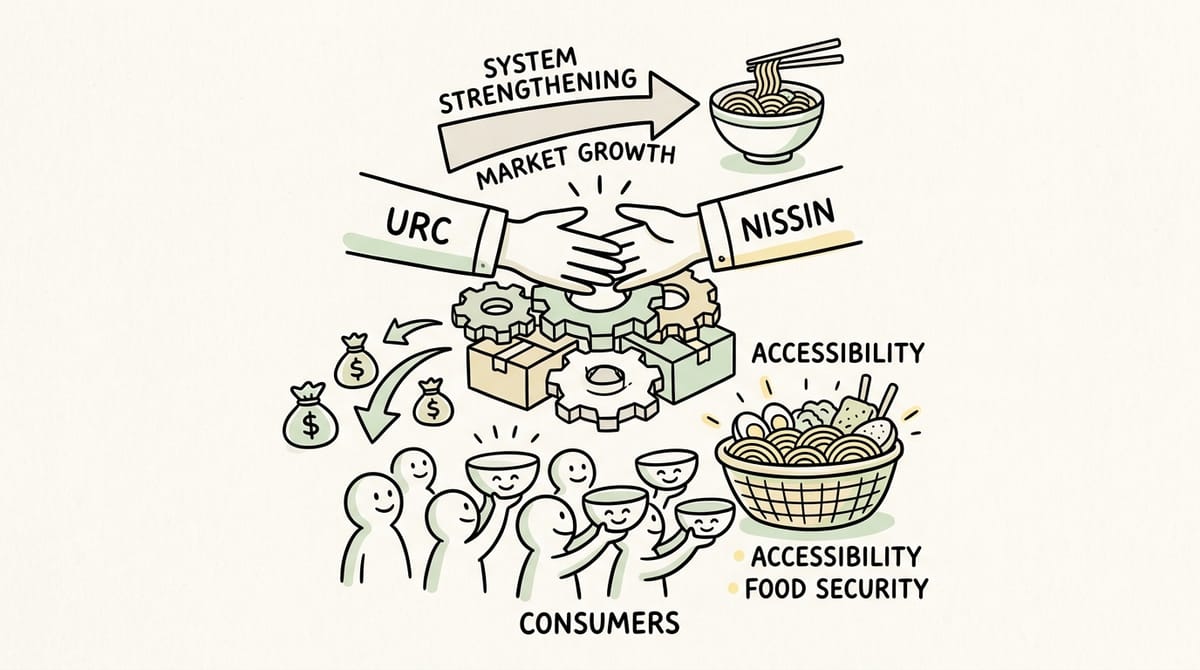
The Philippine Competition Commission (PCC) cleared Universal Robina Corp. (URC) to sell a 21% stake in Nissin Universal Robina Corp. (NURC) to Japan’s Nissin Foods Asia. The deal increases Nissin’s ownership to 70%, giving it majority control over product development and innovation, while URC retains 30% and stays in charge of local distribution. This article breaks down corporate ownership, regulatory oversight, and potential long-term impacts on staple food costs for Filipino households.
PCC Clears URC’s 21% NURC Stake Sale to Nissin Foods Asia
The Philippine Competition Commission (PCC) officially cleared Universal Robina Corp. (URC) to sell its remaining 21% equity stake in Nissan-URC Corp. (NURC) to joint venture partner Nissin Foods Asia Co., Ltd.
PCC confirmed the transaction does not violate merger control provisions or lessen market competition.
Nissin Foods Asia expands its majority stake from 79% to 100%, gaining complete control over NURC operations.
URC divests non-core holdings to optimize capital allocation toward its primary food and beverage portfolios.
NURC manufactures and distributes popular instant noodle products nationwide. Full ownership enables Nissin Foods Asia to streamline supply chains and product innovation in the Philippines, while regulatory approval ensures consumer market choices remain safeguarded.
The Philippine Competition Commission (PCC) recently cleared Universal Robina Corp. (URC) to sell a 21% stake in its instant noodle venture, Nissin Universal Robina Corp. (NURC), to Nissin Foods Asia Co. Ltd.
Once completed in early 2027, the move increases Nissin’s share in the joint venture from 49% to a 70% controlling majority, leaving URC with 30%.
For most Filipinos, corporate stake sales sound like high-level business chatter. However, instant noodles are a staple in low-income and working-class households across the country. Understanding corporate shifts in essential food industries helps everyday consumers monitor potential changes in grocery shelves, product choices, and budget management.
What Happened
Under the clearance granted by the country's antitrust body, URC is transferring 39.69 million shares of NURC to its long-time Japanese partner, Nissin Foods Asia.
- The Share Shift: Nissin increases its ownership stake to 70%, while URC's share decreases to 30%.
- Shift in Leadership: Nissin Foods Asia assumes the primary lead in product innovation, manufacturing standards, and brand strategy.
- Local Operations: URC continues as the local operating partner, keeping its role in supply chain execution, nationwide routing, and retail distribution.
- No Immediate Disruption: URC confirmed that the corporate restructuring will not alter ongoing day-to-day production or product supply.
Why This Matters
Instant noodles serve as an accessible, quick-prep meal for millions of Filipino workers, students, and families managing daily expenses. When a major food brand changes its primary leadership structure, consumer products can gradually change over time.
Nissin Foods holds global expertise in food technologies and flavor development. By giving Nissin direct operational control, the brand plans to bring more product variation, packaging choices, and manufacturing efficiencies into the local market.
What the Headlines Don't Explain
While news coverage focuses heavily on stock market disclosures and corporate valuations, several practical details affect ordinary consumers:
- Role of Antitrust Oversight: The Philippine Competition Commission (PCC) reviews transactions like this to prevent unfair market monopolies. Clearance signifies that the transaction is not expected to unfairly restrict market choices or stifle competition.
- Separation of Supply and Product: While Nissin will drive product formulations and brand decisions, URC’s existing distribution networks remain active. This reduces immediate risks of supply bottlenecks or missing stock in local sari-sari stores.
- Pricing Adjustments Take Time: Ownership transfers do not automatically cause sudden price changes. Pricing decisions depend on broader economic factors like raw ingredient costs, flour imports, fuel, and packaging materials.
How This Could Affect Filipinos
- Low-Income Families & Workers: Instant noodles remain a budget-friendly meal choice. Increased investment in production technology by a global food leader could improve product choices without abruptly altering basic price points.
- Sari-Sari Stores & Small Retailers: Because URC maintains its nationwide distribution infrastructure, neighborhood stores are unlikely to encounter supply shortages during the transition.
- Students & Young Professionals: Nissin's focus on product innovation may bring new flavor profiles, convenience-oriented packaging, or healthier ingredient options to the market over the next few years.
What Consumers Should Know
- Watch the Suggested Retail Price (SRP): Standard food items are subject to regular consumer price monitoring. Consumers should keep track of official price guides issued by the Department of Trade and Industry (DTI).
- Read Product Labels: Changes in majority ownership can lead to updated ingredients, adjusted net weights, or altered nutritional content over time. Checking product labels helps ensure you continue getting expected value.
- Understand Wholesale Sourcing: Small neighborhood vendors and community buying groups can manage grocery budgets more effectively by watching bulk supply trends for pantry essentials.
Practical Takeaways
- Plan Pantry Expenses: Track household food costs monthly to catch subtle price changes across everyday staples.
- Support Community Buying: Programs like the BUKLURAN HUB ecosystem demonstrate how collective resource pooling and bulk sourcing can help families access essential household goods at more manageable costs.
- Stay Informed on Market News: Following basic economic updates allows households to anticipate changes in food costs rather than being surprised at the checkout counter.
Looking Ahead
The transaction is scheduled for formal completion in early January 2027. In the coming months, valuation terms will be finalized while manufacturing strategies are quietly integrated. Consumers can expect business as usual on store shelves in the short term, with new product formulations and brand updates gradually appearing in subsequent years.
Understanding how corporate transitions work behind the scenes empowers everyday consumers to make informed choices for their household budgets.

Power Our Mission, Shape the Future
We empower single parents, PWDs, youths, seniors, and stay-at-home parents through digital livelihood.
Help us build resilient communities.
BUKLURAN remains open to partnerships, sponsorships, and collaborative initiatives that create meaningful community impact.
Whether through funding, in-kind support, volunteerism, or shared services, your organization can help strengthen programs that serve underserved communities.
Do you want to take part in our free livelihood programs, scholarship assistance, and community resource pooling initiatives? Membership is completely free.
Join BUKLURAN!
Register, volunteer, and become a member today.