What OpenAI’s "Astra" and Autonomous AI Workers Mean for Filipino Jobs
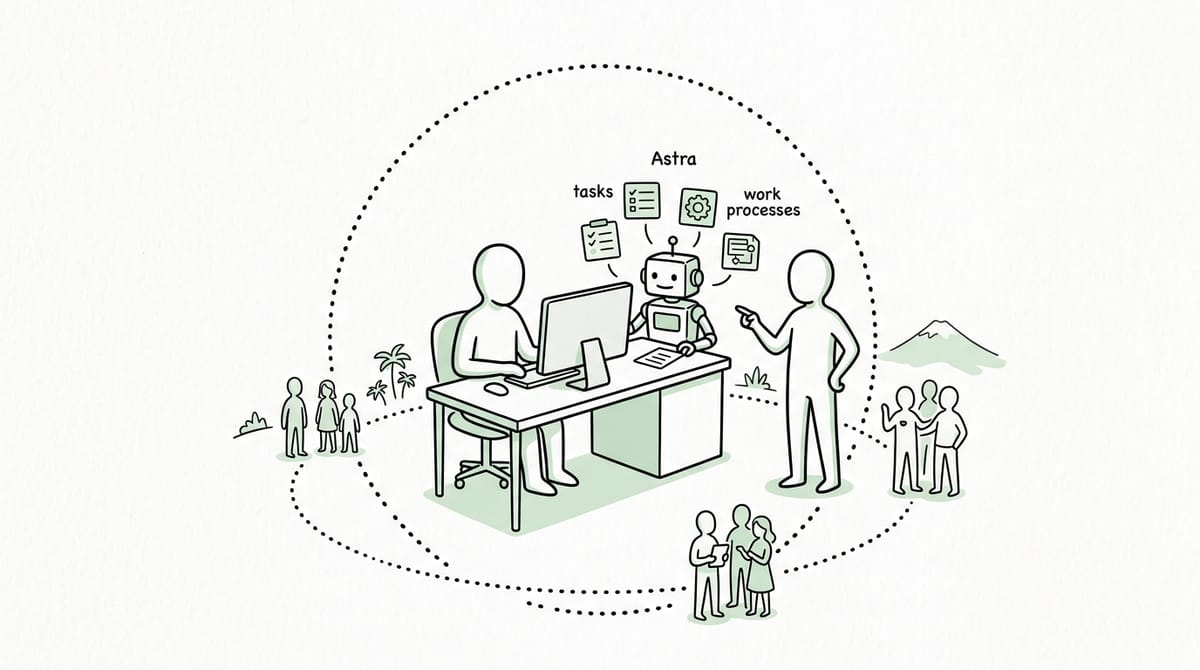
OpenAI is developing "Astra," an initiative designed to evolve artificial intelligence from conversational chatbots into autonomous "digital workers" capable of handling complex office tasks. While this shift offers productivity gains for small businesses and enterprises, it poses operational and job security challenges for the Philippine labor market, particularly office support roles, entry-level admin jobs, and the local BPO sector. Preparing through digital literacy and continuous reskilling is essential to navigating this transition.
Artificial intelligence is undergoing a significant architectural evolution. Tech developer OpenAI is advancing an initiative known as Astra, designed to shift AI capabilities away from simple text-based conversational chatbots toward fully autonomous "digital workers."
Rather than merely answering questions or generating text summaries when prompted, a digital worker operates software applications, manages multi-step computer tasks, coordinates administrative workflows, and executes complex processes independently.
For the Philippines—where millions of workers depend on information technology, business process outsourcing (BPO), administrative assistance, and remote freelancing—this transition introduces immediate opportunities alongside serious operational risks.
OpenAI's Astra Aims to Turn AI From Chatbot into Digital Worker
This summary provides public-interest analysis based on reporting from e27 (published September 4, 2026). Additional contextual analysis on labor market impact and community skills readiness was developed by BUKLURAN Editorial staff.
What Happened: The Shift to AI Agents
To understand OpenAI's Astra project, it helps to distinguish between the two primary stages of artificial intelligence development in recent years:
- Generative AI Chatbots (2022–2025): Systems like ChatGPT, Claude, or Gemini respond to specific user prompts. A human must guide every step—asking the system to draft an email, translate a paragraph, or fix a line of software code.
- Autonomous AI Agents / Digital Workers (2026 onwards): Systems designed to operate software tools directly. Instead of asking a human to copy-paste results, an AI agent opens applications, fills out digital forms, updates databases, sends client communications, and schedules follow-up tasks without continuous human oversight.
Astra aims to integrate these capabilities into software environments, effectively enabling software programs to act as digital employees capable of handling routine computer-based labor.
What the Headlines Don't Explain
Media coverage often focuses on the high-tech novelty of artificial intelligence, but several practical realities determine how this technology actually affects local economies:
1. The Bottleneck Has Shifted from Generation to Execution
Early AI tools saved time by drafting text or code. However, humans still had to review, copy, paste, and move data between programs. Digital workers eliminate that manual execution step, allowing entire office workflows to run automatically.
2. High-Speed Deployment in the Cloud
Unlike physical industrial robots that require multi-million peso factory installations, software-based digital workers require no physical hardware upgrades. A small business or multinational corporation can deploy digital worker tools instantly through existing cloud subscriptions.
3. Impact on Entry-Level Skill Ladders
Entry-level white-collar jobs—such as data entry, basic customer service ticketing, schedule management, and introductory coding—traditionally serve as the training ground for young professionals. When AI automates these baseline roles, the entry point into many industries becomes higher and more competitive.
How This Could Affect Filipinos
The economic effects of AI automation will not be identical for every household or industry sector.
The Structural Leap: From Text Assistant to Digital Worker
Traditional Chatbot
- Responds strictly to single prompts
- Human must manually copy/paste data
- Requires continuous step-by-step guidance
Autonomous Digital Worker
- Executes end-to-end multi-stage workflows
- Operates software directly via UI / API
- Manages complex multi-task business processes
For BPO and IT Services Workers
The Philippine BPO industry employs over 1.5 million workers, many performing customer support, back-office processing, data validation, and IT maintenance. Digital workers capable of navigating software interfaces directly will accelerate the automation of basic Tier-1 support roles. Workers specializing in complex problem-solving, technical architecture, and client relationship management will face less immediate disruption than those in repetitive data-handling roles.
For Freelancers and Virtual Assistants (VAs)
Thousands of Filipinos work as remote virtual assistants for international clients, handling email management, social media scheduling, bookkeeping, and customer inquiries. As digital worker software becomes affordable, overseas clients may use automated AI workflows for baseline admin tasks, forcing local freelancers to offer higher-level specialized management services.
For Micro, Small, and Medium Enterprises (MSMEs)
Filipino business owners often struggle with limited staff and administrative overhead. For a small retail store, local logistics outfit, or professional firm, AI tools offer the ability to handle inventory tracking, basic customer follow-ups, and invoicing at a fraction of the cost of legacy enterprise software.
What People Should Know: Fact vs. Reality
It is vital to separate technical capabilities from immediate real-world outcomes:
- AI digital workers are not infallible. These systems can still misinterpret complex instructions, execute incorrect commands, or generate errors across databases if left completely unmonitored.
- Human oversight remains mandatory. Businesses using AI workers still require human managers to audit outputs, handle unusual customer exceptions, enforce privacy compliance, and make ethical judgments.
- Data privacy and security risks are real. Granting AI agents full access to internal office software raises important questions regarding corporate privacy, customer data protection, and cybersecurity vulnerabilities under Philippine data privacy laws.
Practical Takeaways for Ordinary Households
While tech developers build autonomous systems, individual workers and families can take practical steps to adjust:
- Focus on Human-Centric Skills: Emphasize skills that software agents struggle to replicate—critical thinking, complex negotiation, specialized trade crafts, cross-cultural communication, and hands-on community service.
- Learn How to Direct AI Tools: Rather than competing against automated software, learn how to configure, monitor, and manage digital tools. Understanding how to prompt and supervise AI systems makes a worker more productive.
- Audit Your Current Job Tasks: Identify which parts of your daily workload are repetitive (filling out spreadsheets, sending templated emails) versus strategic (solving unique client issues, planning strategy). Shift your focus toward higher-value tasks.
- Utilize Community Learning Resources: Seek out public and non-profit digital literacy programs that teach modern software navigation, basic data analysis, and office productivity tools.
At BUKLURAN, empowering community members to adapt to economic shifts is central to our educational efforts. Through programs like the Bagong Simula Learning Program and community-level Digital Literacy Initiatives, BUKLURAN works to bridge the digital skills gap—helping workers, adult learners, and families build practical digital awareness, navigate modern workforce demands, and maintain household financial resilience.
Looking Ahead
The transition from AI chatbots to autonomous digital workers like OpenAI’s Astra represents an evolution in how administrative work is organized globally. While industrial transformation creates displacement risks for routine roles, it also opens avenues for higher productivity and new digital services.
Monitoring how Philippine industries adapt, how local labor policies evolve, and how accessible upskilling programs become will determine how successfully Filipino workers navigate this changing economic landscape.

Power Our Mission, Shape the Future
We empower single parents, PWDs, youths, seniors, and stay-at-home parents through digital livelihood.
Help us build resilient communities.
BUKLURAN remains open to partnerships, sponsorships, and collaborative initiatives that create meaningful community impact.
Whether through funding, in-kind support, volunteerism, or shared services, your organization can help strengthen programs that serve underserved communities.
Do you want to take part in our free livelihood programs, scholarship assistance, and community resource pooling initiatives? Membership is completely free.
Join BUKLURAN!
Register, volunteer, and become a member today.