When Big Oceans Meet Small Boats: Why Global Security Talks Matter at the Dinner Table
When global leaders talk about regional security, what does it mean for the everyday lives and livelihoods of ordinary Filipino families?
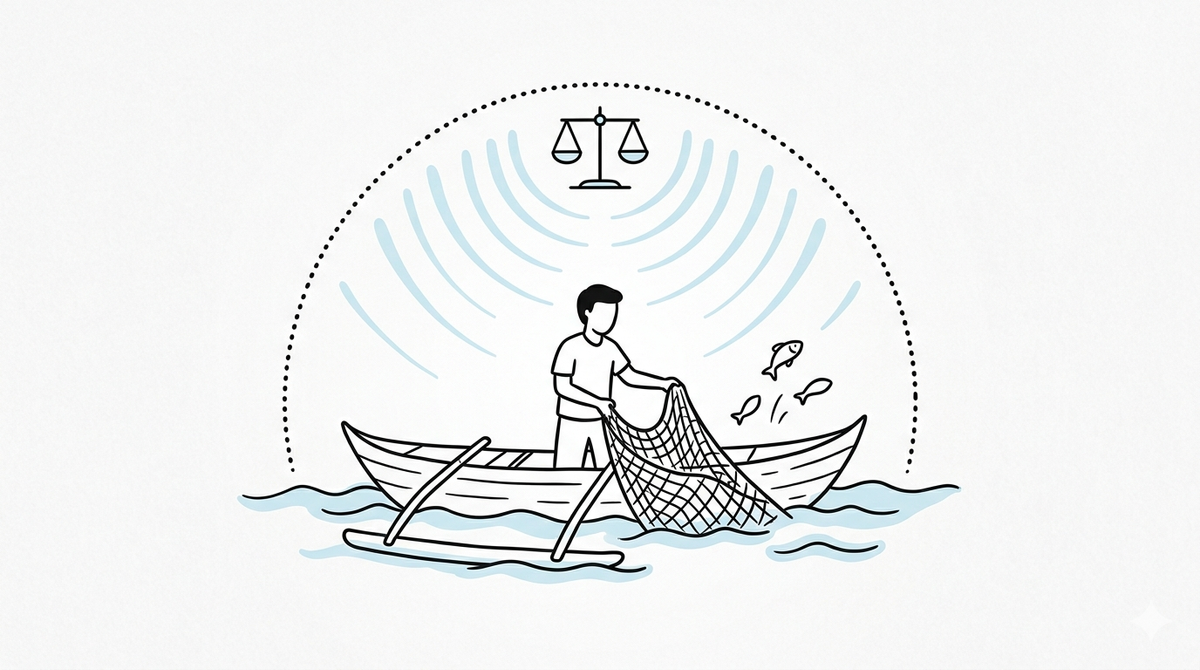
The article connects complex international security dialogues from the Shangri-La Dialogue to the tangible, everyday realities of Filipino fishers, food prices, and community stability.
Every morning before dawn, thousands of Filipino fisherfolk push their wooden outriggers into the open sea. For them, the ocean is not a strategic map or a chessboard of international relations. It is simpler than that: it is the source of the day’s meal, the tuition fee for their children, and the quiet rhythm of a life built around the tides. They measure the waters not in nautical miles or sovereign boundaries, but in the weight of the catch and the safety of the journey back home.
Yet, thousands of miles away in air-conditioned conference halls, high-level diplomats and defense chiefs look at the very same waters through a completely different lens. They speak of "convergence points," "geopolitical friction," and "multilateral defense frameworks."
To the average Filipino trying to budget a daily wage in the market, these terms sound detached, academic, and far removed from the immediate realities of high prices, underemployment, or local community issues. But the reality is that the decisions made, or not made, in these high-stakes global forums eventually ripple inward, finding their way straight to our shores, our markets, and our kitchen tables.
The View from the High Table
Recently, at the International Institute for Strategic Studies (IISS) Shangri-La Dialogue—a major security summit in Singapore—the Philippines took center stage. Philippine Defense Secretary Gilberto Teodoro Jr. presented a vision of the country as a "convergence point" for regional security. Building on previous stances from the national government, the message positioned the Philippines as a nation standing firmly by international law, offering a unique space where middle powers and regional partners can collaborate to maintain peace.
The core argument is that in a fragmented world where global superpowers vie for dominance, smaller and middle-income nations must band together to uphold the rules that protect everyone. By becoming a hub for dialogue and cooperation, the Philippines hopes to help steer Asia away from conflict and toward a stable, predictable peace.
It sounds noble, strategic, and profoundly important on an institutional level. But for an ordinary citizen, the question remains: Why should we care? What does a "convergence point" mean for a mother in Pangasinan, a farmer in Isabela, or a commuter in Metro Manila?
Moving Beyond the Headlines: The Price of Instability
To understand the relevance of international security, we must first look at what happens when law and order on the seas begin to fracture. The oceans surrounding the Philippine archipelago are not empty spaces; they are the busiest marine highways in the world.
A significant portion of global trade passes through these waters. This includes the fuel that powers our public transport, the raw materials that feed our factories, and the imported commodities that supplement our local food supply.
When geopolitical tensions rise, the risks multiply:
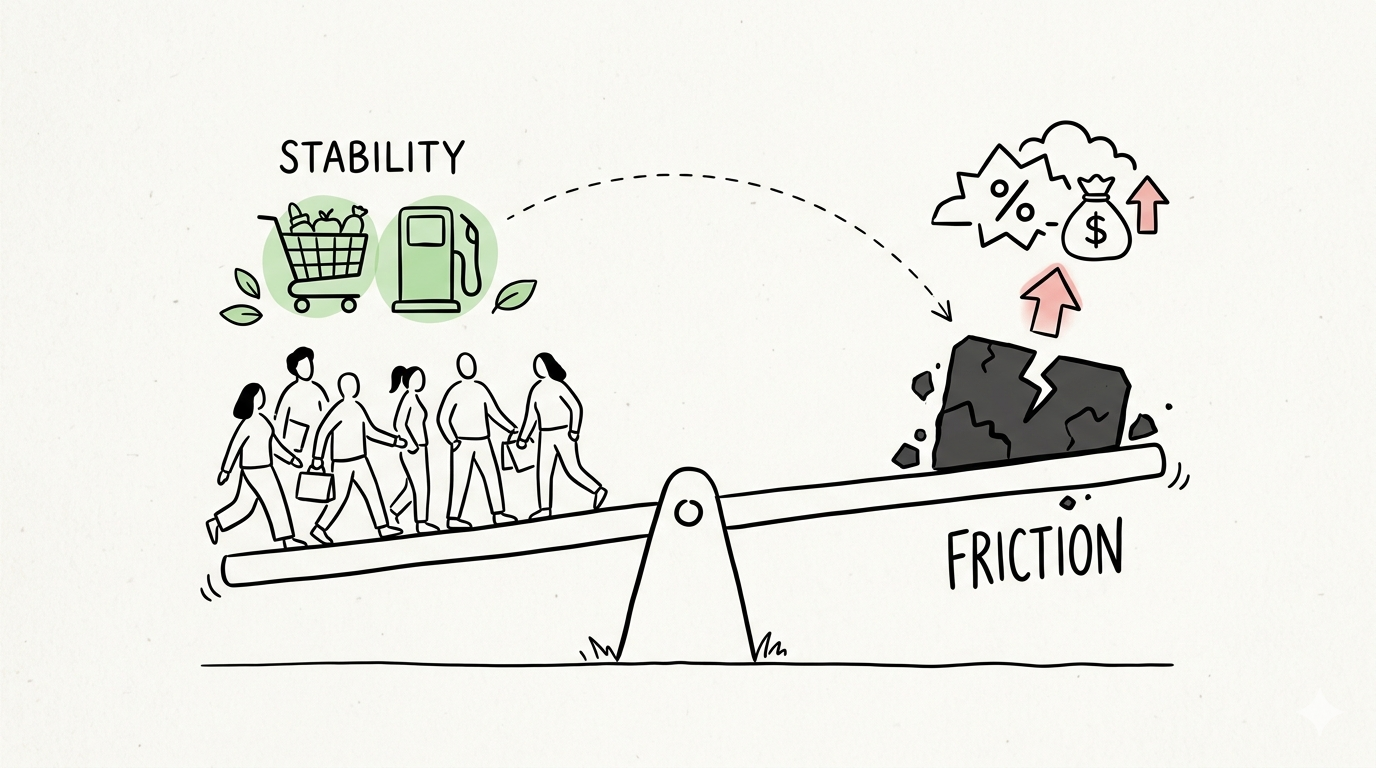
- Shipping and Insurance Costs: If a region is deemed unstable or high-risk, shipping companies face skyrocketing insurance premiums. These companies do not absorb those costs—they pass them down the line. Eventually, the consumer pays for it in the form of pricier goods, from electronics to basic canned goods.
- Supply Chain Disruptions: Delays in maritime trade can choke the supply of vital agricultural inputs like fertilizers, directly impacting local farmers' yields and driving up food prices in urban centers.
- Energy Security: The Philippines relies heavily on imported fuel. Any localized friction that threatens shipping lanes can cause immediate spikes at the gas pumps, triggering a domino effect on the fares of jeepneys, the cost of logistics, and the monthly electricity bill of every household.
When we talk about upholding international law and freedom of the seas, we are not just talking about abstract legal principles. We are talking about keeping the lines of commerce open so that life at home remains affordable and stable.
The Human Scale of the Sea
Beyond the economic data, there is a deeply human dimension to regional security. The concept of sovereignty is felt most acutely by those who live on the margins.
Consider our coastal communities. For generations, fishing has been more than an occupation; it is a cultural anchor. When international rules are ignored, these communities are the first to suffer. When fishers are intimidated or restricted from their traditional fishing grounds, it doesn't just reduce the national GDP—it directly diminishes the income of a family that relies on that day’s catch to buy rice.
When a fishing boat cannot sail freely, the supply of fish in local wet markets drops, and the prices rise for urban poor families who rely on fish as an affordable source of protein. The micro-economy of a coastal village is directly tied to the macro-politics of the region. A secure ocean means a secure livelihood, and a secure livelihood means fewer families falling into poverty.
From Global Diplomatic Visions to Local Resilience
The vision of the Philippines as a convergence point for peace relies heavily on the strength of its partnerships and international law. However, as global discussions remind us, a nation’s external strength is only as robust as its internal resilience. True security cannot be built solely on treaties and diplomatic speeches; it must be rooted in the strength of its communities.
This issue reflects why community-based efforts around local economic resilience, sustainable livelihoods, and community-driven development matter. While national leaders work to position the country as a diplomatic bridge in Asia, the real foundation of peace is built when local communities are organized, self-reliant, and capable of weathering economic and environmental shifts. When local livelihoods are diverse and protected, communities become less vulnerable to the external shocks born from international instability.
A Question for the Future
The discussions in international summits like the Shangri-La Dialogue are easy to dismiss as distant political theater. It is tempting to look at the photos of leaders in suits and think that their world has nothing to do with ours.
But in an interconnected world, isolation is an illusion. The stability of our region determines whether a parent can afford nutritious food next month, whether a young graduate can find a stable job in a growing economy, and whether our rural communities can look to the future with a sense of predictability and hope.
As our leaders attempt to navigate these complex geopolitical waters and position the nation as a beacon for international law, it is worth asking ourselves a deeper question: How can we, as ordinary citizens, build stronger, more unified communities at home so that whatever waves may come from the outside world, our households remain anchored and secure?
Lahat tayo masaya kapag naririnig nating bida ang Pilipinas sa mga malalaking global security summits tulad ng Shangri-La Dialogue. Pero ano nga ba ang kinalaman ng "regional security" at "international law" sa presyo ng bigas, sa krudo ng dyip, o sa huli ng mga mangingisda natin? Alamin kung paano ang mga usapan sa ibang bansa ay may direktang epekto sa hapag-kainan ng bawat pamilyang Pilipino.

Power Our Mission, Shape the Future
We empower single parents, PWDs, youths, seniors, and stay-at-home parents through digital livelihood.
Help us build resilient communities.
BUKLURAN remains open to partnerships, sponsorships, and collaborative initiatives that create meaningful community impact.
Whether through funding, in-kind support, volunteerism, or shared services, your organization can help strengthen programs that serve underserved communities.
Do you want to take part in our free livelihood programs, scholarship assistance, and community resource pooling initiatives? Membership is completely free.
Join BUKLURAN!
Register, volunteer, and become a member today.