When the Game Costs Too Much: Re-evaluating the True Price of Student Athletics
When a team-building activity ends in an unimaginable loss, we have to look past the scoreboard and ask tough questions about safety.
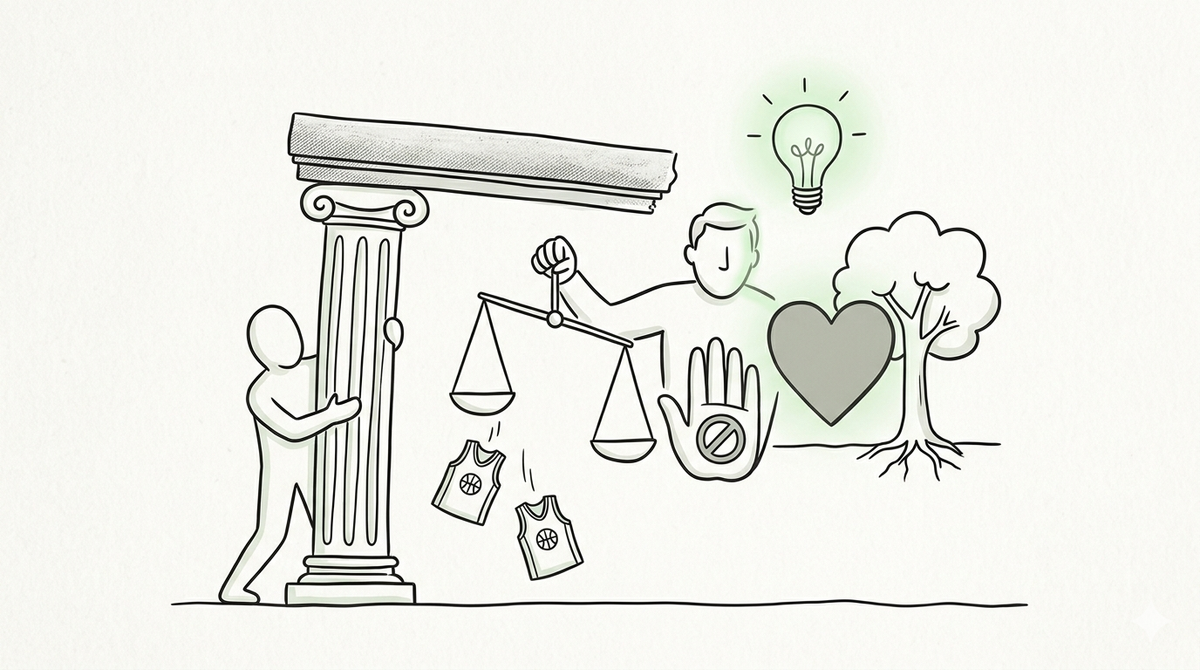
The tragic loss of two young athletes during a team-building activity exposes systemic gaps in student-athlete safety protocols and calls for a fundamental shift in how schools prioritize student well-being over athletic prestige.
Every year, thousands of Filipino parents cheer from the bleachers, watching their children run onto court beds and athletic fields. For these families, a sports scholarship or a slot on a prestigious university team is more than just a source of school pride—it is a hard-earned ticket to a better future, a college education, and potentially a career. We celebrate the buzzer-beating shots, the grueling training montages, and the fierce loyalty to school colors. But a quiet, uncomfortable reality often stays hidden beneath the stadium lights: what happens when the systems designed to nurture these young talents fail to protect their very lives?
The sports community was shaken to its core following the heartbreaking deaths of two student-athletes from Ateneo de Manila University during a team-building event. What was supposed to be an exercise in camaraderie and preparation for the upcoming seasons turned into an unimaginable nightmare for their families, teammates, and peers. Now, the University Athletic Association of the Philippines (UAAP) is actively evaluating potential sanctions against the university as investigations into the incident continue.
While institutional penalties, suspensions, and fine structures occupy the headlines, the real conversation belongs to the living rooms of ordinary Filipino families. This is no longer just a story about a single university or a specific sports league; it is a critical turning point that forces us to look closely at the invisible pressures, systemic gaps, and safety cultures operating within our educational systems.
When we read about "team building" or "off-season training," it is easy to assume these activities are tightly regulated, safe, and heavily supervised. In reality, the lines between pushing an athlete to their competitive peak and compromising their basic physical safety can become dangerously blurred. In a culture that deeply romanticizes puso (heart) and grit, young athletes are frequently conditioned to endure extreme discomfort, push past exhaustion, and keep silent about safety hazards out of fear of losing their spots on the roster or letting down their coaches.
The impending decision by the UAAP regarding sanctions underscores a massive structural vulnerability. For the longest time, student-athletics has operated on a high-stakes model where performance and prestige often outpace institutional oversight. When a tragedy like this occurs, it reveals that existing guidelines may either be insufficient, poorly communicated, or treated as mere paperwork rather than strict, non-negotiable life-saving measures.
An ordinary observer might ask: why does a sports association have the power to penalize a school for an event that happened outside the official tournament calendar? The answer lies in accountability. A league cannot simply exist to collect gate receipts, manage broadcast rights, and hand out championship trophies; it must serve as the primary custodian of standard safety thresholds across all member universities. If the rules do not strictly enforce a zero-risk environment for off-court activities, then the rules are fundamentally broken.
The impact of this loss ripples far past the university walls in Quezon City. It lands heavily on the shoulders of every parent who has ever packed a gym bag for their child. When parents entrust their children to a school’s sports program, there is an implicit, sacred contract: We lend you our children to learn and compete, and you promise to return them to us safe. When that contract is broken, the collective trust of the community fractures.
For the students left behind—the teammates who shared dormitories, classrooms, and dreams of sports stardom—the emotional toll is staggering. They are forced to navigate profound grief while watching the administrative machinery debate penalties, policy revisions, and legal liabilities. Meanwhile, high school players aspiring to make it to the big leagues are watching closely, learning a heavy lesson about the real-world stakes of the games they play.
This tragedy brings to light why deep, community-centered reflection on youth safety and welfare is so critical. Across the country, local communities constantly struggle with a lack of standardized safety protocols, limited access to medical personnel during grassroots sports meets, and a general lack of training regarding emergency responses in out-of-school activities. The conversations happening at the highest levels of collegiate sports need to filter down to every local league, school district, and community center. Safety cannot be an afterthought reserved only for high-profile schools; it must be a baseline right for every single child who picks up a ball.
As the UAAP determines its next steps and Ateneo faces institutional reckoning, the ultimate goal must move beyond punishment. Fines will not bring back two vibrant young lives, and suspended playing privileges will not heal the grief of the bereaved families. The only meaningful outcome is a sweeping, transparent overhaul of how student-athlete welfare is managed in the Philippines.
We need to redefine what "strength" means in sports. A truly strong athletic program is not one that wins championships at any cost, but one where the safety, physical health, and mental well-being of the students are fiercely and unconditionally guarded.
The next time we sit down to watch a game, we should look past the scoreboard and remember the human beings wearing the jerseys. They are children, siblings, and students first—and athletes second. No trophy is shiny enough, and no school legacy is important enough, to justify the loss of a single human life. The true measure of our sports programs will always be how well we protect our players when the cameras are turned off.
Lahat tayo masaya kapag nanonood ng laro ng ating mga paboritong student-athletes. Hangang-hanga tayo sa kanilang galing at sakripisyo para sa kanilang paaralan. Pero paano kung ang sistemang dapat nag-aalaga sa kanila ang mismong naglalagay sa kanila sa panganib? Ang trahedya kamakailan ay isang mabigat na paalala: walang tropeo o kampeonato ang mas mahalaga kaysa sa buhay ng ating mga kabataan.

Power Our Mission, Shape the Future
We empower single parents, PWDs, youths, seniors, and stay-at-home parents through digital livelihood.
Help us build resilient communities.
BUKLURAN remains open to partnerships, sponsorships, and collaborative initiatives that create meaningful community impact.
Whether through funding, in-kind support, volunteerism, or shared services, your organization can help strengthen programs that serve underserved communities.
Do you want to take part in our free livelihood programs, scholarship assistance, and community resource pooling initiatives? Membership is completely free.
Join BUKLURAN!
Register, volunteer, and become a member today.