When the Ground Shakes and the Signal Dies: What the Mindanao Quake Teaches Us About Lifelines
When a 7.8 magnitude quake cuts off power and cell towers, a text message becomes a lifeline. How new space tech is changing survival.
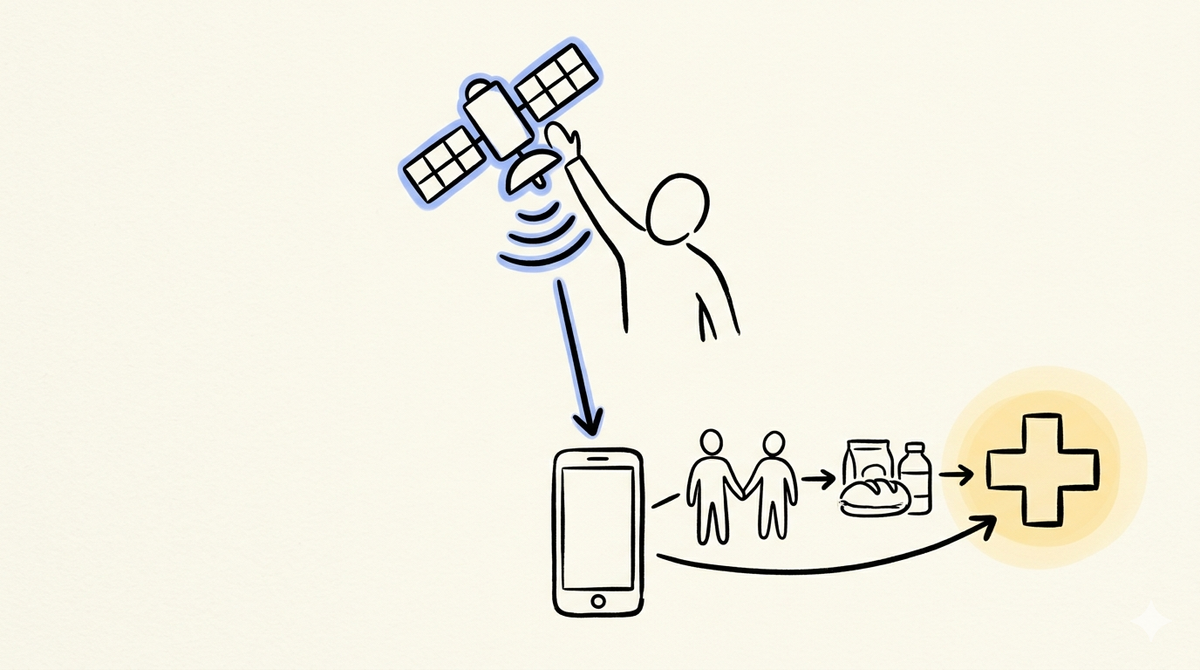
The deployment of direct satellite-to-mobile connectivity following the magnitude 7.8 earthquake in Mindanao marks a critical evolution in disaster resilience, proving that keeping families connected during crises requires bypass solutions that don't rely on vulnerable ground-based infrastructure.
Imagine the ground beneath your feet suddenly shifting violently. It is 7:37 in the morning, the exact moment thousands of children are settling into their desks for the first day of classes across Southern Mindanao. Within seconds, a massive magnitude 7.8 earthquake shatters the morning calm. Bookshelves topple, concrete walls fracture, and the deafening roar of shifting earth fills the air.
As the shaking stops, the very next instinct is universal, automatic, and desperate: you reach for your mobile phone. You need to check on your daughter at the local high school, your elderly parents a few barangays over, or your spouse who just left for work.
But when you look at the top corner of your screen, the signal bars are completely gone. The screen reads "No Service."
This was the harrowing reality faced by thousands of families across Sarangani, South Cotabato, and Sultan Kudarat. Beyond the immediate physical destruction of a major seismic event—and the terrifying tsunami warnings that quickly followed along the coastal communities of Southern Mindanao—the earthquake triggered a quiet, invisible second crisis: a massive communications blackout.
The emergency exposed a fundamental truth about our modern lives. In the Philippines, a cell phone signal is no longer a convenience; it is a basic human necessity, especially when survival is on the line.
The Day the Towers Fell
When the earthquake struck, it did not just damage buildings; it severed the invisible grid we rely on every day. Across Southern Mindanao, commercial power grids collapsed almost instantly. For telecommunications networks, power is oxygen. Without electricity, the ground-based cellular towers that blanket our towns and cities go dark.
The numbers paint a stark picture of the disruption:
- 30 municipalities experienced immediate, widespread network failures.
- 9 provinces reported severe, intermittent signal loss.
- Over 700,000 mobile subscribers were abruptly cut off from the outside world.
In the crucial hours following a disaster—often called the "golden hours" of search, rescue, and evacuation—the inability to send a simple text message creates a vacuum of terror. Rumors spread faster than facts. Families cannot coordinate evacuation plans, and local emergency responders are left operating in the dark, unable to pinpoint where help is needed most.
Historically, restoring communications meant waiting days for telecom engineers to clear debris, transport heavy diesel generators to remote cell sites, or set up massive mobile cellular trucks. But when roads are split open and bridges are compromised, physical access is painfully slow.
Moving the Grid to the Skies
The recent crisis in Mindanao, however, saw the deployment of a new technology that bypasses the broken ground entirely. For the first time in Philippine disaster response, telecom operators utilized direct "satellite-to-mobile" (or direct-to-cell) technology.
Through a temporary emergency permit from the National Telecommunications Commission (NTC), low-Earth orbit satellites—specifically from the Starlink constellation—were utilized to connect directly to ordinary smartphones on the ground.
To understand why this matters, we have to look at how regular mobile networks function versus how satellite networks operate.
| Feature | Traditional Cellular Grid | Direct Satellite-to-Mobile Grid |
| Infrastructure Link | Requires local cell towers, fiber cables, and local power grids. | Plugs directly from an orbit satellite to your phone. |
| Vulnerability | High. Easily knocked out by earthquakes, typhoons, and blackouts. | Low. Immune to terrestrial and ground-based physical disasters. |
| Hardware Needed | Standard commercial smartphone. | Standard commercial smartphone (4G LTE / 5G compatible). |
| Primary Use Case | High-speed data, daily browsing, voice calls. | Emergency messaging, WhatsApp, SMS, rescue coordination. |
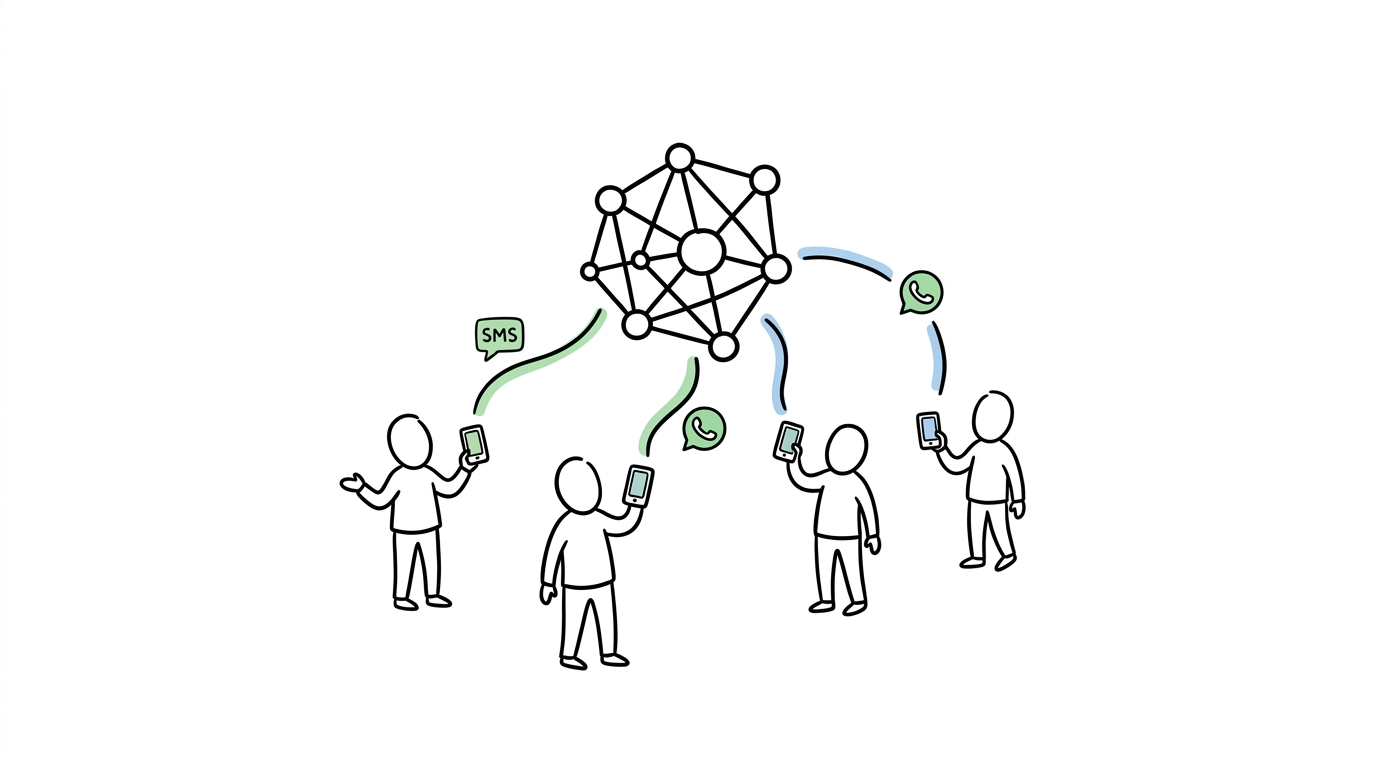
For the residents in towns like Lake Sebu, Glan, or Kalamansig, this meant that even if the local cell tower was physically broken or dead from a power outage, they could step into an open area with a clear view of the sky and see their phones register a basic connection. Without changing their SIM cards, without buying expensive proprietary satellite phones, and without paying premium fees, ordinary citizens were given a temporary 30-day window of free basic text and data lifelines.
The Human Side of the Signal
Why does a 50-character text or a quick WhatsApp message matter so much in a disaster?
Because data is the antidote to panic. For a mother standing outside her cracked home in Sarangani, being able to send a message saying "Ligtas kami rito, huwag kayong mag-alala" (We are safe here, don't worry) saves an entire extended family from agonizing panic. For local barangay captains, the ability to text municipal disaster offices about blocked roads or rising river levels means relief arrives hours, if not days, faster.
Furthermore, this technological shift highlights an overlooked aspect of the digital divide. When disasters hit, affluent communities often have backup power, satellite television, or generators to keep their home internet alive. It is the vulnerable populations—the farming communities in Sultan Kudarat or the coastal fishing villages in Sarangani—who are completely isolated when the primary grid fails.
The deployment of space-based emergency communication platforms serves as an equalizer, ensuring that basic communication becomes an unassailable public safety baseline rather than a luxury.
Rethinking Community Resilience
The lessons of the Mindanao earthquake go far beyond technology. They force us to rethink how we build our communities to survive an uncertain future. If our communication infrastructure is fragile, our entire disaster response plan is fragile.
This reality reflects why community-based efforts around local preparedness matter so deeply. True resilience cannot rely solely on the sudden arrival of high-tech corporate solutions after a catastrophe has already occurred. It requires a seamless integration where local governments, civic organizations, and grassroots leaders are trained to utilize alternative channels—whether that means traditional analog two-way radios, community broadband networks, or satellite-backed emergency kiosks.
Technology is only as good as the community's capacity to use it. A satellite link in the sky is useless if a local neighborhood doesn't have a organized, trained disaster committee on the ground ready to manage the flow of information, distribute aid equitably, and keep the peace when the regular systems fail.
Moving Forward From the Ruins
As the aftershocks slowly fade and the hard work of rebuilding infrastructure begins across Mindanao, the magnitude 7.8 earthquake must serve as a permanent wake-up call for the entire archipelago. We live in a country cradled by typhoons and crisscrossed by active fault lines. The question is never if the next disaster will strike, but when.
The successful deployment of satellite-to-mobile connectivity proves that human ingenuity can build bridges across chaos. But it also leaves us with a critical, lingering question to ponder:
Are we doing enough within our own households and local barangays to secure our lifelines before the next silence falls?
Bakit nga ba unang nawawala ang signal ng cellphone tuwing may malakas na lindol, kung kailan ito pinakakailangan ng ating mga pamilya?
Ang nagdaang magnitude 7.8 earthquake sa Mindanao ay nag-iwan ng mahalagang leksyon tungkol sa ating kaligtasan. Sa gitna ng blackout at sirang mga cell tower, isang bagong teknolohiya mula sa kalawakan ang naging huling linya ng komunikasyon. Sapat na nga ba ito para sa susunod na krisis?

Power Our Mission, Shape the Future
We empower single parents, PWDs, youths, seniors, and stay-at-home parents through digital livelihood.
Help us build resilient communities.
BUKLURAN remains open to partnerships, sponsorships, and collaborative initiatives that create meaningful community impact.
Whether through funding, in-kind support, volunteerism, or shared services, your organization can help strengthen programs that serve underserved communities.
Do you want to take part in our free livelihood programs, scholarship assistance, and community resource pooling initiatives? Membership is completely free.
Join BUKLURAN!
Register, volunteer, and become a member today.