When the Ground Shakes: What We Forget About Rebuilding After a Disaster
When the ground stops shaking, the real test begins. Why disaster response is about rebuilding power, health, and community stability.
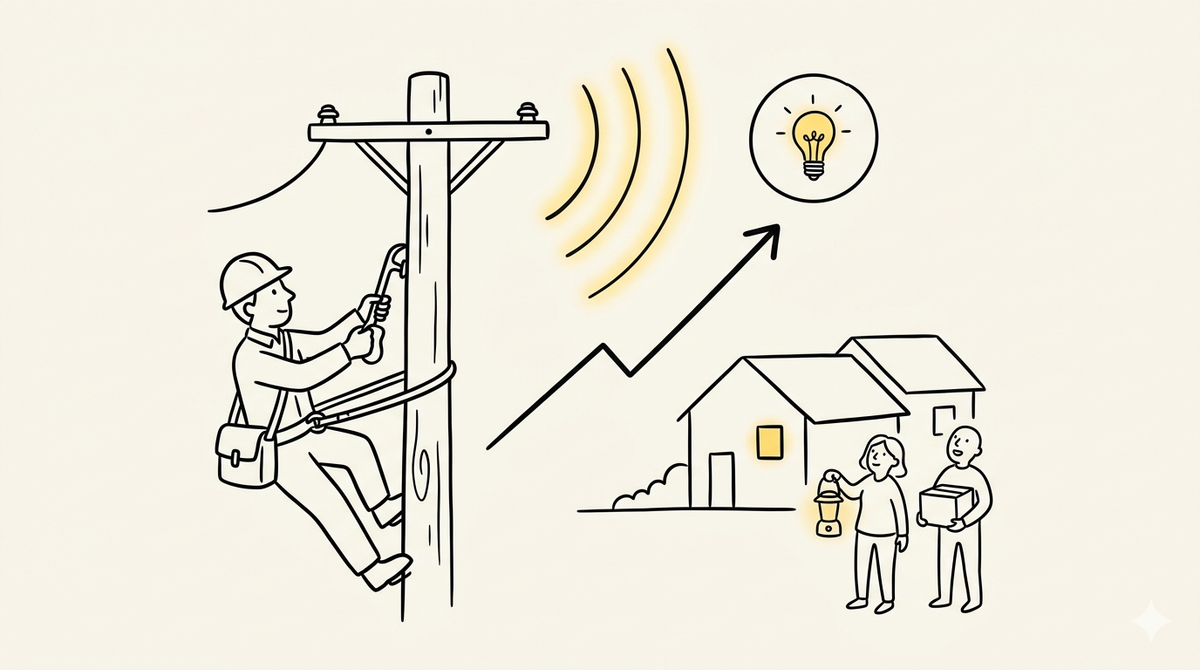
Disaster relief must go beyond temporary food packs to address the critical, systemic restoration of power and health infrastructure that allows communities to truly recover.
When a major earthquake strikes, the first few seconds are defined by a universal instinct: survival. You find a doorway, drop under a sturdy table, or run out into the street, waiting out the terrifying rumble of the earth. But when the dust finally settles and the ground falls silent, a completely different kind of challenge begins.
For more than 35,000 families across 199 barangays in Southern Mindanao, this is the current, exhausting reality. A powerful earthquake recently tore through General Santos City, Sarangani, and neighboring provinces, leaving behind fractured concrete, upended livelihoods, and communities completely cut off from the modern grids they rely on every single day.
In the immediate aftermath of a disaster, the images that capture public attention are usually the most visible ones—collapsed storefronts, cracked highways, and lines of families carrying whatever they could salvage. Naturally, our collective instinct is to look at immediate material losses. But as the days bleed into weeks, the true depth of a disaster reveals itself not in what has fallen down, but in what has stopped working.
The Invisible Grid That Keeps Us Safe
To understand the real anatomy of a crisis, we have to look closely at the invisible networks that keep a community functioning. Imagine trying to manage an emergency inside a crowded hospital when the lights suddenly snap off. Ventilators default to brief battery backups, diagnostics grind to a halt, and surgeons are left working under the erratic glow of smartphones.
This isn't a hypothetical movie scene; it is the immediate risk faced by institutions like St. Elizabeth Hospital and Socsargen County Hospital in General Santos City following the quake. When a region loses power, its entire healthcare system is pushed to the absolute brink.
This is why recent recovery efforts have taken a critical turn toward infrastructural triage. While the distribution of relief goods like food packs and bottled water provides a vital lifeline to displaced families, the simultaneous deployment of power restoration support to the South Cotabato II Electric Cooperative, Inc. (SOCOTECO II) represents the structural backbone of disaster recovery.
Getting the lights back on in a disaster zone is not about convenience or comfort. It is about restoring the vital signs of an entire society. Without electricity, water pumps fail, leading to severe sanitation crises. Without power, communication networks collapse, leaving families unable to check on loved ones or coordinate rescue operations.
Moving Beyond Temporary Lifelines
Disaster response in the Philippines has long relied on a familiar formula: the immediate packing and shipping of relief boxes. This tradition of bayanihan (community cooperation) is beautiful, deeply necessary, and uniquely Filipino. When corporations like Meralco send solar lanterns, clean water, and engineering teams across regional borders to assist local electric cooperatives, it demonstrates a massive, structural form of mutual aid.
Yet, as citizens and community observers, we must ask ourselves an important question: What happens when the initial wave of solidarity recedes?
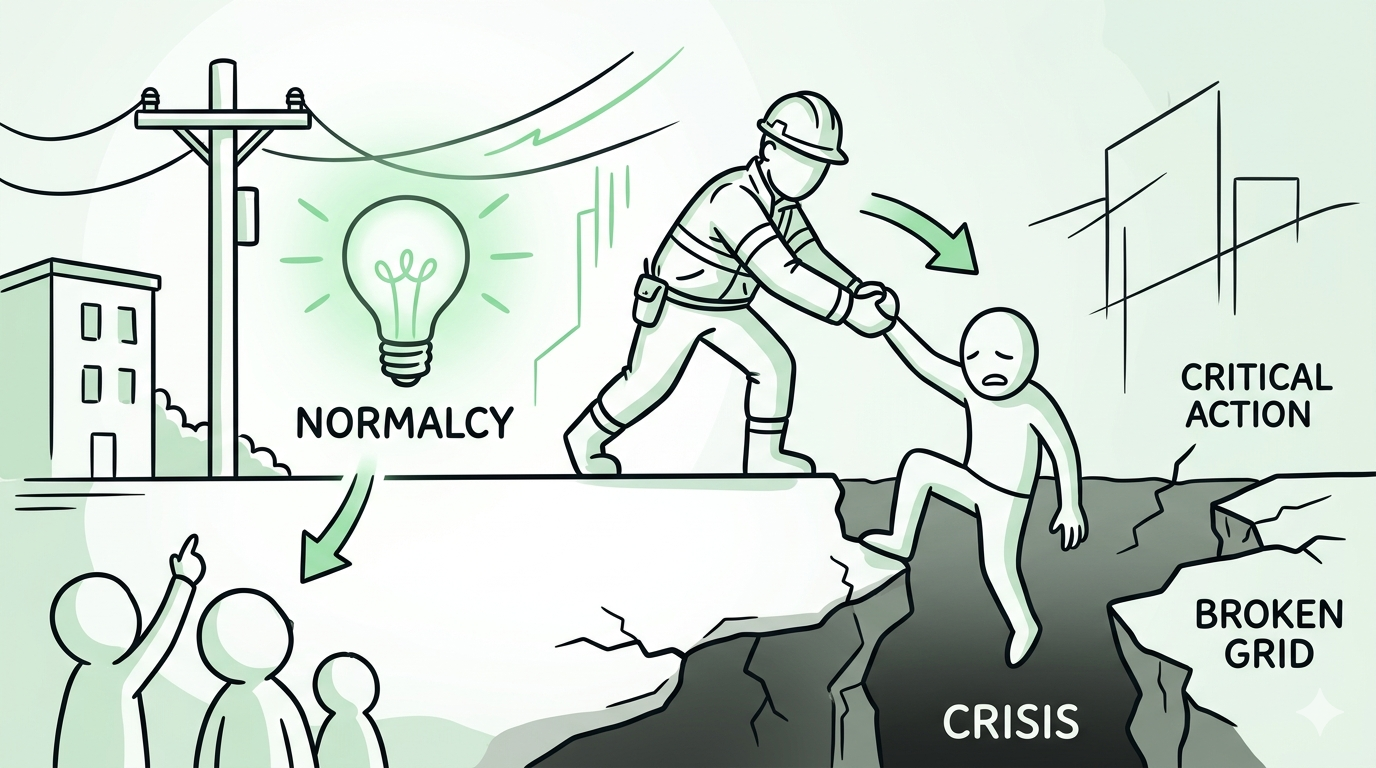
A food pack feeds a family for two or three days. A bottle of water quenches thirst for an afternoon. But a community cannot rebuild its life while living out of a plastic bag. True recovery requires shifting our perspective from temporary relief to long-term systemic stability.
Consider the overlooked implications for workers and small business owners in Southern Mindanao. A small sari-sari store owner who loses her refrigerator loses her entire stock of perishable goods—and with it, her daily income. A welder or a digital worker without electricity cannot earn a living. When infrastructure stays broken, a natural disaster quickly mutates into a prolonged economic crisis, dragging vulnerable families deeper into poverty.
Therefore, the speed at which a local grid is repaired directly dictates how quickly an ordinary family can reclaim their financial independence. We must begin measuring the success of disaster response not just by the number of relief boxes handed out, but by the number of days it takes to return a community to full operational self-reliance.
The Human Impact: Stories From the Ground
Behind every statistic of "35,000 affected families" are individual human lives trying to navigate an altered landscape. There are parents sitting in dark evacuation centers, wondering if it is safe to take their children back inside their cracked homes. There are elderly residents relying on the gentle, steady light of a donated solar lantern just to navigate a cluttered room safely at night.
For these families, disaster recovery is a deeply psychological process as much as a physical one. The simple return of a stable streetlamp or a humming refrigerator brings a profound sense of normalcy back to a traumatized neighborhood. It signals to the community that they have not been abandoned in the dark, and that the slow march back to ordinary life has officially begun.
The Reality of Relief: True disaster resilience is built when national resources seamlessly support local expertise. When major utility providers collaborate with local cooperatives like SOCOTECO II, it creates a template for how the country can protect its most vulnerable regions from being permanently left behind after a crisis.
This ongoing situation in Mindanao reflects exactly why community-based efforts around local infrastructure monitoring and localized emergency preparedness matter so deeply. Long before the trucks arrive from Manila, it is the local community organizers, the barangay health workers, and the regional linemen who stand on the front lines of defense. Investing in their training, their equipment, and their safety is the most sustainable way to ensure that the next time the ground shakes, our systems bend instead of breaking.
Looking Forward
As the rehabilitation of Southern Mindanao continues, the tents will eventually be packed away, and the headlines will inevitably shift to other stories. But for the thousands of Filipinos in Sarangani and General Santos, the journey of rebuilding will take months, if not years.
It leaves us with a quiet, necessary truth to ponder: If disasters are an inevitable reality of living in our beautiful, fractured archipelago, how can we build a society where our infrastructure is as resilient as our spirit? True bayanihan isn't just about helping our neighbors pick up the pieces after a catastrophe—it is about building a world where the pieces don't shatter so easily in the first place.
Lahat tayo masaya kapag may dumadating na relief goods pagkatapos ng lindol, pero sapat na nga ba ang relief packs para tunay na makabangon ang isang komunidad?
Higit sa pagkain at tubig, may mga "invisible" na pangangailangan ang higit 35,000 pamilya sa Mindanao ngayon na mas nagdidikta kung paano muling magsisimula ang kanilang buhay. Ano ang totoong kuwento sa likod ng rehabilitasyon kapag nawala na ang mga kamera?

Power Our Mission, Shape the Future
We empower single parents, PWDs, youths, seniors, and stay-at-home parents through digital livelihood.
Help us build resilient communities.
BUKLURAN remains open to partnerships, sponsorships, and collaborative initiatives that create meaningful community impact.
Whether through funding, in-kind support, volunteerism, or shared services, your organization can help strengthen programs that serve underserved communities.
Do you want to take part in our free livelihood programs, scholarship assistance, and community resource pooling initiatives? Membership is completely free.
Join BUKLURAN!
Register, volunteer, and become a member today.