When the Guardrails Fail: What the Bamban POGO Indictment Reveals About Our Safety at Home
When local leaders bend rules for big money, everyday citizens pay the price in public safety. Why the Bamban POGO crisis matters at home.
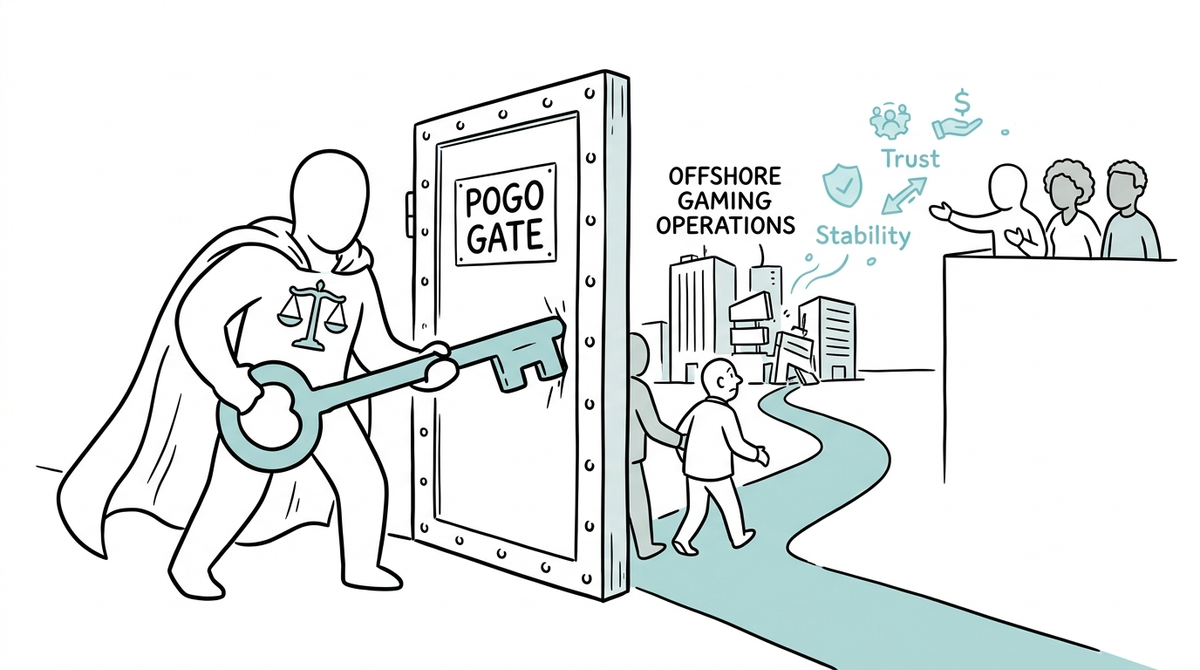
The Office of the Ombudsman’s indictment of former Mayor Alice Guo highlights how systematic lapses in local governance expose ordinary Filipino communities to transnational crime, demanding greater civic vigilance.
For most busy Filipinos, the morning routine revolves around immediate, tangible concerns. We check if the water is flowing from the tap, map out the cheapest commute to work, calculate the rising cost of a kilo of rice, and make sure our children leave for school safely. National political headlines often feel like a distant noise—a televised drama played out by figures in high places who have very little to do with the quiet realities of everyday neighborhood life.
But every so often, a legal development occurs that shatters the barrier between state governance and the safety of our own backyards.
The recent decision by the Office of the Ombudsman to indict former Bamban, Tarlac Mayor Alice Guo, alongside a long list of local officials and private individuals, is one of those moments. The charges—rooted in violations of the Anti-Graft and Corrupt Practices Act—stem from the establishment and operations of raided Philippine Offshore Gaming Operators (POGOs) within the quiet municipality of Bamban.
To look at this purely as a spectacular political scandal is to miss the point entirely. Strip away the media coverage, the dramatic senate hearings, and the high-profile arrests, and you are left with a sobering, fundamental truth that affects every citizen: when local government guardrails are deliberately lowered, it is the ordinary community that inherits the danger.
The Breakdown of Local Protection
An intelligent but busy citizen might look at the indictment and ask, "What exactly is the crime here?" In simple terms, the anti-graft office found that public office was allegedly used to clear the path for businesses that brought transnational criminal networks into a rural town.
Instead of acting as strict gatekeepers of public safety, local authorities are accused of fast-tracking permits, ignoring missing documentation, and entering into agreements that directly benefited private entities over the welfare of the municipality. Property that belonged within the local jurisdiction became a sprawling hub for illegal actions, human trafficking, and financial fraud.
In the Philippines, the Local Government Code grants municipal leaders immense power. Mayors, councilors, and local assessors have the ultimate say over who gets to build in your neighborhood, what kinds of businesses can set up next to your schools, and how heavily those businesses are inspected. This power is supposed to serve as a shield. It ensures that a community grows in an orderly, safe, and lawful manner.
When that shield is traded for private gain or hidden financial interests, the local government ceases to be a protector. It becomes an enabler of risks that a small town is completely unequipped to handle on its own.
Overlooked Implications for Everyday Life
The structural damage of local governance failure goes far deeper than a single raided compound in Tarlac. When illegal operations are allowed to entrench themselves in a locality, they alter the socio-economic fabric of the neighborhood in ways that squeeze ordinary families out.
First, consider the distortion of local economies. The influx of massive, unregulated capital into quiet municipalities artificially drives up the cost of land, rent, and basic commodities. Local merchants and family-run enterprises suddenly find themselves competing with deep-pocketed entities for space and resources.
Second, there is a severe erosion of public safety that directly threatens households. A town known for quiet streets suddenly becomes a magnet for specialized crime—online scams, undocumented workers living under coercive conditions, and security threats that strain the capabilities of local police forces. A parent shouldn't have to worry if the large compound down the street from their child's high school is harboring illegal syndicates, yet that became the exact reality for residents in Bamban.
Perhaps the most long-lasting consequence is the institutional rot left behind. When junior municipal employees see top leadership bypassing regulatory checks with impunity, the standard for public service drops across the board. The everyday transactions that citizens rely on—getting a clear business permit, resolving a boundary dispute, or seeking emergency assistance—become tainted by a culture where rules are viewed as optional for the right price.
Public offices are not business franchises. When regulations are treated as commodities to be bought and sold, the structural safety of the entire community collapses.
Connecting Systems to the Household
We often talk about "good governance" as if it were an abstract, academic concept debated in air-conditioned seminar halls. In reality, good governance is the invisible infrastructure that keeps your family safe.
- For the parent: It means knowing that the commercial building near the neighborhood center has passed actual fire and structural inspections, rather than just having a signed piece of paper.
- For the local worker: It means that the jobs being generated in the area are legitimate, dignified, and subject to Philippine labor laws, rather than exploitative underground operations that bring criminal elements into the local ecosystem.
- For the ordinary taxpayer: It means that public land and local resources are being used to build public parks, health centers, and public markets, rather than being carved up for exclusive, high-walled compounds that shut the community out.
When we realize that local corruption directly compromises the physical and economic security of our households, we stop viewing political accountability as an elective interest. It becomes an act of self-preservation.
The Role of Grounded Vigilance
The crisis in Bamban reflects a broader truth that many civil society organizations observe across the country: communities are only as strong as their local institutions. This issue highlights why community-based efforts around basic civic education, transparent governance tracking, and local community organizing matter so deeply.
When ordinary citizens understand how municipal budgets are allocated, how zoning laws work, and what steps are required to issue local business permits, it becomes much harder for illicit networks to operate in the shadows. True protection does not just come from federal raids or national task forces after a crisis has matured; it begins with local residents asking the right questions before the ground is even broken.
Beyond the Headlines
The indictment of Alice Guo and her co-accused will wind its way through the anti-graft courts for years. The legal machinery will grind onward, focusing on statutes, evidence, and judicial arguments.
But for the rest of the country, the lesson must be absorbed today. The Bamban tragedy is a stark reminder that local government positions are the first line of defense for the Filipino family. When those positions are compromised, the vulnerability travels directly down to the ordinary citizen.
The ultimate defense against the encroachment of illegal industries into our towns isn't just a vigilant national police force—it is an informed, active, and unyielding local citizenry that refuses to let their community's safety be signed away behind closed doors.
How well do we know what is happening in our own municipal halls, and what will it take for us to look closer?
Talaga bang malayo sa buhay natin ang mga balita tungkol sa korapsyon sa malalayong bayan? Akala natin, usaping politikal lang ang pagkaka-indict kay dating Mayor Alice Guo. Pero sa likod ng mga headline, may mas malalim na katotohanan: kapag ang mga lokal na pinuno ay nagpabaya sa patakaran kapalit ng pera, ang kaligtasan ng mga ordinaryong pamilya ang direktang nanganib. Paano nga ba naaapektupan ang iyong komunidad kapag bumagsak ang proteksyon ng lokal na pamahalaan?

Power Our Mission, Shape the Future
We empower single parents, PWDs, youths, seniors, and stay-at-home parents through digital livelihood.
Help us build resilient communities.
BUKLURAN remains open to partnerships, sponsorships, and collaborative initiatives that create meaningful community impact.
Whether through funding, in-kind support, volunteerism, or shared services, your organization can help strengthen programs that serve underserved communities.
Do you want to take part in our free livelihood programs, scholarship assistance, and community resource pooling initiatives? Membership is completely free.
Join BUKLURAN!
Register, volunteer, and become a member today.