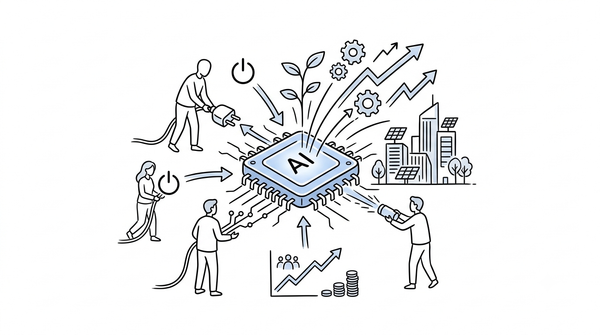
When the Horizon Crowds: What Joint Maritime Drills Mean for Our Coastal Towns
When military vessels appear on the horizon, the ripple effects are felt most acutely by the fishing communities navigating our shores.
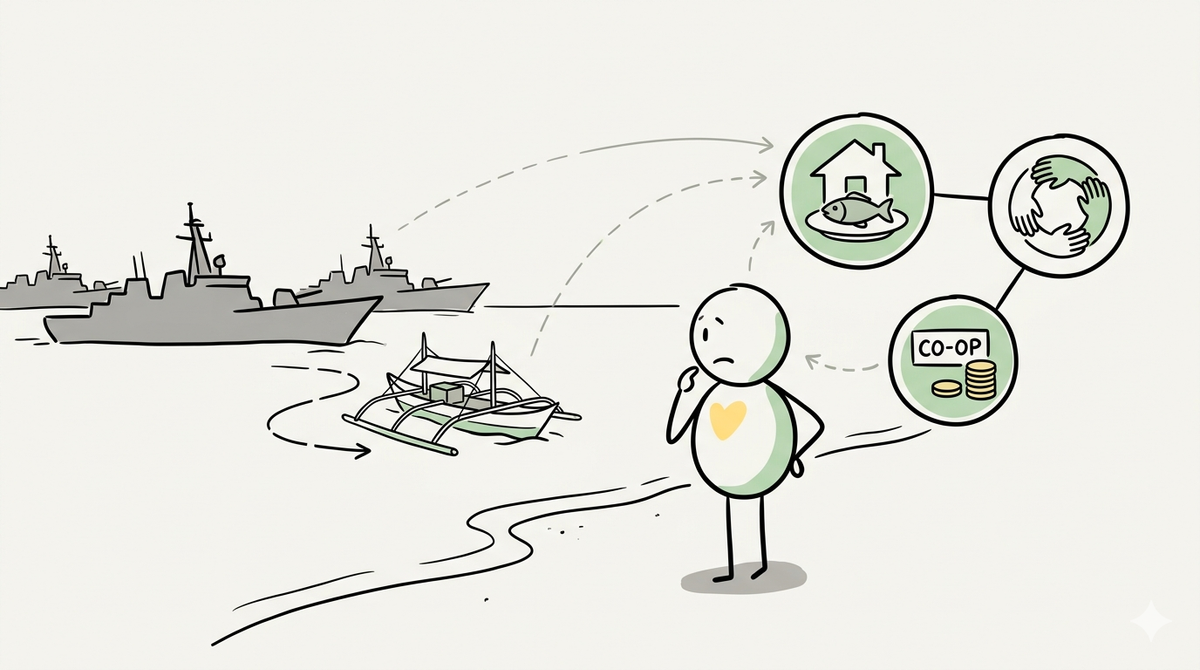
While joint maritime drills strengthen international military interoperability, they also shape the immediate economic realities, safety nets, and long-term climate resilience of local coastal communities.
Every morning before dawn breaks, thousands of small wooden boats push off from Philippine shorelines. For these families, the sea is not a chess board of international relations, exclusive economic zones, or territorial claims. It is simply the kitchen table. It is where tuition fees are harvested, where local markets find their daily pulse, and where a bad day of weather or a sudden disruption means a dinner table with nothing but white rice and salt.
Recently, headlines across the country highlighted the joint maritime drills conducted by Philippine and United States troops. These exercises are explicitly designed to boost interoperability, improve tactical communication, and test collective responses to maritime security challenges. In high-level military briefings and state television broadcasts, the focus is squarely on strategic alliances, hardware capabilities, and national defense postures.
Yet, for an ordinary citizen living in a coastal municipality, a completely different set of questions arises when military gray hulls appear on the blue horizon. Beyond the abstract language of geopolitics, there is an entire undercurrent of local realities that rarely makes it into the official joint communiqués. To fully appreciate what these large-scale exercises mean for our country, we must look away from the strategic maps and look closer at the households navigating the immediate, practical, and everyday impacts of an increasingly crowded sea.
The Immediate Ripple in Local Waters
To understand the public interest angle of maritime drills, one has to examine the direct operational friction they introduce to local fishing grounds. When joint exercises take place, specific marine coordinates are temporarily restricted to ensure safety during live-fire practices, maneuvering drills, or helicopter coordination. While these restrictions are necessary for public safety, they fundamentally alter the daily route of a traditional fisherman.
A small-scale fisherman operating a motorized banca does not have an unlimited supply of diesel. His daily voyage is calculated with razor-thin margins. If a standard fishing area is designated as a temporary exclusion zone, he faces a difficult choice: venture further out into deeper, more unpredictable open waters, or stay closer to shore where the fish are fewer and the competition among local fishers is fierce. Extending the trip by even a few miles means burning through more fuel, directly shrinking the take-home income meant for his family's daily needs.
Furthermore, these disruptions have a localized domino effect on food security. When local catches decrease because fishing schedules are cut short or altered, the immediate impact lands squarely on the municipal wet market (palengke). Less fish on the stalls leads to higher prices for the neighborhood consumer. For a family already stretching their budget to cope with inflation, a temporary spike in the price of staple fish like galunggong or tilapia is not a minor inconvenience—it is a direct strain on household nutrition.
Overlooked Implications and Safety Nets
Beyond the immediate loss of fishing days, there is a broader context regarding how local communities absorb systemic shock. Coastal municipalities in the Philippines are often the most vulnerable to overlapping risks, including seasonal typhoons, changing marine migration patterns, and sudden economic downturns. Large-scale maritime events highlight an underlying structural reality: our local communities operate with very few buffers.
When an external event alters the normal economic rhythm of a coastal town, the institutional safety nets available to residents are frequently put to the test. Geopolitical analysts often focus on the macro benefits of military coordination, such as enhanced disaster response capabilities. While it is true that joint training can improve long-term large-scale humanitarian assistance deployments, the immediate, localized economic displacement of families requires immediate, localized solutions.
When a family cannot fish for several days due to bad weather, a marine accident, or temporary zone closures, their reliance shifts heavily toward community structures. They depend on informal credit from local sari-sari stores, mutual aid from neighbors, or relief initiatives managed by local organizations. This vulnerability underscores why grassroots resilience cannot rely solely on high-level defense frameworks; it must be built systematically through continuous economic empowerment and community safety nets on the ground.
The True Measure of Community Resilience
True security for an ordinary Filipino family is rarely measured by the sophistication of defense equipment or the success of international interoperability drills. Instead, it is measured by the stability of their livelihood, the continuity of their children's education, and their capacity to adapt to unexpected disruptions.
When structural disruptions occur at sea or on land, the families that recover the fastest are those with diversified lifelines. For instance, if a household depends entirely on traditional fishing, a week of interrupted access can completely deplete their meager savings. However, if family members have access to practical skills training, small-scale alternative enterprises, or community-led purchasing networks, they can weather the storm without slipping into severe deprivation.
Building this kind of community-driven resilience requires shifting our focus from large-scale national frameworks down to the micro-level dynamics of the Filipino home. It means recognizing that a community's genuine strength lies in its internal cohesion, its readiness to adapt to modern economic environments, and its ability to mobilize resources collectively during periods of localized stress.
The Role of Grassroots Frameworks
This intersection between external disruptions and local vulnerabilities reflects exactly why community-based efforts around structured welfare, livelihood systems, and social safety nets matter. While macro-level military drills seek to protect territorial boundaries, grassroots systems work quietly to protect the boundaries of human dignity within our neighborhoods.
When local households encounter economic pressure—whether from environmental shifts or temporary resource restrictions—having an established social safety net can make all the difference. This reality aligns with the core philosophy behind community-led programs such as the BUKLURAN Lingap Komunidad initiative, which operates as a volunteer-driven mechanism to provide immediate, resource-based humanitarian and community support to underserved sectors in times of need. When institutional gaps appear, organized community outreach and basic welfare initiatives help keep vulnerable families afloat.
Moreover, the long-term buffer against any economic disruption is sustainable livelihood participation. Grassroots frameworks like the BUKLURAN HUB emphasize practical community cooperation, allowing members to engage in resource pooling, cooperative purchasing, and structured distribution to lower daily costs and build collective enterprise experience. By reducing a household’s dependence on a single fragile economic source and enhancing their capacity through skills development programs like BUKLURAN Kasanayan, a community becomes fundamentally more stable and organized. When a community possesses a holistic ecosystem—where early education support via BUKLURAN Pabaon works hand-in-hand with adult literacy and cooperative livelihood programs—it develops the internal capacity to sustain its own growth, regardless of the shifting tides on the horizon.
Looking Past the Horizon
As the maritime drills conclude and the participating vessels return to their respective bases, the coastal towns of the Philippines will remain exactly where they have always been: standing on the frontlines of the sea. The news reports will eventually move on to other headlines, but the daily struggle for economic stability, food security, and community safety will persist for millions of ordinary Filipinos.
The next time we read about high-level maritime exercises or defense cooperation agreements, we should look past the dramatic photographs of naval maneuvers and ask a deeper question: How are we strengthening the everyday people who live along those very shores? National security is an incomplete concept if it does not translate into the economic security, resilience, and well-being of the most vulnerable coastal communities. Ultimate strength is not just found in the alliances forged in government halls, but in the self-reliance and solidarity built within our own neighborhoods.
Bakit nga ba kapag may naglalakihang maritime drills sa ating karagatan, ang unang naaapektuhan ay ang hapag-kainan ng mga ordinaryong pamilyang Pilipino? Higit sa usaping militar at geopolitika, may mas malalim na epekto ang mga barkong pandigma sa kabuhayan, presyo ng isda, at katatagan ng ating mga komunidad sa baybayin na bihirang mapag-usapan sa balita.

Power Our Mission, Shape the Future
We empower single parents, PWDs, youths, seniors, and stay-at-home parents through digital livelihood.
Help us build resilient communities.
BUKLURAN remains open to partnerships, sponsorships, and collaborative initiatives that create meaningful community impact.
Whether through funding, in-kind support, volunteerism, or shared services, your organization can help strengthen programs that serve underserved communities.
Do you want to take part in our free livelihood programs, scholarship assistance, and community resource pooling initiatives? Membership is completely free.
Join BUKLURAN!
Register, volunteer, and become a member today.