When the Machines Disagree: The Hidden Risk in Our Families’ Digital Footsteps
When top AI platforms disagree on simple facts, the risk lands right on our children's homework and our digital doorsteps.
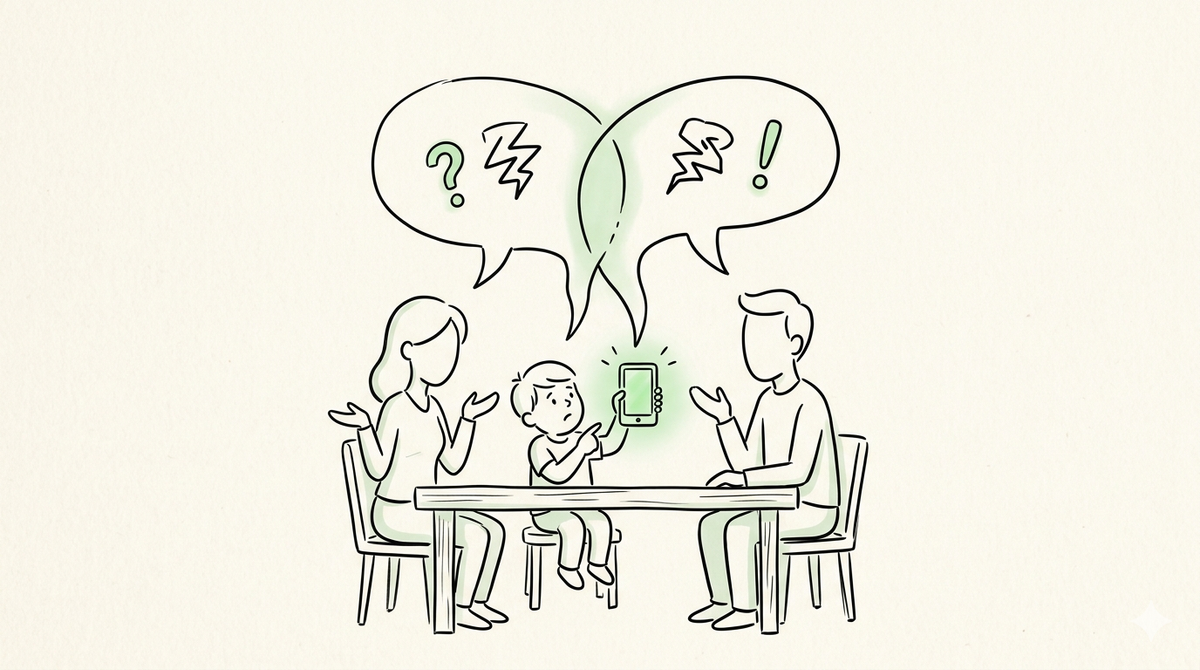
As frontier AI models frequently conflict on basic factual claims, ordinary Filipinos face new digital risks that require communal vigilance, digital literacy, and practical verification.
Step into any average urban household late in the evening, and you will likely find a familiar glow. In the corner of a crowded living room, a high school student hunches over a secondhand smartphone, rushing to finish a science report due the next morning. Across the table, an aspiring freelance worker drafts an email pitch to an overseas client, or a mother reviews a digital chat to understand a sudden neighborhood health advisory.
For millions of Filipinos, these nightly tasks are increasingly mediated by artificial intelligence. We use AI assistants, text generators, and automated chat tools seamlessly. They have become the invisible tutors, draft writers, and quick answer engines of our generation. They are fast, free, and incredibly polite. But beneath that polished conversational veneer lies a fundamental vulnerability that is quietly reshaping the landscape of public trust, digital safety, and household reliability.
A recent breakthrough study published by researcher Kosta Jordanov at Lenz Research evaluated five frontier AI models—the absolute gold standards of the tech industry. The investigation yielded an unsettling truth: these leading AI systems consistently demonstrate disagreement on factual claims, falling below the reliability threshold of 0.8. In simple terms, the smartest digital systems built by mankind frequently experience difficulties reaching a unanimous agreement on basic, real-world facts. When asked the same objective questions, different AI platforms generate conflicting narratives.
To a tech developer, this is a metric to be adjusted in the next software update. But to an ordinary Filipino family, this dynamic introduces a hidden tax on our time, our productivity, and our safety.
What does it really mean when the machines disagree? In an ecosystem like the Philippines, where the line between online information and real-world vulnerability is razor-thin, the consequences are immediate. We are already an online-first culture. We spend hours navigating social networks, digital wallets, and messaging groups. Yet, our deep digital immersion has outpaced our structural digital defense systems.
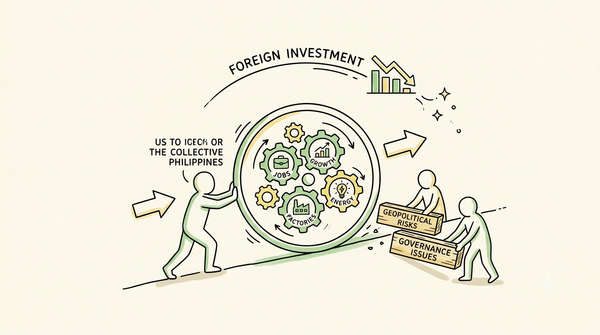
When frontier AI models fail to achieve factual consistency, the burden of proof is completely transferred to the user. Consider a father trying to understand a complex government memo about housing benefits, or a student querying an AI tool to explain a historical event for a school exam. If the AI hallucinates, errs, or contradicts another system, the student or the parent rarely has the training or the hours required to cross-reference academic journals or official gazettes. They take the generated text at face value because it looks professional, structured, and definitive.
This creates a systemic barrier to genuine advancement. If our youth rely on tools that stumble over basic truths, their foundational learning becomes compromised. If small-scale home entrepreneurs use automated assistants to draft business descriptions, legal disclaimers, or financial guidelines, a single factual error could destroy their hard-earned credibility or expose them to compliance violations. The data, quite simply, explains the precarious situation of the people: when the tools we trust are built on unstable ground, our everyday progress becomes unstable too.
The human impact of this technological friction hits specific corners of our communities hardest. For our students, the impact is an erosion of critical thinking. When an answer is instantly provided by a machine, the grueling but necessary process of research—visiting libraries, questioning sources, reading comprehensive texts—is bypassed. If that instant answer is fundamentally flawed or factually disputed among the models themselves, our children are unwittingly absorbing errors.
For stay-at-home parents and solo earners who look toward digital freelancing as a financial lifeline, the stakes are equally high. A mistake in an AI-generated product description or a localized report can mean a terminated contract from a client who realizes the information is factually incorrect. Furthermore, for senior citizens and vulnerable households navigating an landscape filled with sophisticated digital text, the inability of systems to universally isolate and agree on verified facts leaves an open door for automated scams and highly convincing digital deceptions.
This widespread challenge is precisely why localized, community-based efforts around digital readiness are becoming so crucial. In the broader ecosystem of public welfare, addressing tech vulnerability cannot simply happen at the state level; it must be tackled inside neighborhood centers. Initiatives like the BUKLURAN Bagong Simula Program (Learning and Digital Readiness Program) highlight this exact community-based necessity. Within its specific Financial & Digital Literacy sub-track, the emphasis is placed not just on the technical execution of digital payments, but directly on digital safety, online safe transactions, and scam awareness.
When global systems struggle with factual alignment, the local defense mechanism must center around building an analytical community. By creating localized workshops and structured peer discussions where beginners, youth, and parents talk through real-life digital use cases, everyday citizens learn to question, verify, and safely navigate the online environment rather than accepting automated information blindly. It proves that technological literacy is no longer an optional skill for a specialized workforce—it is a protective shield for every household.
We must collectively move away from the idea that technology is an infallible authority. The findings from Lenz Research remind us that AI models are not omniscient minds; they are statistical mirrors reflecting vast, complicated, and often contradictory human data. They are exceptional tools for brainstorming, structuring, and accelerating work, but they remain deeply flawed arbiters of absolute truth.
As we move forward into a future where automated text will saturate our feeds, our classrooms, and our workplaces, a crucial question remains for us to ponder: if the most advanced machines in the world cannot agree on what constitutes a basic fact, how are we training ourselves, our children, and our neighbors to recognize the truth? Perhaps the answer lies not in finding a smarter machine, but in cultivating a more discerning, vigilant, and supportive community.
Lahat tayo masaya kapag may AI na tumutulong sa assignment ng anak o sa trabaho natin. Pero alam niyo bang ayon sa pag-aaral, madalas magkamali at magkontrahan ang mga nangungunang AI models sa mga simpleng katotohanan? Ano ang ibig sabihin nito para sa kaligtasan at edukasyon ng ating pamilya? Huwag magpaloko sa mukhang tamang sagot sa internet.

Power Our Mission, Shape the Future
We empower single parents, PWDs, youths, seniors, and stay-at-home parents through digital livelihood.
Help us build resilient communities.
BUKLURAN remains open to partnerships, sponsorships, and collaborative initiatives that create meaningful community impact.
Whether through funding, in-kind support, volunteerism, or shared services, your organization can help strengthen programs that serve underserved communities.
Do you want to take part in our free livelihood programs, scholarship assistance, and community resource pooling initiatives? Membership is completely free.
Join BUKLURAN!
Register, volunteer, and become a member today.