When the Rain Doesn’t Stop: The Unseen Cost of a Passing Storm
Storms do more than flood streets; they disrupt the fragile economic balance of the homes that keep our communities running.
The text explores how weather disturbances like Typhoon Domeng expose the deep-seated economic and structural vulnerabilities of ordinary Filipino households, highlighting the vital role of grassroots solidarity and safety nets in navigating daily systemic disruptions.
For many residents in urban communities, a heavy downpour is not just a change in the weather; it is a shift in the entire household economy. It is the sound of rain hitting a corrugated iron roof at 3:00 AM, triggering an immediate mental checklist for a parent: Will the streets be flooded by daybreak? Will the jeepneys be able to ply their usual routes? If work is suspended, or if the informal market stalls cannot open, what happens to the day’s budget?
The recent advisory regarding Typhoon Domeng (Jangmi) maintaining its strength east of Batanes, alongside an enhanced southwest monsoon, brings this exact reality back into focus. While the center of the storm may track far out at sea, its trailing trough and the accompanying monsoon rains are projected to bring scattered thunderstorms and heavy downpours across vast swathes of the country—from Central Luzon, Metro Manila, and Calabarzon, down to Mimaropa, Western Visayas, and parts of Mindanao. For climatologists and news anchors, it is a localized weather update. But for millions of ordinary Filipinos, it is an institutional disruption to daily survival.
To understand why a passing storm matters so deeply to an ordinary household, one must look past the dramatic footage of rising rivers and focus instead on the quiet arithmetic of everyday life. In many working-class communities, income is structured around immediate daily productivity. Tricycle drivers, street vendors, daily wage earners, and stay-at-home parents managing micro-enterprises operate on narrow margins. When heavy rain floods an arterial road or turns a neighborhood alley into a stream, transportation grinds to a halt. The immediate consequence is not always a destroyed home; more frequently, it is a lost day of work. For a family living hand-to-mouth, one single day without earnings causes an immediate ripple effect that impacts food security, school allowances, and basic health needs for the rest of the week.
Furthermore, these persistent monsoon rains exacerbate existing infrastructure deficiencies. In crowded urban neighborhoods and low-lying coastal municipalities, drainage systems are quickly overwhelmed. This forces families into a state of constant, exhausting vigilance. It means staying awake through the night to monitor water levels, moving vulnerable appliances onto plastic stools, and worrying about the health risks associated with wading through contaminated floodwaters. Waterborne illnesses, fever, and skin infections are predictable secondary crises that follow heavy downpours, placing a sudden and unplanned financial burden on families who may lack immediate access to basic medicines or primary healthcare.
The structural impact extends heavily into the lives of students and young children. School disruptions caused by inclement weather do more than delay modules and exams; they alter the household care structure. When classes are suspended, stay-at-home parents or solo parents must scramble to ensure childcare while simultaneously trying to protect their meager livelihood sources from the elements. If a parent must stay home to care for young children because schools are closed, the household’s economic engine stalls completely. The preparation, nourishment, and motivation needed for a child to excel in education become significantly harder to sustain when the physical environment is consistently threatened by flooding and structural vulnerability.
This intricate web of challenges demonstrates that a natural hazard becomes a human disaster long before the water reaches the doorstep. It highlights the profound gap between macro-level disaster reporting and the hyper-local realities of community life. Large-scale government response systems and institutional relief operations are vital during severe catastrophes, but they are rarely designed to mitigate the subtle, daily economic erosions caused by a regular monsoon downpour or a distant typhoon’s trough.
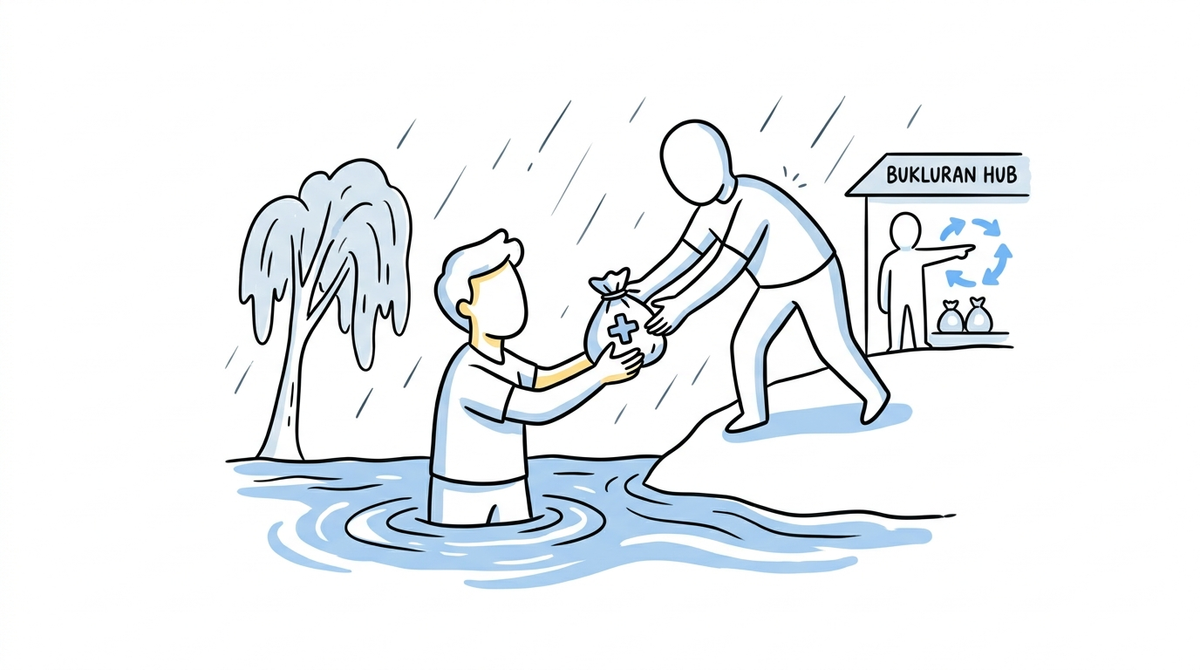
This persistent vulnerability reflects exactly why structured, community-based efforts matter. Within marginalized areas, institutional support systems are often supplemented by organized grassroots initiatives that focus on building collective safety nets. For instance, community welfare and health support programs, such as the BUKLURAN Lingap Komunidad framework, emphasize the value of local volunteer networks. These initiatives operate not as top-down charity, but as localized mutual aid systems where residents mobilize to distribute basic hygiene kits, health-related supplies, or food packs directly to households experiencing sudden disruptions. When neighborhood volunteers lead these activities, it reinforces the spirit of shared responsibility and provides an immediate, dignity-preserving buffer against the economic shocks of bad weather.
Similarly, when local enterprise models like the BUKLURAN HUB encourage community resource pooling and cooperative purchasing of essential commodities, they build a baseline of household resilience before the rainy season even begins. By reducing the daily cost of basic commodities through collective action, families are given a small cushion to absorb the financial shock of a lost working day. These community-driven frameworks do not claim to solve the macro-economic or infrastructural challenges of the country; rather, they demonstrate that when institutional structures are slow to adapt, organized neighbor-to-neighbor cooperation becomes an essential mechanism for daily survival.
Ultimately, the passing of a storm like Typhoon Domeng should prompt us to reflect on how we define safety and preparedness. True resilience cannot be measured solely by the height of our floodwalls or the volume of relief goods stored in regional warehouses. It must be measured by the stability of an ordinary family’s livelihood when the weather turns foul. As long as a few hours of rain can threaten a household's weekly meals or disrupt a child’s education, our understanding of disaster preparedness remains incomplete. The real test of a society’s strength is found not in how it handles the extraordinary crises, but in how safely its most vulnerable citizens can navigate the ordinary rains.
Bakit nga ba kahit malayo ang bagyo, tila ramdam pa rin natin ang bigat nito sa ating bulsa at hapag-kainan? Ang patuloy na pag-ulan dala ng Bagyong Domeng at Habagat ay hindi lang usapin ng basang kalsada—ito ay kwento ng mga pamilyang kailangang pumili sa pagitan ng kaligtasan at ng kita para sa pangaraw-araw na tustusin.

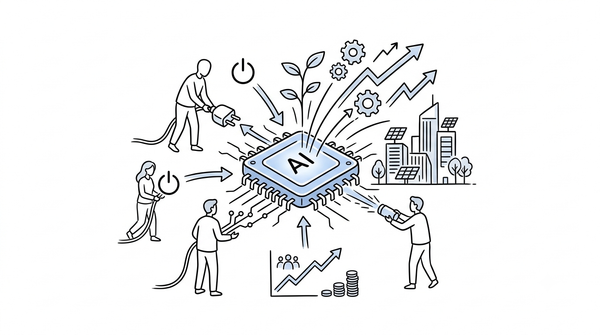
Power Our Mission, Shape the Future
We empower single parents, PWDs, youths, seniors, and stay-at-home parents through digital livelihood.
Help us build resilient communities.
BUKLURAN remains open to partnerships, sponsorships, and collaborative initiatives that create meaningful community impact.
Whether through funding, in-kind support, volunteerism, or shared services, your organization can help strengthen programs that serve underserved communities.
Do you want to take part in our free livelihood programs, scholarship assistance, and community resource pooling initiatives? Membership is completely free.
Join BUKLURAN!
Register, volunteer, and become a member today.