When the Screen Moves to Your Eyes: What the Next Tech Wave Means at Home
Smartphones changed everything. Now, AI glasses promise to do it again. But are ordinary Filipino households ready for what comes next?
The rapid rise of AI glasses signals a massive shift in personal computing that risks widening the digital divide for ordinary Filipinos, highlighting the critical need for foundational digital literacy.
Walk into any neighborhood morning market or ride a crowded jeepney home after a long shift, and you will see a familiar sight. A mother is balancing a plastic bag of vegetables while replying to a customer on a cheap smartphone. A student is squinting at a cracked screen, trying to download a heavy PDF file for a school requirement using a weak data connection. A small neighborhood storefront owner is meticulously taking photos of their new stock to upload to a social media page, hoping the algorithm favors them today.
For the ordinary Filipino family, the smartphone is not a luxury item or a status symbol; it is an absolute lifeline. It is the office, the school desk, the marketplace, and the family reunion all rolled into one pocket-sized device. It took nearly two decades for our communities to adapt to this handheld reality—to learn its quirks, to budget for prepaid load, and to build small livelihoods around it.
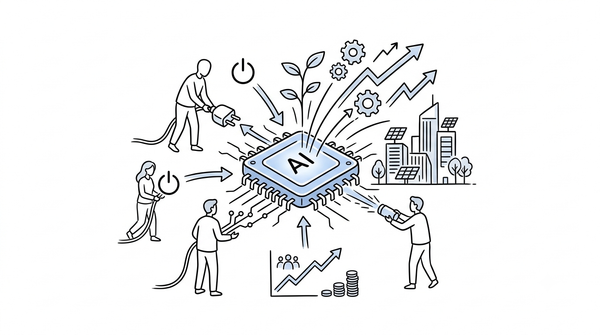
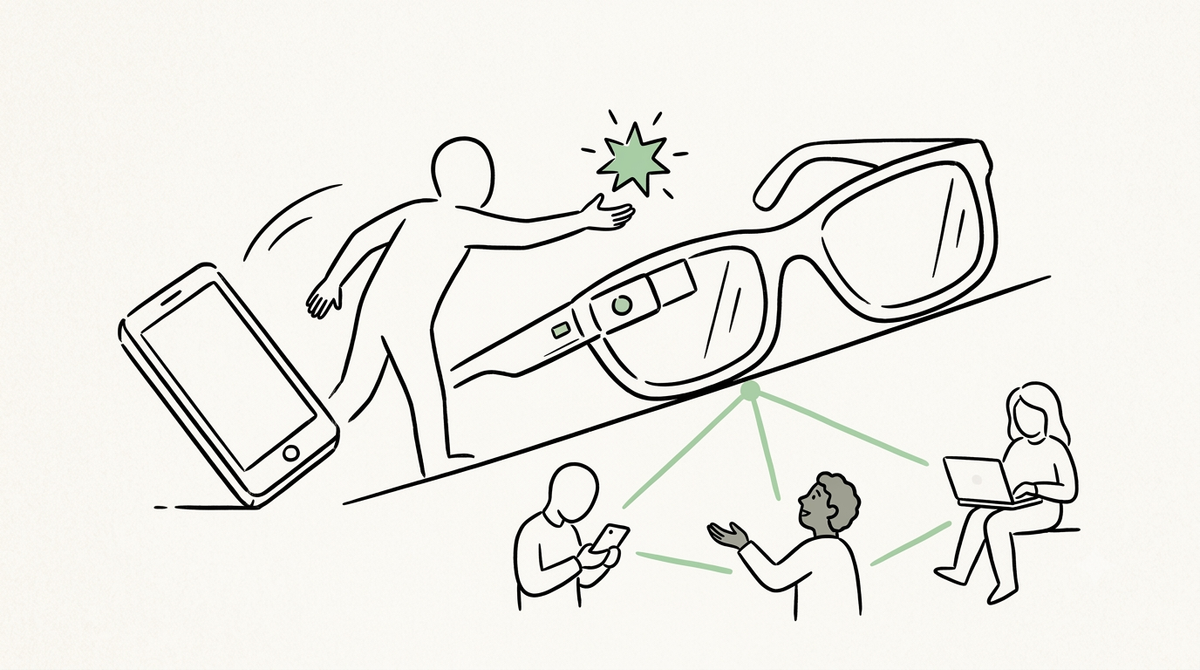
But just as we are beginning to find our footing in this mobile-first world, a quiet shift is happening in the global tech landscape. Tech companies are preparing for what they call the next major tipping point in personal computing: the rise of artificial intelligence (AI) glasses. These are wearable spectacles equipped with tiny cameras, audio systems, and micro-displays that project digital information directly onto the real world. Instead of reaching into your pocket to check a map, view a message, or scan a product, the information simply hovers in your field of vision, guided by artificial intelligence that tracks your eyes and listens to your voice.
To the engineers in Silicon Valley or Tokyo, this is the ultimate dream of seamless efficiency. But for an ordinary household in an underserved community, it raises a deeply urgent, practical question: what happens to the people who are still trying to master the tools of today when the world suddenly moves on to the tools of tomorrow?
The Reality Behind the New Tech Tipping Point
The transition from traditional smartphones to wearable AI interfaces is no longer a concept from science fiction. Major global tech manufacturers are shifting massive resources into perfecting smart eyewear. The goal is simple yet aggressive: to create a device that makes the handheld smartphone completely obsolete within the next decade.
In a perfectly connected world, the benefits of this technology sound incredible. Imagine a delivery rider who no longer needs to risk their safety by constantly glancing down at a phone screen strapped to their motorcycle handlebars; the navigation arrows would appear directly on the road ahead of them. Imagine an aspiring technician or a local dressmaker who can see step-by-step, interactive repair or design instructions projected onto their workspace in real time without having to stop working to swipe a screen. For individuals with certain physical disabilities, voice-activated visual overlays could open up entirely new ways of interacting with the world.
However, when global technology shifts at this speed, it rarely waits for the margins of society to catch up. The introduction of any groundbreaking technology doesn't just bring new features—it alters infrastructure, shifts employment requirements, and changes how everyday services are accessed. When smartphones became dominant, government agencies, banks, and public utilities slowly phased out physical options in favor of mobile apps. Those who could not afford a smartphone or did not know how to use one were suddenly left standing in much longer lines, facing higher barriers to basic human services.
The Widening Chasm of the Digital Divide
When we look beyond the glossy product announcements, the practical implications for ordinary communities reveal significant challenges. The first and most obvious barrier is economic. When smartphones first entered the Philippine market, they were prohibitively expensive. It took years for budget-friendly alternatives to become widely available, allowing lower-income families to participate in the digital economy. Wearable AI technology will undoubtedly follow the same path, starting as a high-end luxury product accessible only to a fraction of the population.
But the deeper, more complex issue is not just about who can afford the hardware; it is about who has the foundational digital literacy to navigate an increasingly complex digital landscape.
Consider a typical family where parents work long hours in informal or low-wage jobs, and children attend underfunded public schools. For these households, learning how to use digital platforms safely and productively is already an uphill battle. They face daily hurdles: unstable internet connections, a lack of structured training, and the constant threat of online scams, misinformation, and data privacy breaches.
When technology moves from a physical screen that you can put away in a drawer to a wearable device that constantly monitors your environment, data privacy concerns multiply exponentially. Wearable AI glasses rely on continuous data harvesting—recording what you see, where you look, and what you hear—to function effectively. For a population that may not fully understand standard digital data permissions, the risks of exploitation, identity theft, and privacy violations become dangerously high.
Furthermore, as industries begin to adopt these advanced tools to automate data processing and analysis, the nature of entry-level work will inevitably change. The basic digital skills that many young Filipinos rely on today to secure employment—such as manual data entry, simple content moderation, or basic customer service—may look completely different in an ecosystem dominated by ambient, hands-free AI.
Why Foundational Digital Literacy Matters Now More Than Ever
This looming technological shift highlights a critical truth: we cannot prepare for the future by ignoring the gaps of the present. If our communities do not possess a strong, resilient foundation of digital literacy, every new wave of technological innovation will only serve to push marginalized sectors further behind.
We cannot expect an individual to safely navigate an automated, wearable AI world if they have not yet had the opportunity to learn the core principles of online safety, data privacy, and basic digital tool management. True digital empowerment is not about chasing the newest device; it is about building the intellectual and practical capacity to control technology, rather than being controlled or excluded by it.
This clear need for a solid foundation is precisely why community-based efforts focusing on basic digital competencies are so essential. When we look at grassroot initiatives like the BUKLURAN Bagong Simula Learning Program, the emphasis is placed exactly where it is needed most: on the fundamentals. By focusing on practical digital literacy workshops, basic financial awareness, and online safety training for youth, stay-at-home parents, and solo parents, these community learning sessions build the necessary defense mechanisms for ordinary citizens.
Before a community can even begin to think about how advanced artificial intelligence or augmented reality might impact their local economy, they must first know how to protect their personal information online, navigate digital financial platforms safely, and use basic computing tools to secure stable livelihoods. Strengthening these fundamental skills creates a buffer, ensuring that when global tech changes its rules, local communities are not left entirely defenseless.
Moving Forward Together
Technology will continue to advance, driven by global market forces that rarely take the realities of a vulnerable Filipino household into account. We cannot stop the arrival of the next tech wave, nor should we fear it blindly. Wearable AI and advanced computing hold immense potential to improve lives, boost productivity, and solve complex problems.
However, the measure of a society's progress is not found in how advanced its newest gadgets are, but in how safely and equitably its most vulnerable members can navigate the changing landscape. As screens slowly move closer to our eyes and digital systems become more invisible and continuous, our collective focus must return to the basics.
By investing heavily in grassroots digital education, demanding stronger data privacy protections for ordinary consumers, and ensuring that basic services remain accessible to all regardless of the device they own, we can build a community that stands resilient. True progress means ensuring that as the world leaps forward into the future, no family is left stranded in the shadows of the past.
What steps can we take today in our own homes and local neighborhoods to ensure that our families are not just consumers of technology, but informed and protected participants in a digital world?
Lahat tayo masaya kapag may mga bagong gadyet tulad ng AI glasses na darating daw sa hinaharap. Pero paano kung ang mabilis na pagbabagong ito ay lalo lang mag-iwan sa mga ordinaryong pamilyang nagtitiis pa rin sa mahinang internet at mamahaling load? Handa nga ba ang ating mga komunidad kapag lumipat na ang mga screen mula sa ating mga kamay patungo mismo sa ating mga mata?

Power Our Mission, Shape the Future
We empower single parents, PWDs, youths, seniors, and stay-at-home parents through digital livelihood.
Help us build resilient communities.
BUKLURAN remains open to partnerships, sponsorships, and collaborative initiatives that create meaningful community impact.
Whether through funding, in-kind support, volunteerism, or shared services, your organization can help strengthen programs that serve underserved communities.
Do you want to take part in our free livelihood programs, scholarship assistance, and community resource pooling initiatives? Membership is completely free.
Join BUKLURAN!
Register, volunteer, and become a member today.