Why the Expansion of Digital Entertainment Doesn't Automatically Mean Better Communities
When digital screens meet physical spaces, our everyday entertainment choices change. What does this mean for the typical Filipino family?
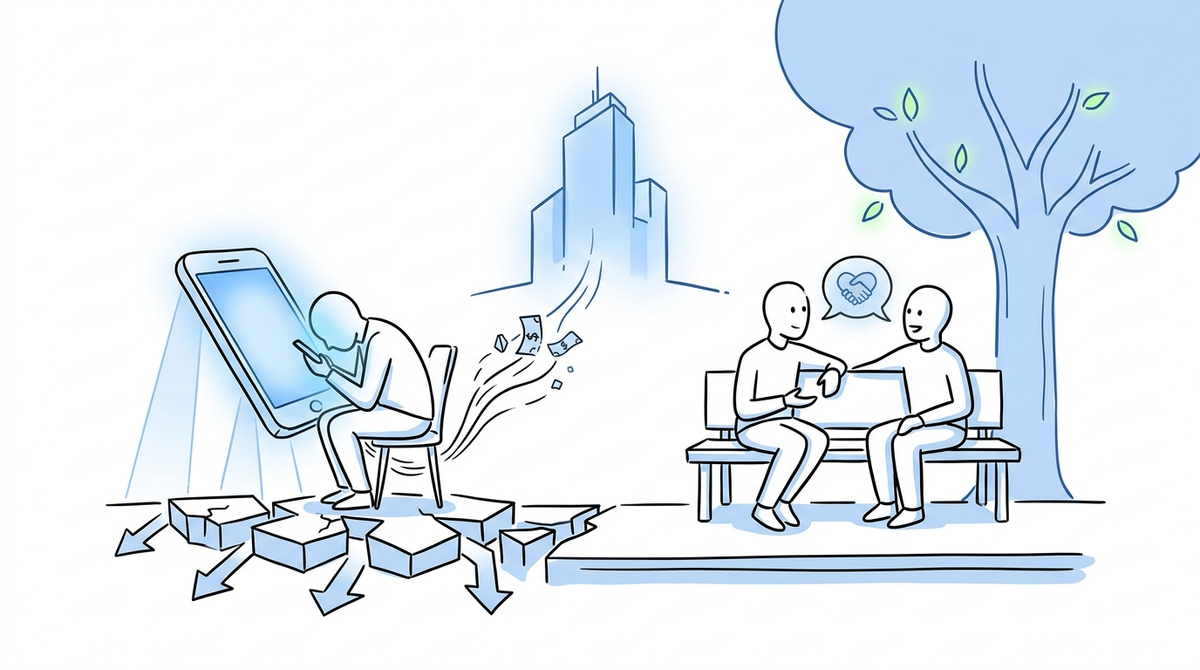
The growing integration of mobile entertainment platforms and physical entertainment developments reflects a deeper shift in how regular Filipinos spend their hard-earned money and interact within their communities.
Walk into any neighborhood coffee shop, ride a crowded jeepney, or look around the family dinner table after a long day of work, and you will notice a common scene. Heads are bowed, eyes are fixed, and fingers are rapidly tapping or swiping on glowing smartphone screens. For millions of ordinary Filipinos, the mobile phone has transitioned from a basic communication tool into an all-in-one entertainment hub.
We used to rely on community spaces, neighborhood plazas, or physical family gatherings for leisure. Today, a stable internet connection opens up an entire ecosystem of digital amusement directly from our pockets. While macroeconomists track the millions of pesos moving through corporate mergers, the true impact of this digital shift plays out silently in our homes, affecting everyday budgets, domestic relationships, and community well-being.
The Intersection of the Digital and Physical Worlds
A major corporate development has highlighted this accelerating trend. DigiPlus Interactive Corp.—a prominent player in the local digital entertainment sector—announced that its subsidiary, Total Gamezone Xtreme Inc. (TGXI), has partnered with New Coast Leisure Inc. (NCLI). Under this agreement, TGXI will operate the online gaming components within the upcoming LaVie Resort & Casino Manila.
On paper, this sounds like standard corporate strategy. Large financial corporations combine their infrastructure to capitalize on modern market demand, improve stock market returns, and expand the tech-driven leisure market. However, for the average Filipino, this corporate milestone represents a much closer reality: the absolute normalization of digital entertainment platforms in daily life.
What used to be confined to high-end physical venues in integrated entertainment cities is now directly integrated into localized mobile interfaces. The physical boundaries of leisure have evaporated, turning every living room, workplace breakroom, and public space into a potential digital interaction point.
Reading Between the Bottom Lines
When corporate announcements report rising market demand and strategic industry growth, they are looking at numbers from a bird's-eye view. From a community perspective, however, we have to look at where that money comes from. The revenue driving the rapid expansion of digital platforms is drawn directly from the discretionary income of regular citizens—the security guards, BPO workers, teachers, and small micro-enterprise owners who look to their screens for a quick escape from daily stressors.
There are structural risks when digital platforms become highly efficient at capturing attention and consumer spending. Unlike physical venues that require travel time, dress codes, and explicit planning, mobile entertainment is immediate, frictionless, and available 24 hours a day.
- The Slippery Slope of Micro-Transactions: Spending small amounts on a mobile interface can feel insignificant in the moment. However, when aggregated over weeks and months, these tiny outlays can quietly erode a household's financial safety net.
- The Attention Economy Premium: When individuals spend hours focused entirely on small screens, they are not just spending money; they are investing time that could otherwise be allocated to family bonding, learning new skills, or participating in neighborhood activities.
- The Digital Illusion of Wealth: Mobile interfaces are intentionally designed to celebrate small, immediate wins, hiding the long-term cumulative costs. This can create an inaccurate perception of personal financial stability.
Moving Past the Hype of "New Opportunities"
Proponents of the digital expansion point out that large corporate partnerships generate local employment opportunities, ranging from software developers and customer support professionals to operations staff within hospitality venues. While these corporate investments do provide immediate income for hundreds of Filipino families, the broader structural questions remain unresolved.
An economy heavily reliant on digital consumption and consumer leisure platforms operates differently than one rooted in manufacturing, agriculture, or essential services. Wealth generated in the digital entertainment space tends to concentrate heavily at the top corporate layers, while the localized economic benefit is often restricted to precarious service-industry jobs.
Furthermore, when a community's disposable income is funneled heavily into digital platforms, less money flows into local neighborhood economies—the community sari-sari stores, nearby eateries, public transport providers, and home-grown service businesses that rely on active neighborhood circulation.
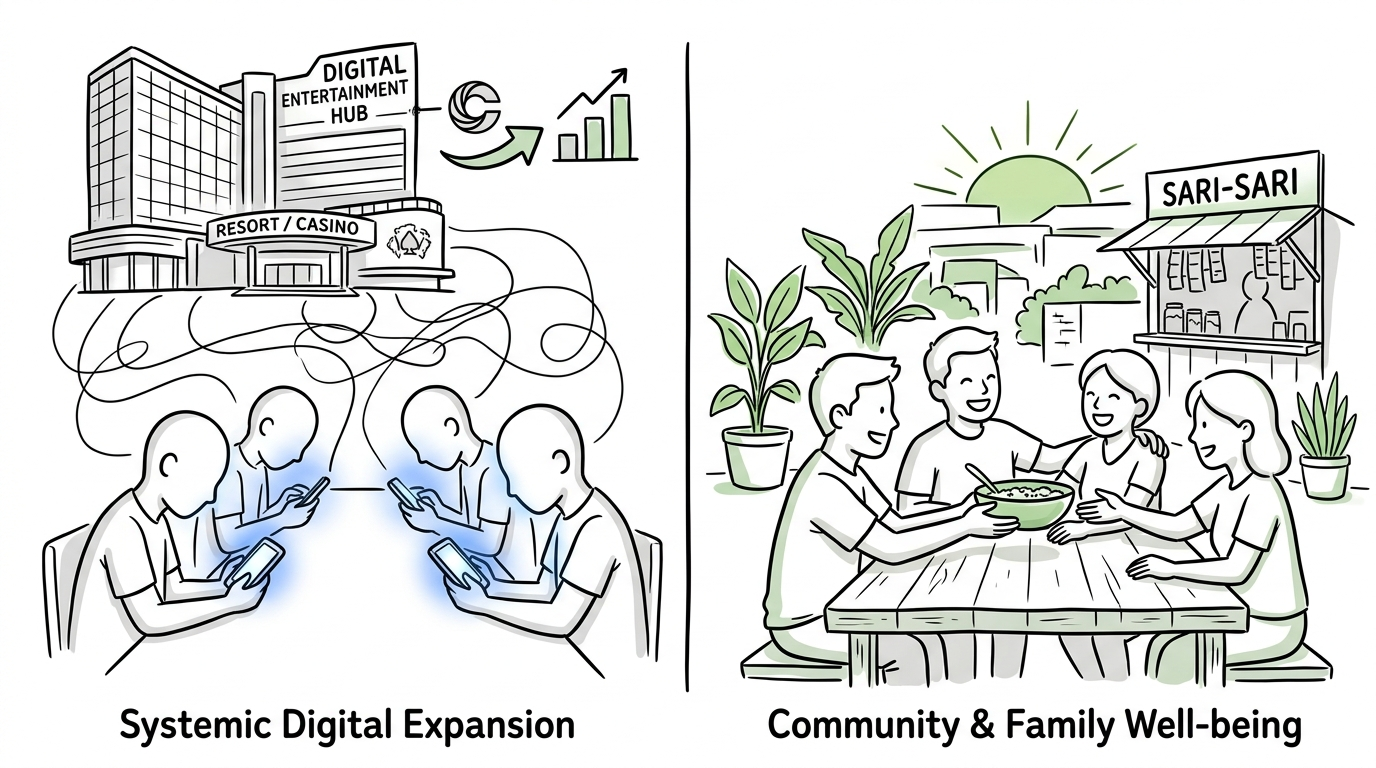
The Human Factor: Guarding the Family Table
The rapid proliferation of digital platforms poses an invisible challenge to the traditional Filipino family structure. In many households, the dinner table was once considered a sacred space for decompression, storytelling, and mutual emotional support. As mobile interfaces become more immersive, personal devices frequently displace these shared human moments.
Consider a typical household where parents work long hours to keep up with inflation and rising utilities. When they return home, the temptation to decompress by scrolling through an infinite feed of digital entertainment is incredibly high. While it provides an immediate escape, it can gradually create a culture of isolated cohabitation, where family members reside under the same roof but remain completely disconnected emotionally.
This systemic trend highlights why grassroots, face-to-face community development initiatives remain so critical. The rapid digitization of our personal lives underscores the urgent need for structured programs focused on basic digital literacy and household financial education. When families understand how digital interfaces are designed to capture their attention and financial resources, they can make conscious, protective choices about how they allocate their time and money.
A Question of Balance
The expansion of the digital economy in the Philippines is an inevitable reality of our technological age. Major corporate partnerships will continue to build expansive digital networks, and physical landscapes will continue to adjust to accommodate high-tech leisure venues. Technology itself is not the problem; the challenge lies in how we manage its integration into our daily lives.
As our physical world and digital screens continue to merge, ordinary Filipinos must ask themselves a vital question: Are these digital platforms truly serving as an affordable, harmless form of personal relaxation, or are they slowly reshaping our personal habits, financial priorities, and family structures without our conscious consent?
True community progress is not measured by the sophistication of the digital platforms available at our fingertips or the scale of the resorts built along our skylines. It is measured by the health of our households, the financial security of our working class, and our capacity to put down our devices and look each other in the eye.
Lahat tayo masaya kapag may mga bagong trabaho at modernong teknolohiya sa bansa, pero naitanong na ba natin kung ano ang totoong kapalit nito sa ating mga tahanan? Habang dumarami ang mga digital platform sa ating mga cellphone, paano ba nito binabago ang badyet at ugnayan ng pamilyang Pilipino?

Power Our Mission, Shape the Future
We empower single parents, PWDs, youths, seniors, and stay-at-home parents through digital livelihood.
Help us build resilient communities.
BUKLURAN remains open to partnerships, sponsorships, and collaborative initiatives that create meaningful community impact.
Whether through funding, in-kind support, volunteerism, or shared services, your organization can help strengthen programs that serve underserved communities.
Do you want to take part in our free livelihood programs, scholarship assistance, and community resource pooling initiatives? Membership is completely free.
Join BUKLURAN!
Register, volunteer, and become a member today.